
Suthra Punjab Programme 2026 is the Punjab government’s province-wide cleanliness and waste management programme, run through the Suthra Punjab Authority and local waste management companies. It covers door-to-door waste collection, street sweeping, drain cleaning and safe disposal of waste in cities, towns and villages across Punjab. This guide explains what the programme does, which areas it covers, how to report uncollected waste, how the cleanliness fee and bill check work, and how to reach the official helpline 1139.
The programme is a public service, not a cash assistance scheme. There is no registration form and no application to fill in — if you live in a covered area, the service comes to your street. All facts in this article are taken from the official Suthra Punjab portal at suthra.punjab.gov.pk and from reputable news reports, and anything that could not be verified is clearly marked as not officially announced.
Quick Overview: Suthra Punjab Programme 2026
| Information | Details |
|---|---|
| Program Name | Suthra Punjab Programme (Clean Punjab Programme) |
| Responsible Authority | Suthra Punjab Authority, under the Punjab Local Government & Community Development Department, working with district Waste Management Companies (WMCs) |
| Program Purpose | Province-wide cleanliness: door-to-door waste collection, street sweeping, drain desilting and safe waste disposal |
| Coverage (Official Portal) | 41 districts and 146 tehsils of Punjab, urban and rural areas |
| People Served (Official Portal) | 138 million+ residents |
| Workforce (Official Portal) | 180,000 sanitation workers and field force |
| Workforce (CM Statement, 3 Nov 2026) | 200,000 workers engaged, according to Chief Minister Maryam Nawaz |
| Vehicles and Fleet (Official Portal) | 40,000 waste collection and service vehicles |
| Waste Handled (Official Portal) | 55,000+ tons of waste every day |
| Disposal Sites (Official Portal) | 141 engineered landfill sites |
| Cleanliness Fee | A monthly fee applies; the exact amount depends on property size and locality and is printed on your bill |
| Citizen Helpline | 1139 (official portal) |
| Citizen App | Suthra Punjab Shehri app (500,000+ downloads, official portal) |
| Official Website | suthra.punjab.gov.pk |
| Last Updated | 6 November 2026 |
Latest Update on Suthra Punjab Programme 2026
The most recent statement about the programme came on 3 November 2026, when Chief Minister Maryam Nawaz addressed a ceremony at COMSATS University in Attock. She said 200,000 workers were engaged in the Suthra Punjab programme, but added that even two million workers would not be able to keep Punjab clean if people continued throwing garbage in public places. She asked citizens, including students, to join hands with the government and keep their streets, neighbourhoods and cities clean. The statement was reported by Pakistan Today and Business Recorder on 3–4 November 2026.
The programme itself began in late 2024 as a province-wide overhaul of how Punjab collects and disposes of municipal waste. Before Suthra Punjab, each city ran its own cleaning system with different standards; the programme replaced that with one monitored system run through waste management companies and private contractors under public oversight. In 2026 the programme was given a legal foundation: the Suthra Punjab Authority Act 2026 received the Governor’s assent on 25 February 2026, creating the Suthra Punjab Authority to oversee solid waste management, sanitation services, collection, transport, treatment and safe disposal across the province, and to promote recycling and waste-to-energy work. The Punjab Local Government & Community Development Department lists the Act among the province’s governing laws.
The official portal’s current operating snapshot shows the programme has grown beyond its original footprint. Earlier reports described 36 districts and 141 tehsils with more than 140,000 workers; the portal now lists 41 districts, 146 tehsils and 180,000 workers, with 40,000 vehicles and more than 55,000 tons of waste handled every day. The Chief Minister’s figure of 200,000 workers, given on 3 November 2026, is higher than the portal’s 180,000 figure — both numbers are reported here with their sources, and the difference is most likely because the portal figure and the Chief Minister’s statement count the workforce differently. Forbes has described Suthra Punjab as the world’s largest integrated waste management system, a description the official portal itself highlights.
On the ground, the programme is visible in daily operations. In Lahore, the Suthra Punjab Agency Lahore (SPAL) works in three shifts with loader rickshaws for door-to-door collection in rural union councils, and its teams clear waste hotspots town by town. In Tehsil Gujrat, which the administration presents as a model for the programme, more than 280,000 tonnes of solid waste have been collected, transported and disposed of since the programme began, at an average of about 680 tonnes a day, using 597 vehicles and machines and 2,873 sanitation workers across 84 union councils. Gujrat’s technology-based monitoring model was later presented at the Global COP30 Climate Change Conference, according to The News.
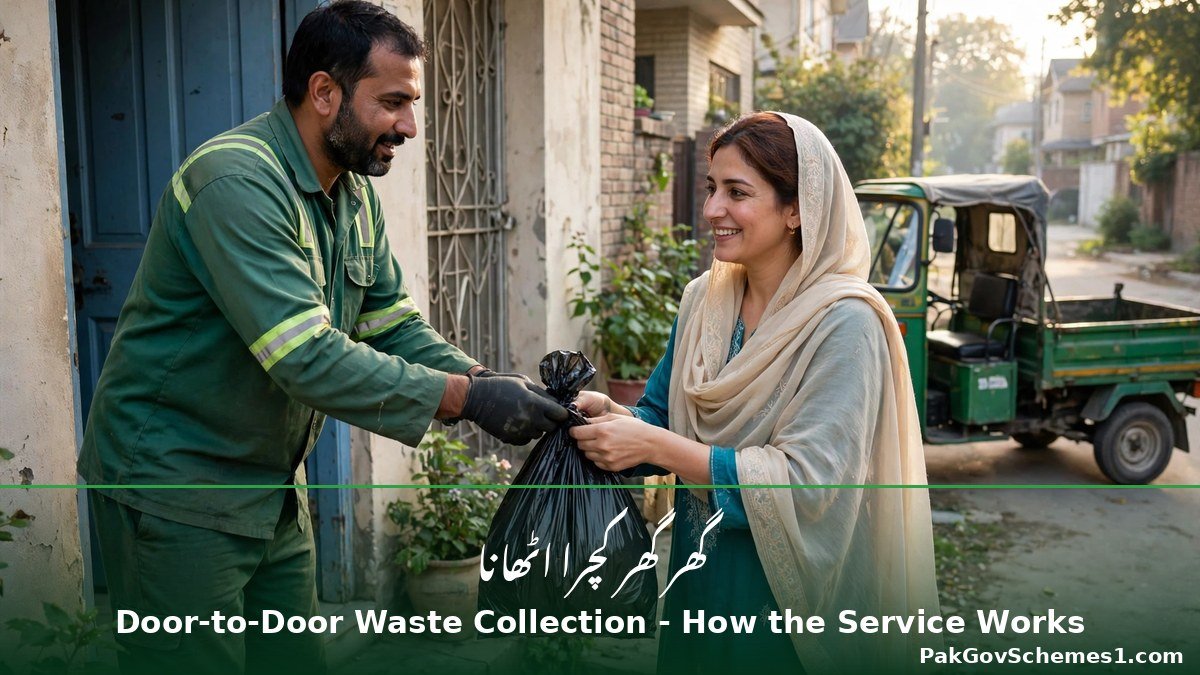
What Suthra Punjab Does: Services Covered
Suthra Punjab is a service programme, not a payment or registration scheme. Its work covers the whole journey of municipal waste, from your doorstep to final disposal. The official portal lists six areas of work:
- Door-to-door collection. Household and commercial waste is collected from homes and shops, backed by collection points, container systems and contractor performance review. Loader rickshaws are used in narrow streets and rural areas where big trucks cannot reach.
- Manual sweeping. Streets are swept on beat plans, with worker attendance checks and supervisor inspections, to keep public spaces visibly clean.
- Drain desilting. Drains are cleaned, stagnant water is cleared and problem points are fixed, which matters for public health and for reducing flooding during rains.
- Fleet and routes. Vehicle movement, trip counting and container servicing are tracked through a digital portal, so managers can see whether routes were actually completed.
- Public spaces. Markets, bus terminals, open plots, roadsides and shared spaces are part of the cleaning scope, not only residential streets.
- Complaint response. Citizen reports are routed to the right local unit with location details and field evidence, and workers complete the task under supervisory monitoring.
The programme is run as a performance-led public-private partnership: the government owns and oversees the service, while private companies and contractors do the field work under contracts that are monitored. Worker attendance is checked through facial recognition and picture-based verification, field activity is recorded with geo-tagged and time-stamped evidence, and vehicles are tracked by GPS. The long-term direction, according to the official portal, is “waste to value” — recovering materials, composting organic waste, improving landfills and, eventually, waste-to-energy. Those are long-range goals, not services available today.

For readers who want other Punjab government services that work alongside cleanliness, see our guide to the Punjab Clinic on Wheels 2026, which brings basic healthcare to neighbourhoods across the province.
Who Is Covered: Districts and Areas
Every resident of a covered area is served — there is no eligibility test, no income limit and no application. The official portal lists 41 districts and 146 tehsils in its current operating snapshot. Earlier official and news figures described 36 districts and 141 tehsils, so the coverage has expanded during 2026. The programme treats urban and rural areas as one service geography, which is a change from the old system where village cleaning was often left to union councils with little support.
| Coverage Detail | Verified Information |
|---|---|
| Districts covered | 41 districts (official portal, 2026 snapshot) |
| Tehsils connected | 146 tehsils (official portal, 2026 snapshot) |
| Urban areas | Covered — cities, towns, markets and commercial areas |
| Rural areas | Covered — villages and rural union councils, including door-to-door collection by loader rickshaw |
| Residents served | 138 million+ (official portal) |
| Tehsil service offices | 150 tehsil offices listed for local complaints and coordination (reported by Minute Mirror, September 2026) |
No official district-by-district list of service schedules could be verified on the portal as of 6 November 2026. The portal does have a “Locate Us” page where you can search by district, tehsil or town to find your local Suthra Punjab service office on Google Maps, and a service map showing which team is responsible for cleanliness in your area. Clean surroundings matter most around schools and hospitals — the province also runs a school meal scheme for public school children, see our Punjab School Meal Programme 2026 guide. If waste is not being collected on your street, the practical step is to report it through the complaint channels below rather than waiting for a schedule to be published.
How the Service Works: Step by Step
Because this is a public service and not an application-based scheme, there is no registration process. Here is how it works for a household:
- Keep your household waste ready. Put your daily waste in a bag or bin at your doorstep or at the collection point your area uses, at the time your local team collects. Collection rounds are run by the local waste management company or contractor for your tehsil.
- The collection team lifts it. Sanitation workers collect the waste door to door, or from containers and collection points, and load it onto loader rickshaws or trucks. In Lahore, SPAL teams work in three shifts, including in rural union councils.
- Waste is transported and weighed. Vehicles follow set routes that are tracked by GPS, and trips are counted through the digital portal so managers can check that routes were completed.
- Waste goes to a disposal site. Collected waste is taken to transfer stations and then to engineered landfill sites — the official portal lists 141 of them — instead of being dumped on open plots.
- Streets and drains are cleaned separately. Sweeping teams work on beat plans, and drain desilting teams clear blocked drains and stagnant water.
- If something is missed, you report it. Uncollected waste, an overflowing container, a blocked drain or illegal dumping can be reported through the helpline, the app or the online complaint form. The complaint is routed to the local unit, and the work is supposed to be completed with digital evidence and supervisory monitoring.
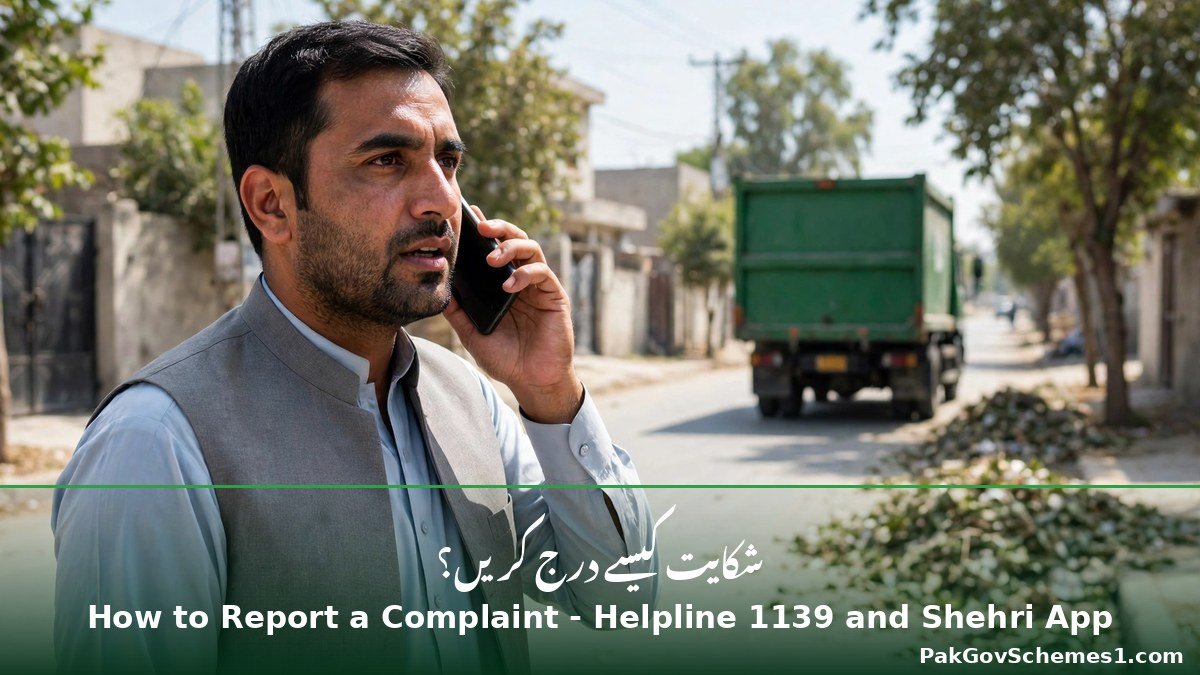
There is no form to fill in to “join” Suthra Punjab and no card or registration number is issued to households. Anyone who tells you to pay for registration, or asks for your CNIC to enrol you in the programme, is not part of the official process. The only household-level paperwork connected to the programme is the monthly cleanliness fee bill, explained below.
Cleanliness Fee and Bill Check
A monthly cleanliness fee (sanitation levy) funds the programme. The Punjab Cabinet approved the fee so the service can pay for itself, and billing is handled digitally through the Punjab Information Technology Board (PITB) and the Bank of Punjab, using the ePay Punjab system. Lahore residents began receiving waste management bills in 2026; the Lahore Waste Management Company said bills were being issued in phases across the city, and advised residents with complaints to contact the Suthra Punjab helpline at 1139.
| Detail | Verified Information |
|---|---|
| Fee type | Monthly cleanliness fee (sanitation levy), approved by the Punjab Cabinet — reported by third-party bill guides; the official portal confirms billing exists through its Bill Check page |
| Typical amount, small house (reported) | About Rs 200–300 per month for a house up to 5 marla, varying by locality — reported by scheme and bill guides, not an official published tariff |
| How the amount is set | Based on property size and locality (urban or rural) and property category — reported; the exact amount is printed on your own bill |
| How to check your bill | Official portal: open Bill Check Online and enter the 20-digit PSID printed on your Suthra Punjab bill |
| How to pay | Digitally through ePay Punjab — open the ePay Punjab app or portal, select Local Government & Community Development, then Suthra Punjab Sanitation Fee, and enter your reference number to generate a PSID (reported method) |
| Cash payment | Field staff and sanitation workers are strictly forbidden from accepting cash payments — reported by bill guides; all bills are to be paid digitally |
| Vacant plots | Vacant plots with no construction generate no household waste and can be exempt — reported by bill guides; apply through the official complaint or exemption channel |
One important warning: the exact fee tariff has not been published as an official rate table on the Suthra Punjab portal, so the figures above are typical ranges reported by independent bill guides, not official rates. Rates vary by district and property category, and your own bill is the only official figure for what you owe. In May 2026, some Lahore residents complained that their very first bill included four months of charges plus a penalty, and that the bill did not clearly show the monthly rate — a reminder to read your bill carefully and to question anything unclear through helpline 1139. Do not pay cash to any person who comes to your door asking for the cleanliness fee. If a bill looks wrong, use the official Bill Check page with your PSID, or call 1139, before paying.
Documents Needed
There is no registration, so there is no document list for joining the programme. You only need documents or numbers in these specific situations:
- To check your bill: the 20-digit PSID printed on your Suthra Punjab bill (official portal).
- To track a complaint: your complaint ID and the mobile number you used when submitting it (official portal).
- To pay through ePay Punjab: your property reference number, which generates a PSID (reported method).
- To dispute a bill or a wrong property category: third-party guides say you may be asked for a property tax copy, your CNIC and a Form-A; this is reported, not officially published, so confirm what is needed through helpline 1139 before visiting an office.
Never hand your original CNIC, or a photo of it, to a sanitation worker or to anyone who comes to your door about the programme. The real service does not collect CNICs at the doorstep.

How to Complain: Helpline 1139, Shehri App and Online Form
The official portal gives three ways to report a cleanliness problem, and the helpline number is confirmed on the portal itself:
- Call helpline 1139. The citizen helpline is listed on the official portal for complaints and public support. Third-party guides describe it as toll-free, but that detail could not be confirmed on the official portal, so it is reported rather than official.
- Use the Suthra Punjab Shehri app. The official citizen app lets you report waste-related complaints, view duty rosters, check schedules and share feedback. The portal says it has more than 500,000 downloads. Third-party guides say you can attach geo-tagged photos and track your complaint in the app.
- Use the online complaint form on the official website. The portal’s FAQ says to use the public complaint form on the website, the Shehri app, or helpline 1139. To track a complaint, open the Track Complaint page and enter your complaint ID with the mobile number used during submission.
- Visit your local tehsil office. The portal’s Locate Us page lets you search by district, tehsil or town and open the relevant service office in Google Maps. Minute Mirror reported a network of 150 tehsil offices.
Third-party guides report that ordinary door-to-door collection complaints are meant to be resolved within 24 hours and that billing disputes can take 7 to 15 working days, but these timeframes do not appear on the official portal and could not be verified, so they are reported, not official. If your complaint is not resolved, call 1139 again with your complaint ID, and keep a record of the date and the name of the person you spoke to.

Jobs and Recruitment: What Is Known
Many readers ask whether they can get a job as a sanitation worker under Suthra Punjab. The programme employs a very large workforce — the official portal lists 180,000 workers and the Chief Minister said 200,000 on 3 November 2026 — and field work is carried out through waste management companies and private contractors. However, no official recruitment announcement, jobs portal, application form, salary scale or hiring schedule for sanitation workers could be verified on the official Suthra Punjab portal or the Local Government Department’s website as of 6 November 2026. That information is therefore not officially announced.
Do not pay anyone who promises you a Suthra Punjab job, and do not share your CNIC or documents with agents on Facebook or WhatsApp who claim to arrange recruitment. If hiring opens, it would be announced through the Suthra Punjab Authority, the Local Government & Community Development Department, or the district waste management companies — check the official portal and the department’s website rather than trusting social media posts.
Troubleshooting: Common Problems and Fixes
1. Waste was not collected from your street
Report it the same day through helpline 1139 or the Shehri app, giving your street, mohalla and tehsil so the complaint reaches the right team. Note your complaint ID so you can track it. If collection is missed repeatedly, visit your tehsil service office through the portal’s Locate Us page.
2. An overflowing container or illegal dumping near your home
Report it with a photo through the Shehri app if you can, or call 1139. Illegal dumping can also be reported to your local municipal office. Do not try to clear a large dump yourself, especially if it contains hospital or chemical waste.
3. A blocked drain or stagnant water
Drain desilting is part of the programme. Report the exact location through 1139 or the app. During monsoon rains, special teams are deployed to low-lying areas and underpasses, but you should still report your street so it is on the list.
4. Your bill amount looks wrong
Check the bill on the official portal with your 20-digit PSID first. If the property size or category on the bill does not match your house, raise a billing dispute through 1139 or the app. Keep your bill and any payment receipt. Do not pay cash to anyone who offers to “fix” your bill at your door.
5. You received a bill for a vacant plot
Vacant plots are reported to be exempt because they generate no household waste. Raise the matter through the official complaint channel and ask about the exemption process, and confirm what documents are needed through 1139 before visiting an office.

6. The Shehri app or the portal is not working
Try again after some time, and use helpline 1139 in the meantime. The portal also has a public complaint form on the website itself, so the app is not the only route. If you are out of mobile data while trying to file a complaint, see our guide to Punjab Free WiFi Hotspots 2026 for free internet at public places across the province.
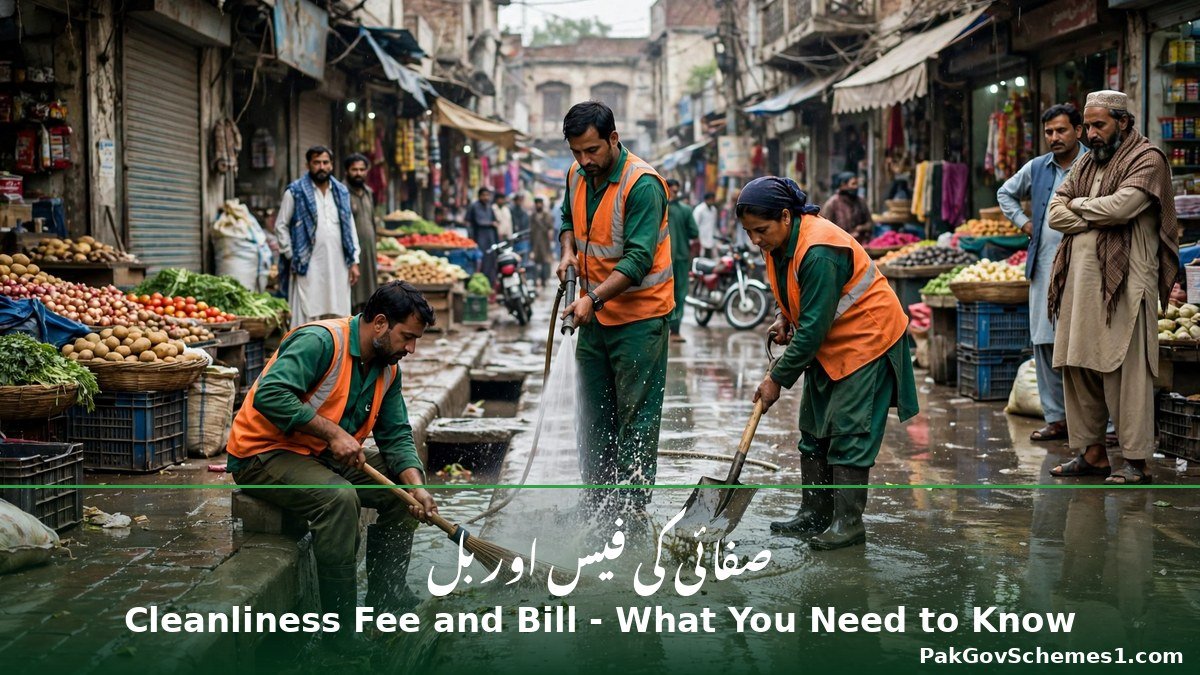
Official Helpline and Complaint Procedure
The confirmed official contact for Suthra Punjab is helpline 1139, listed on the official portal at suthra.punjab.gov.pk for complaints and public support. The portal also offers the public complaint form on its website and the Suthra Punjab Shehri app, which has more than 500,000 downloads. To find a local office, use the portal’s Locate Us page and search by district, tehsil or town.
A WhatsApp helpline number for Suthra Punjab is quoted on some third-party bill guides, but it does not appear on the official portal and could not be verified from an official source, so it is not published in this article. Use only 1139, the official website and the official app. In Lahore, residents can also contact the Lahore Waste Management Company, which manages the service in the city and uses the same 1139 helpline.
Common Mistakes to Avoid
- Paying cash to a sanitation worker. Bills are paid digitally through ePay Punjab. Field staff are forbidden from taking cash, according to bill guides. Anyone collecting cash at your door is not following the official process.
- Paying for “registration” in the programme. There is no registration, no enrolment fee and no card. The service is a public programme for all residents of covered areas.
- Paying an agent for a Suthra Punjab job. No official recruitment process has been announced. Job promises in exchange for money are a scam.
- Trusting a helpline number from a Facebook post. Only 1139 is published on the official portal. Other numbers, including WhatsApp numbers quoted by third-party sites, are unverified.
- Assuming the fee is the same for every house. The fee depends on property size and locality. Your own bill is the only official figure — a neighbour’s bill is not proof of your rate.
- Throwing waste in the street because “workers will pick it up”. The Chief Minister said on 3 November 2026 that even two million workers could not keep Punjab clean if people keep throwing garbage in public places. Use bins and collection points.
- Ignoring your bill. Third-party guides report a late-payment surcharge and possible service action after long non-payment, but these consequences are reported, not officially published. Read your bill, check it online, and dispute errors early through 1139.
Fake Claims About Suthra Punjab — What Is Not True
Because the programme touches every household, false claims spread quickly on Facebook, WhatsApp and TikTok. Here are the ones readers should not believe:
- “Pay Rs 500 at your door to register for Suthra Punjab.” False. There is no registration and no doorstep fee. Bills are paid digitally.
- “Send your CNIC on WhatsApp to get free waste collection.” False. No CNIC is needed for the service, and the programme never asks for documents through WhatsApp.
- “Suthra Punjab only cleans cities, not villages.” Not true. The official portal says urban and rural areas are treated as one service geography, and loader rickshaws do door-to-door collection in rural union councils.
- “Every house pays a fixed Rs 300 per month.” Misleading. About Rs 200–300 a month for a small house is a typical reported range, not a fixed official rate. The amount varies by property size and locality.
- “Call this mobile number for Suthra Punjab complaints.” Unverified. The only helpline published on the official portal is 1139. Mobile numbers shared on social media are not official.
- “The programme has ended” or “Suthra Punjab was a one-month campaign.” False. It is an ongoing programme with a dedicated Authority created by law in February 2026, and the Chief Minister spoke about it again on 3 November 2026.
If you see one of these claims, do not forward it. Check suthra.punjab.gov.pk first, and report the post if it asks for money or personal documents.

Frequently Asked Questions
1. What is the Suthra Punjab Programme?
Suthra Punjab is the Punjab government’s province-wide cleanliness and waste management programme. It provides door-to-door waste collection, street sweeping, drain cleaning and safe waste disposal through the Suthra Punjab Authority and local waste management companies, covering 41 districts and 146 tehsils according to the official portal.
2. Do I need to register for Suthra Punjab?
No. There is no registration form, no application and no card. The service is a public programme for all residents of covered areas. If someone asks you to pay for registration or to send your CNIC to enrol, that person is not part of the official process.
3. How much is the Suthra Punjab cleanliness fee?
A monthly fee applies, but no official rate table has been published on the portal. Independent bill guides report typical amounts of about Rs 200–300 per month for a small house up to 5 marla, varying by property size and locality. Your own bill is the only official figure for what you owe.
4. How can I check my Suthra Punjab bill online?
Open the Bill Check page on the official portal at suthra.punjab.gov.pk and enter the 20-digit PSID printed on your bill. You can also pay digitally through ePay Punjab by selecting Local Government & Community Development and then Suthra Punjab Sanitation Fee.
5. What is the Suthra Punjab helpline number?
The official helpline is 1139, published on the Suthra Punjab portal for complaints and public support. You can also report problems through the public complaint form on the website or the Suthra Punjab Shehri app. Do not trust other numbers shared on social media.
6. How do I complain about uncollected waste?
Call 1139, use the Suthra Punjab Shehri app, or fill in the complaint form on the official website, giving your street, mohalla and tehsil. Keep your complaint ID and the mobile number you used, so you can track the complaint on the portal’s Track Complaint page.
7. Which districts are covered by Suthra Punjab?
The official portal lists 41 districts and 146 tehsils, covering both urban and rural areas and more than 138 million residents. Earlier figures were 36 districts and 141 tehsils, so coverage has expanded during 2026. Use the portal’s Locate Us page to find your local service office.
8. Can I get a job as a sanitation worker in Suthra Punjab?
No official recruitment announcement, jobs portal or hiring schedule could be verified as of 6 November 2026, so this is not officially announced. The workforce is engaged through waste management companies and contractors. Never pay anyone who promises you a job in the programme.

9. Is the Suthra Punjab service free?
The cleaning service itself is a public service, but households pay a monthly cleanliness fee, which is billed digitally. There is no separate charge for reporting a complaint or for the collection service itself. Do not pay cash to any worker at your door.
10. What should I do if my bill is wrong?
Check the bill on the official portal with your 20-digit PSID, and if the property size or category is wrong, raise a billing dispute through helpline 1139 or the Shehri app. Keep your bill and payment receipt. Third-party guides say billing disputes can take 7 to 15 working days, but that timeframe is reported, not officially confirmed.
Important Safety Notice
Only use the official Suthra Punjab portal, the official Shehri app and helpline 1139. Never pay cash to a sanitation worker or to anyone who comes to your door about the programme, never share your CNIC photo or OTP codes with strangers, and never trust a helpline or WhatsApp number from a social media post. PakGovSchemes1.com is an independent informational website and is not affiliated with any government department. Always verify fee amounts, bill details and complaint procedures through the official Suthra Punjab website before paying or sharing personal information.
Conclusion
Suthra Punjab Programme 2026 is Punjab’s largest public cleanliness effort: door-to-door waste collection, street sweeping and drain cleaning across 41 districts and 146 tehsils, with 180,000 workers listed on the official portal and 200,000 cited by the Chief Minister on 3 November 2026. There is no registration to complete, but there is a monthly cleanliness fee to check on your bill, and helpline 1139 and the Shehri app are the official ways to report problems. Use the service properly, keep your street clean, and check the official portal for the latest updates before believing claims shared on social media.
Official Sources
- Suthra Punjab — official portal: https://suthra.punjab.gov.pk (official — 41 districts, 146 tehsils, 180,000 workers, 40,000 vehicles, 138M+ residents, 55,000+ tons daily, 141 landfill sites, helpline 1139, Shehri app, Bill Check with 20-digit PSID, Track Complaint, Locate Us)
- Pakistan Today — “Maryam Nawaz distributes laptops and scholarships in Attock” (3 November 2026): https://www.pakistantoday.com.pk/2026/11/03/cm-maryam-inaugurates-rs23b-projects-distributes-laptops-honhaar-scholarships-in-attock (reputable news — CM’s 3 Nov 2026 statement: 200,000 workers engaged in Suthra Punjab)
- Business Recorder — “CM says defamation notice being sent to federal minister over allegations” (4 November 2026): https://www.brecorder.com/news/40447271/cm-says-defamation-notice-being-sent-to-federal-minister-over-allegations (reputable news — confirms the 200,000 workers statement at the Attock ceremony)
- Minute Mirror — “Suthra Punjab initiative expands district-level waste management framework” (28 September 2026): https://minutemirror.com.pk/suthra-punjab-initiative-expands-district-level-waste-management-framework-636960/ (reputable news — Suthra Punjab Authority Act 2026, Governor’s assent 25 February 2026, 150 tehsil offices, helpline 1139)
- The News — “Gujrat ’emerges’ as Suthra Punjab model” (September 2026): https://www.thenews.pk/print/1436894-gujrat-emerges-as-suthra-punjab-model (reputable news — 280,000+ tonnes collected in Tehsil Gujrat, 680 tonnes a day, 597 vehicles, 2,873 workers, COP30 presentation)
- ProPakistani — “Lahore Residents Get 4 Months of Charges in First Waste Management Bill” (6 May 2026): https://propakistani.pk/2026/05/06/lahore-residents-get-4-months-of-charges-in-first-waste-management-bill/ (reputable news — phased billing in Lahore, first bills carrying four months of charges, helpline 1139)
Disclaimer: PakGovSchemes1.com is an independent informational website and is not affiliated with any government department. Information is compiled from available official announcements and other identified sources and may change. Please verify eligibility, registration status, payment details, and deadlines through the relevant official government website before taking action.

