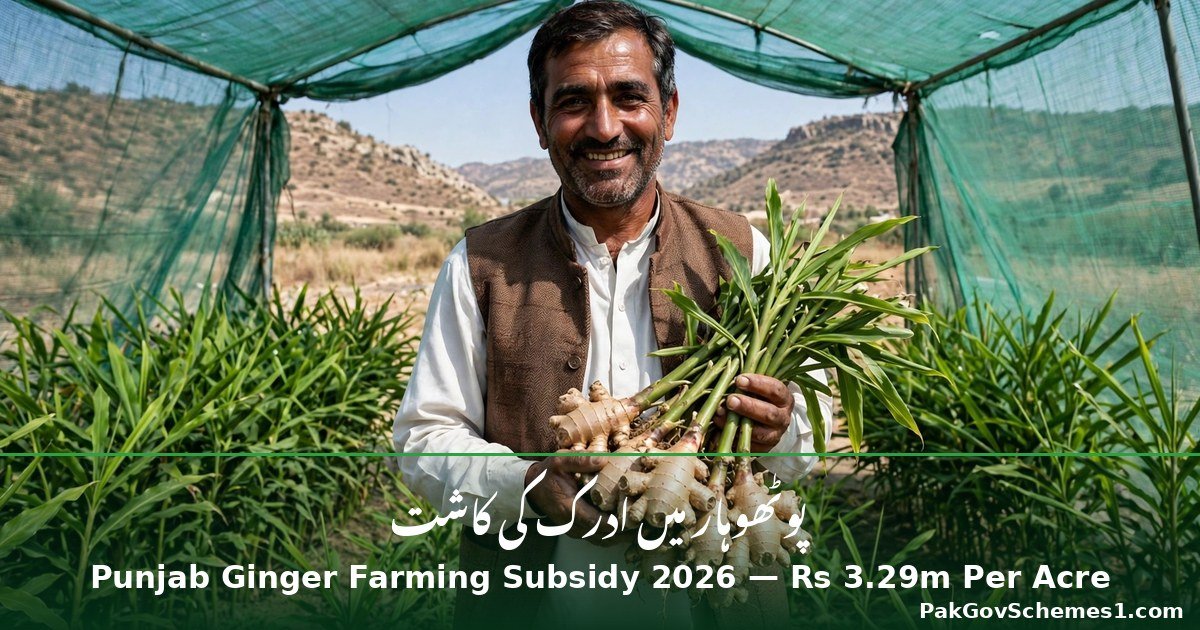
The Punjab ginger farming subsidy gives selected farmers in the Potohar region Rs 3.29 million per acre to grow ginger under tunnels, covering 70% of the cost of certified seed, tunnel structures, shade nets and drip irrigation. On Monday 16 November 2026, the Punjab government held a balloting ceremony in Rawalpindi and gave offer letters to 10 more farmers from Potohar and the Soon Valley in Khushab — 20 growers in two years. This guide explains who was selected, what the subsidy covers, why new applications are not open, and how farmers can prepare for a future round.
Quick Overview: Punjab Ginger Farming Subsidy 2026
| Information | Details |
|---|---|
| Programme name | Ginger Cultivation Promotion Programme, under the CM Punjab Potohar Agriculture Transformation Plan |
| Responsible department | Agriculture Department, Government of Punjab (Agriculture Extension, Rawalpindi Division; Vegetable Research Institute, Faisalabad) |
| Subsidy amount | Rs 3.29 million per acre, covering 70% of the cost (reported 16–17 November 2026) |
| What it covers | Certified ginger seed, tunnel structures, shade nets and drip irrigation systems |
| Programme size | Ginger cultivation on 100 acres over three years (reported); the department’s advertisements put the total at 110 acres from 2025 to 2028 |
| Farmers selected so far | 10 growers in the first year, 10 more selected in November 2026 — 20 in total |
| Area covered | Potohar region (Rawalpindi, Murree, Attock, Jhelum, Chakwal and Talagang) and Soon Valley, Khushab |
| Application status | Closed — applications for this year’s round closed on 15 September 2026 |
| Selection method | Balloting among applicants; offer letters given at a ceremony in Rawalpindi on 16 November 2026 |
| Official website | https://agripunjab.gov.pk/ (Punjab Agriculture Department) |
| Agriculture helpline | 0800-17000, 8am to 8pm daily |
| Last updated | 21 November 2026 |
Latest Update: Balloting Ceremony in Rawalpindi — 16 November 2026
The latest verified news comes from a balloting ceremony in Rawalpindi on Monday 16 November 2026, under the Chief Minister Punjab’s Potohar Agriculture Transformation Plan. APP reported it on 16 November; Dawn carried a full report on 17 November. Chairman of the Chief Minister Punjab Inspection Team and MPA Raja Muhammad Hanif distributed offer letters to the selected farmers, alongside Director Agriculture (Extension) Syed Shahid Iftikhar Bukhari, Project Management Unit Director Muhammad Irfan Maan, and Vegetable Research Institute Director Aamir Latif.
Two points matter most. First, the subsidy was confirmed again: Rs 3.29 million per acre, covering 70% of the cost of certified seed, tunnels, shade nets and drip irrigation. Second, this was a selection ceremony for farmers who had already applied — not the opening of a new round. Ten more farmers from Potohar and the Soon Valley (Khushab) were selected, after 10 growers were supported last year.

Is This a New Scheme? No — It Is a Small Pilot in Its Second Year
Some social media posts present the Punjab ginger farming subsidy as a brand-new, province-wide scheme that any farmer can join. That is not what the verified record shows. The programme began in early 2026 as part of the Chief Minister’s Rs 7 billion Agriculture Transformation Plan for the Potohar region: the first 10 farmers got allotment letters in February 2026, and the Vegetable Research Institute in Faisalabad trained growers in May 2026. November’s ceremony is the second round of a small pilot, not a launch.
The scale matters. Twenty farmers in two years is a pilot, aimed at one place — the rain-fed Potohar plateau, where officials say the climate suits ginger — not at farmers across all of Punjab. The programme aims to support ginger on 100 acres over three years, though a source that read the department’s advertisements puts it at 110 acres from 2025 to 2028. Farmers outside Potohar and the Soon Valley are not covered. Punjab’s larger wheat support runs separately through the Punjab wheat support programme 2026–27.
Who Was Selected: 10 Farmers This Year
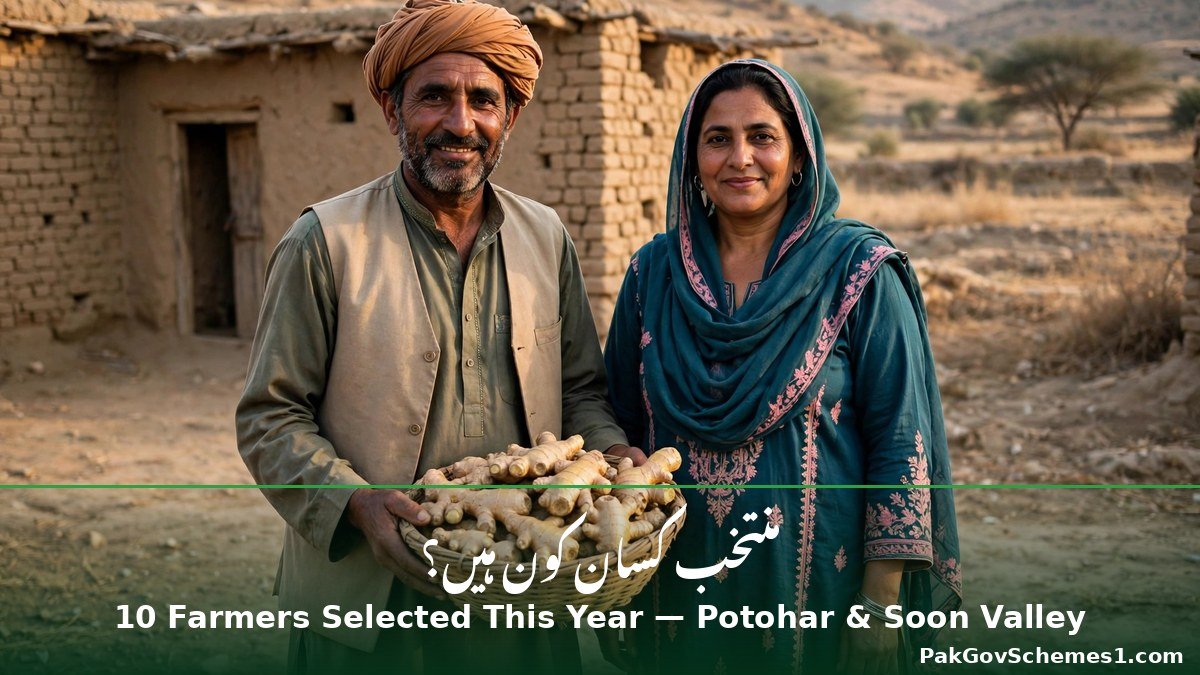
This year, 10 more farmers were selected from the Potohar region and the Soon Valley in Khushab district. They were chosen by balloting — names drawn from applicants — and received offer letters at the Rawalpindi ceremony on 16 November 2026. Last year, the first 10 growers were supported under the same programme.
The department has not published the selected farmers’ names, their villages, or how many farmers applied, so there is no public list to check. If you applied and got no offer letter, you were not selected in this round. The Project Management Unit says the plan’s projects run with complete transparency, but no waiting list or appeal route has been announced.
What the Subsidy Covers: Seed, Tunnel, Shade Net and Drip Irrigation
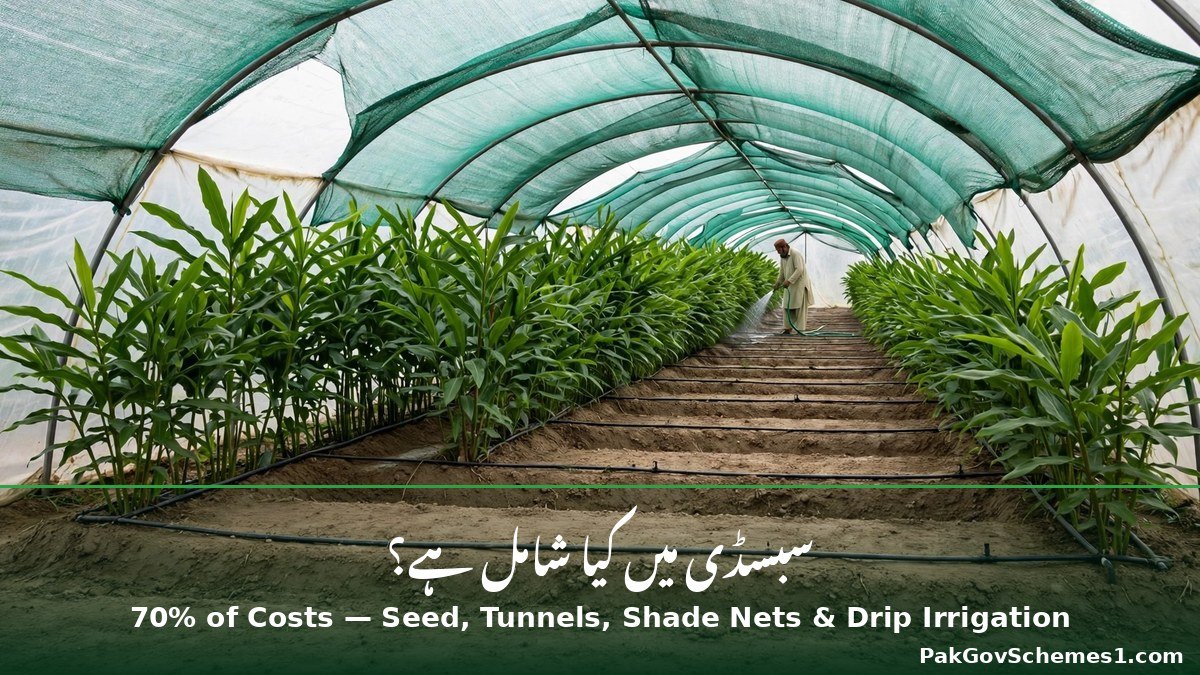
Ginger needs a protected, moist environment, unlike wheat or maize, so the subsidy pays for a complete package rather than cash. The Rs 3.29 million per acre covers 70% of four things: certified ginger seed, the tunnel structure, shade nets, and a drip irrigation system. The farmer pays the remaining 30%; how it is paid, and when the material is delivered, has not been announced.

One discrepancy to note: reports from February and May 2026 described the same package as a “100 per cent subsidy” on seed, tunnels, shade nets and drip irrigation. The November 2026 reports say 70% of the cost. Treat the latest reports as the current position, but confirm the exact cost-sharing in writing at the agriculture office before spending any money. Ginger is a high-value cash crop, and Pakistan spends a huge amount on ginger imports every year.
Eligibility: What Is Known and What Is Not Announced
The department has not published a separate eligibility list for the ginger programme, so most rules are not public. What is verified is the area: the Potohar districts of Rawalpindi, Murree, Attock, Jhelum, Chakwal and Talagang, with the Soon Valley of Khushab included. Farmers outside these areas are not covered. The plan’s published forms show what the department asks for — name, computerised CNIC, phone, land area, mouza, tehsil and district, plus a CNIC copy and the fard (land ownership record) — and one rule applies across its schemes: a farmer can benefit from only one facility at a time.
Not announced: any landholding limits for ginger, whether tenants can apply, and whether unsuccessful applicants get preference next time. No eligibility list for this programme has been published, so ignore any list circulating on WhatsApp or Facebook.
How to Apply: Steps for the Next Round (Applications Are Closed Now)
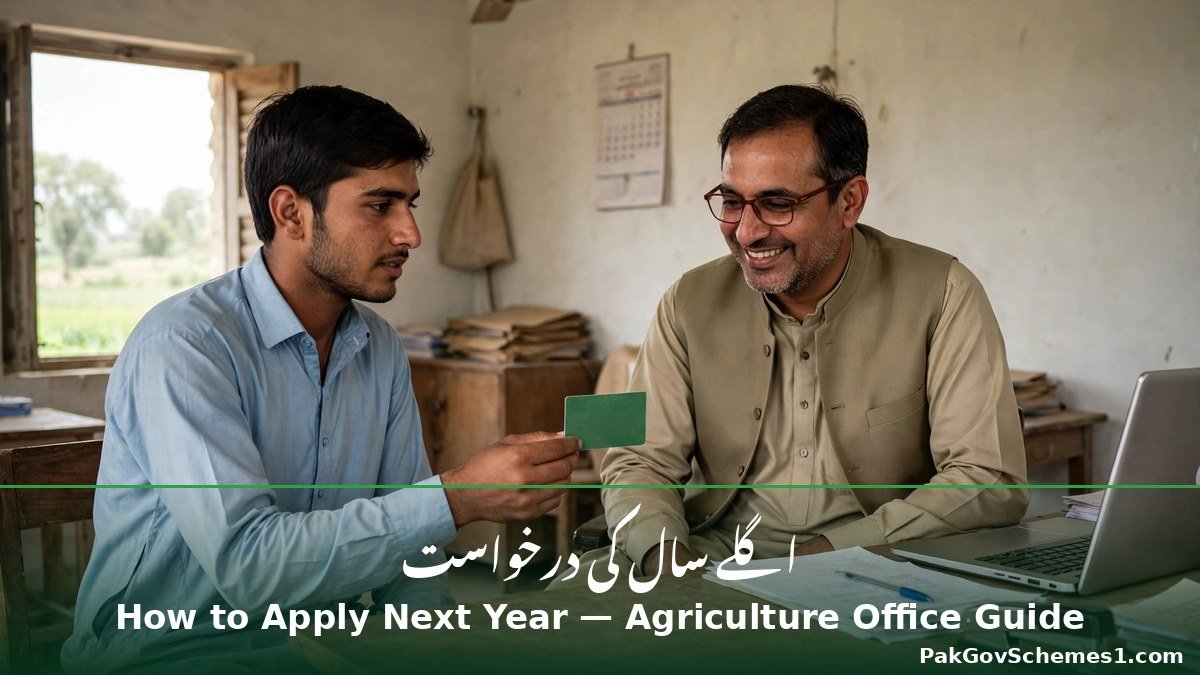
Applications closed on 15 September 2026 and the balloting has already taken place — so no farmer can apply today. The steps below describe how the process worked under the Potohar plan’s published forms, so interested farmers are ready if a new round opens. They are based on the department’s advertisements and forms as read in October 2026.
- Get the form. Download it from agripunjab.gov.pk, or collect it free from your district Soil Conservation or Agricultural Engineering office.
- Fill it in clearly. Write your name, CNIC number, phone, land area, mouza, tehsil and district exactly as they appear on your CNIC and land record.
- Attach your documents. Attach a CNIC copy and the fard (land ownership record) for the land where the tunnel would be built.
- Sign the affidavit on the form. The form includes an affidavit accepting the department’s final decision in any dispute.
- Submit it at the district office. Hand it in at your district office of Soil Conservation or Agricultural Engineering, and keep a receipt.
- Wait for the balloting. If applications exceed the places available, selection is made by ballot, as it was this year. There is no first-come, first-served promise for ginger.
There is no online portal or SMS code for the ginger scheme — the form is paper only. The department has not said whether the scheme will return in 2027–28. The Punjab Kisan Card is a separate programme with its own registration — not the route into the ginger subsidy.
CNIC Check and Application Status
There is no online status-check portal or SMS service announced for the ginger programme. That is different from BISP, where the 8171 web portal lets beneficiaries check Kafalat payments — this is an Agriculture Department scheme, so the 8171 portal will not show anything about a ginger application. To check your position, visit the office where you submitted your form — your district Soil Conservation or Agricultural Engineering office — with your CNIC and submission receipt, or call the Punjab agriculture helpline on 0800-17000 (8am to 8pm daily). Never enter your CNIC number on any website other than an official government portal, and never send your CNIC photo or OTP to a WhatsApp number that claims to check your ginger subsidy.

Subsidy Details and Schedule
| Detail | Verified Information |
|---|---|
| Subsidy per acre | Rs 3.29 million per acre (reported 16–17 November 2026) |
| Cost covered | 70% of the cost of certified ginger seed, tunnel structures, shade nets and drip irrigation systems (November 2026 reports; earlier 2026 reports described the package as 100%) |
| Farmer’s share | 30% of the cost, by arithmetic from the 70% figure; payment timing not officially announced |
| Programme size | 100 acres over three years (Dawn / APP); department advertisements put it at 110 acres from 2025 to 2028 |
| Farmers covered | 10 in the first year; 10 more selected in November 2026 (7 acres Potohar, 3 acres Soon Valley) |
| Selection | Balloting among applicants; offer letters distributed at the Rawalpindi ceremony on 16 November 2026 |
| Application deadline (this round) | Closed 15 September 2026 |
| Next round | Not officially announced |
| Status check | No online portal or SMS code announced; check at the district agriculture or soil conservation office, or call 0800-17000 |
| Delivery of material | Not officially announced |
The 16 November ceremony completed this year’s selection; it did not open applications, and no delivery date has been announced. Anyone who did not apply before 15 September must wait for a future round that has not yet been announced. See also our guides to the Punjab agriculture internship 2026 and the CM Punjab Green Credit Programme.
Required Documents
- Valid CNIC — the original card and a copy, for verification against the form.
- Fard (land ownership record) — proof of the land where the ginger tunnel would be built, attached with the form.
- Registered mobile number — the number on the form, so the office can contact you about the balloting.
- Land details — land area, mouza, tehsil and district, exactly as in the land record.
No ginger-specific document list has been published; this list follows the Potohar plan’s published forms. Show originals only to officials at the agriculture or soil conservation office.
Troubleshooting: Common Problems Farmers Face
You applied but were not selected. Selection is by ballot and only 10 places were available this year. Keep your receipt and ask the district office whether the scheme will reopen.
You missed the 15 September deadline. There is no late application route. Watch the department’s website and your district office for the next round instead of paying anyone who promises to add your name.
You were selected but have heard nothing since the ceremony. No delivery schedule has been announced. Contact the district agriculture office or the Project Management Unit, and keep your offer letter safe — it is your proof of selection.
Someone asks for a fee to get you selected. This is a scam — selection is by ballot, and subsidies are never released against a fee. Report the person to the helpline on 0800-17000 and do not send money.

Official Helpline and Complaint Procedure
The Punjab agriculture helpline is 0800-17000, open 8am to 8pm daily. Use it to ask about Potohar plan schemes, check for a new ginger round, and report anyone demanding a fee or asking for your CNIC details. No helpline specific to the ginger programme has been announced. For local help, contact your district office of Soil Conservation or Agricultural Engineering. When you complain, note the date, the officer’s name, and any reference number you are given.

Common Mistakes to Avoid
- Believing applications are open now. They closed on 15 September 2026 — anyone saying you can still apply for this year’s round is misleading you.
- Thinking the subsidy is open to all Punjab farmers. It covers only the Potohar districts and the Soon Valley, and only 20 farmers have been selected in two years — a pilot, not a province-wide scheme.
- Assuming Rs 3.29 million is cash in hand. The November 2026 reports say it covers 70% of the cost of seed, tunnels, shade nets and drip irrigation — support for those items, not a cash payment.
- Trusting the old “100% free” claim. Early 2026 reports said 100%, but the November 2026 reports say 70%. Confirm the cost-sharing at the office before spending money.
- Paying an agent to get selected. Selection is by ballot. No agent can put your name on the list, and anyone charging a fee is running a scam.
- Sharing your CNIC photo or OTP. No official process asks for these over WhatsApp or by phone.
Frequently Asked Questions
1. What is the Punjab ginger farming subsidy?
It is a programme under the CM Punjab Potohar Agriculture Transformation Plan that helps selected farmers grow ginger under tunnels. It pays Rs 3.29 million per acre, covering 70% of the cost of certified seed, tunnel structures, shade nets and drip irrigation systems.
2. How much subsidy does a farmer get per acre?
Rs 3.29 million per acre, according to reports from the balloting ceremony on 16 November 2026. This covers 70% of the cost of the seed, tunnel, shade net and drip irrigation package, so the farmer pays the remaining 30%. Payment timing has not been announced.
3. Can I apply for the ginger subsidy now?
No. Applications closed on 15 September 2026, and the 10 selected farmers were chosen by balloting on 16 November 2026. There is no late application route, and a new round has not been announced — check the department’s website and your district office for future dates.
4. Who was selected for the subsidy this year?
Ten more farmers from the Potohar region and the Soon Valley in Khushab were selected by balloting in November 2026, after 10 growers were supported in the first year. The department has not published the selected farmers’ names, so there is no public list to check.
5. Which districts does the ginger subsidy cover?
The programme covers the Potohar districts of Rawalpindi, Murree, Attock, Jhelum, Chakwal and Talagang, plus the Soon Valley in Khushab district. Farmers outside these areas are not covered by this programme, which is a small pilot of 100 acres over three years.
6. What does the subsidy package include?
The package covers certified ginger seed, the tunnel structure, shade nets and a drip irrigation system. These are the four items the subsidy pays for, because ginger needs a protected, moist environment that open-field farming in Potohar cannot provide on its own.
7. Is this a new scheme?
No. The Ginger Cultivation Promotion Programme started in early 2026, when the first 10 farmers got allotment letters and the Vegetable Research Institute began training growers. The November 2026 ceremony was the second year’s balloting round, not a new launch.
8. How will I know when applications open again?
Not officially announced. The department has not said whether the ginger scheme will return in 2027–28 or when its applications would open. The reliable routes are the Punjab Agriculture Department’s website at agripunjab.gov.pk, your district agriculture or soil conservation office, and the helpline on 0800-17000.

9. Can I check my ginger subsidy status on 8171?
No. The 8171 portal is for BISP payments, and the ginger subsidy is a Punjab Agriculture Department programme, so it will not appear there. Check with the district office where you submitted your form, or call the agriculture helpline on 0800-17000.
10. What should I do if someone asks for money to get me selected?
Do not pay. Selection is by ballot, and government subsidies are never released against a fee. Keep the person’s number and message, report it to the agriculture helpline on 0800-17000, and never share your CNIC photo, OTP or bank details with them.
Important Safety Notice
Use only agripunjab.gov.pk, helpline 0800-17000, and your district agriculture or soil conservation office for this programme. Never share your OTP, password or CNIC photo with anyone, and never pay anyone who promises to register you or get you selected. PakGovSchemes1.com is an independent informational website, not affiliated with the Government of Punjab, the Agriculture Department, or any government department.
Conclusion
The Punjab ginger farming subsidy offers real help — Rs 3.29 million per acre covering 70% of seed, tunnel, shade net and drip irrigation costs — but it is a small pilot, not an open scheme. Twenty farmers have been selected in two years, applications closed on 15 September 2026, and the balloting is done. If you farm in Potohar or the Soon Valley and want in, now prepare your land record and water source, keep your CNIC details ready, and watch the Agriculture Department’s website and your district office for the next round.
Sources
- UrduPoint (Associated Press of Pakistan), “Punjab offers Rs 3.29m-per-acre subsidy to expand ginger farming in Potohar”, 16 November 2026 — urdupoint.com — Rs 3.29 million per acre covering 70% of costs for certified seed, tunnels, shade nets and drip irrigation; balloting ceremony; 10 growers last year, 10 more this year from Potohar and Soon Valley.
- Dawn, “Farmers selected for ginger cultivation subsidies”, 17 November 2026 — dawn.com — balloting ceremony in Rawalpindi; Raja Muhammad Hanif; Syed Shahid Iftikhar Bukhari; Aamir Latif; 100 acres over three years; 10 farmers in the first year, 10 more this year.
- Dawn, “Farmers trained in ginger cultivation to ramp up local production”, 2 May 2026 — dawn.com — Rs 7 billion Agriculture Transformation Plan for Potohar; 100 acres in three years; first-year 10 farmers; package described then as 100% subsidy; ginger as a high-value cash crop; Pakistan’s large ginger import bill; training by the Vegetable Research Institute Faisalabad.
- Pakera, “Potohar Agriculture Plan Subsidies 2026-27: Every Scheme”, 1 November 2026 — pakera.pk — ginger applications closed 15 September 2026; 110 acres from 2025 to 2028; 7 acres Potohar and 3 acres Soon Valley this year; Potohar districts covered; form and submission process; agriculture helpline 0800-17000. Based on the department’s advertisements and application forms read on 31 October 2026.
- Punjab Agriculture Department — official website — agripunjab.gov.pk — department forms page and Potohar plan advertisements (as cited by the sources above). Checked 21 November 2026.
Disclaimer: PakGovSchemes1.com is an independent informational website and is not affiliated with any government department. Information is compiled from available official announcements and other identified sources and may change. Please verify eligibility, registration status, payment details, and deadlines through the relevant official government website before taking action.

