
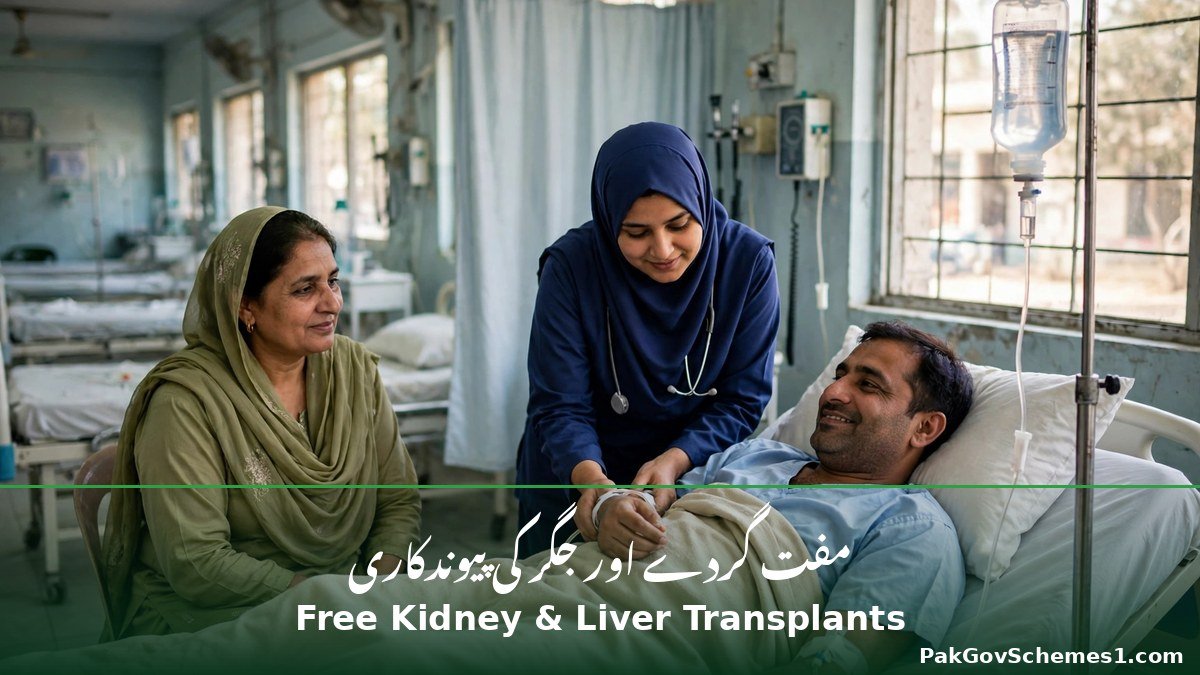
The CM Punjab Transplant Programme 2026 offers free organ transplants to deserving patients in Punjab, including kidney, liver, bone marrow and cornea transplants, as well as cochlear implants for children born deaf. Launched by Chief Minister Maryam Nawaz Sharif in February 2025, it is described as the most comprehensive transplant programme in Pakistan’s history. The government bears the cost of treatment at PHOTA-registered government and private hospitals. This guide explains who can benefit, how the hospital and PHOTA route works, what documents to carry, and what is still not officially announced — so you do not fall for fake agents or false promises.
Quick Overview
| Information | Details |
|---|---|
| Program Name | Chief Minister’s Special Initiative for Transplant Programme (CM Punjab Transplant Programme) |
| Responsible Department | Punjab Health Department; executed by the Punjab Health Initiative Management Company (PHIMC); registration through the Punjab Human Organ Transplantation Authority (PHOTA) |
| Program Purpose | Free organ transplants for deserving patients who cannot afford them |
| Procedures Covered | Kidney (renal), liver, bone marrow, cornea transplants and cochlear implants |
| Eligible Beneficiaries | Deserving patients in Punjab with documented medical need and PHOTA registration (see eligibility section — some details are reported, not officially published) |
| Assistance Amount | Government bears the transplant cost; no per-patient cost cap has been officially announced |
| Registration Status | Open through the hospital / PHOTA route; no online application portal has been officially announced |
| Registration Method | Register with PHOTA and seek treatment at a PHOTA-registered government or private hospital; toll-free helpline 09009 0800 (reported) |
| Required Documents | Valid CNIC, medical reports confirming organ failure, and hospital/PHOTA documents (exact list not officially published) |
| Official Website | No dedicated programme portal has been officially announced; PHIMC’s website is phimc.punjab.gov.pk (reported by third-party guides, not confirmed as the application channel) |
| Last Updated | 26 October 2026 (latest reported figures: PHIMC 120th board meeting, 14 October 2026) |
Latest Update — October 2026
At the 120th meeting of the PHIMC Board of Directors on 14 October 2026, chaired by Provincial Health Minister Khawaja Salman Rafique, officials reported that 2,912 transplant procedures have now been performed under the programme. The reported breakdown is 1,345 kidney transplants, 1,000 cochlear implants, 429 liver transplants, 70 bone marrow transplants and 68 cornea transplants. In early June 2026 the total stood at 1,956, so nearly 1,000 procedures were added in about four months, including 385 kidney and 114 liver transplants.
The same meeting reported that Punjab’s total free-treatment bill across all its specialised health programmes has reached more than Rs 36.5 billion, roughly double the Rs 18 billion reported in June 2026. Note carefully: Rs 36.5 billion is the combined bill for all the Chief Minister’s special health programmes — not the transplant programme alone. The minister also directed hospitals to further shorten waiting lists for transplants, cardiac care, dialysis, cancer and stroke treatment, though no new waiting-list figures were published.
These figures are reported by Business Recorder, The News and Lahore Times from the PHIMC board briefing, not published as a separate official PHIMC announcement we could verify directly. This article therefore dates them as reported in October 2026.
What Is the CM Punjab Transplant Programme?
Transplant surgery is one of the most expensive treatments in medicine. A liver or kidney transplant, a bone marrow transplant, a cornea transplant, or a cochlear implant for a deaf child can cost far more than an ordinary family can ever pay. Chief Minister Maryam Nawaz Sharif launched the programme in February 2025 with a simple promise, quoted at the launch: “Transplantation is a very complicated and expensive process, a common man cannot afford it, now the state will fulfil this duty.”
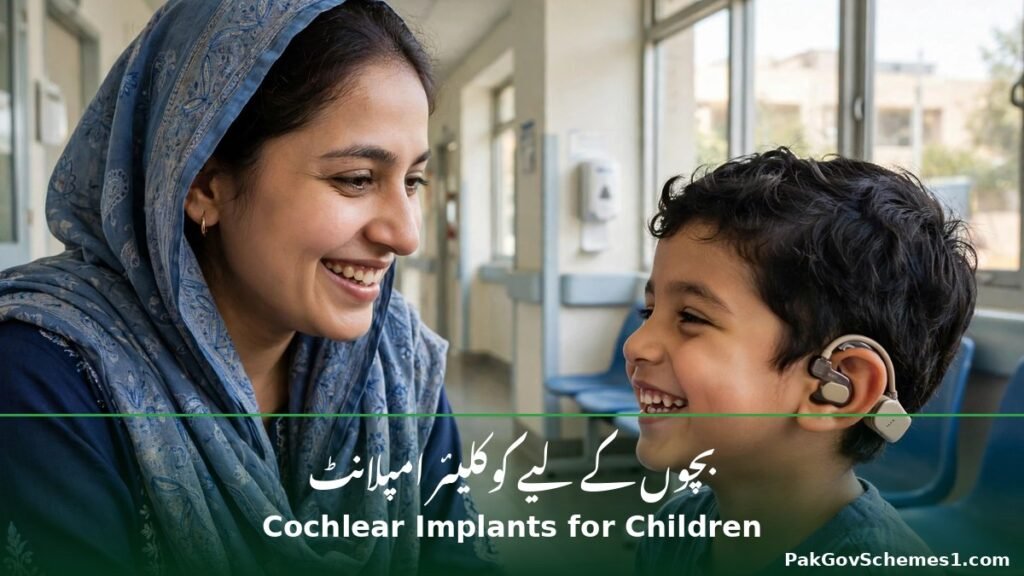
Under the programme, the Punjab government pays for the transplant at hospitals registered with PHOTA, the authority that regulates organ transplantation in the province. Both government and private hospitals take part. The programme covers five types of procedure: kidney, liver, bone marrow and cornea transplants, plus cochlear implants for children born with hearing loss. A cochlear implant restores hearing, and a successful cornea transplant can restore sight.
Eligibility Criteria
No single official eligibility notification for the transplant programme could be verified from an official source at the time of writing. The criteria below therefore combine what was stated at the February 2025 launch with what reputable and competitor sources report. Where a point is only reported, it is marked as such. Do not treat reported criteria as guaranteed rules — the treating hospital and PHOTA make the final decision in each case.
- Deserving patient: At the launch, the programme was described as being for deserving patients who cannot afford transplant surgery. The government bears the cost so that financial hardship does not block treatment.
- Punjab focus: The programme is a Punjab government initiative and the evidence available is Punjab-focused. This article does not claim that residents of other provinces are covered under this programme.
- Documented medical need: Reported sources state that applicants need documented proof of organ failure, confirmed by a certified medical specialist — for example, end-stage kidney disease, chronic liver failure, a blood disorder, corneal blindness, or severe hearing loss in a child.
- PHOTA registration (mandatory): Registration with the Punjab Human Organ Transplantation Authority is mandatory to benefit, according to the launch reports. No transplant under the programme happens outside the PHOTA system.
- Treatment at a PHOTA-registered hospital only: The transplant must be performed at a government or private hospital registered with PHOTA. Treatment at an unregistered hospital is not covered.
- Financial need: Reported sources describe financial need as part of eligibility — applicants should be unable to afford private treatment. No official income limit has been published.
- Age: Not officially announced. Competitor sources report a general 18–60 age range for adults, with children considered for specific treatments such as cochlear implants. Because cochlear implants are explicitly for children born deaf, children are clearly within the programme for that procedure. Treat any general age limit as reported only.
Medical suitability is decided by doctors, not by this article. A transplant also needs a suitable donor and organ match, and PHOTA’s ethical and medical rules apply. Being registered does not guarantee a transplant, and waiting times depend on medical urgency, donor availability and hospital capacity.
How to Apply: Step-by-Step Process (Hospital / PHOTA Route)
There is no officially announced online application form or portal for the transplant programme. Any website or agent claiming to offer an “online transplant application” for this programme is not following the officially described route. The process described at the launch and in subsequent reports is hospital-based:
- Call the toll-free helpline first (reported): Call 09009 0800 for information and guidance on registration. This number was announced at the February 2025 launch and repeated in later reports. Ask which PHOTA-registered hospital handles your type of transplant and what that hospital needs from you.
- Visit a PHOTA-registered hospital: Go to a government or private hospital registered with PHOTA that performs your required transplant. Take your CNIC and all existing medical reports. If you are already under treatment, your current doctor can guide you to the right hospital.
- Get registered with PHOTA: Complete PHOTA registration through the hospital route, as described at the launch. Registration is mandatory — it is the step that brings you into the programme.
- Undergo medical evaluation: Specialists at the hospital will examine you, review your reports and confirm whether a transplant is medically needed and suitable. Further tests may be required.
- Wait for approval and matching: Your case is assessed under PHOTA’s rules. If approved, you join the hospital’s waiting list for a suitable donor and organ. Waiting time is not officially announced and varies by procedure.
- Receive the transplant free of cost: Once matched and approved, the transplant is performed at the registered hospital and the government bears the cost under the programme.
- Follow up after surgery: Attend all follow-up appointments and follow your doctor’s instructions. Post-transplant care is part of recovery — do not skip check-ups even if you feel well.
If anyone asks you for money to get registered, to jump the waiting list, or to arrange a donor, stop and report it. Registration and treatment under a government programme are not sold by agents.

CNIC Check and Application Status
There is no officially announced online CNIC status-check portal or SMS code for the transplant programme. Do not trust websites or messages that claim you can check your transplant status by sending your CNIC to a number — no such official service has been verified.
To check your status, use the route you applied through: contact the hospital where you registered, or call the reported toll-free helpline 09009 0800. Keep your CNIC, hospital file number, and any registration slip safe, and quote them when you ask. If the hospital says your case is under evaluation, medical and PHOTA checks are still in progress — it is not a rejection.
Never share your CNIC copy, photographs, or medical reports with unknown people on WhatsApp or Facebook, and never post them in website comments. Genuine programme staff will not ask you to send sensitive documents to a personal mobile number.

Procedures Covered and Reported Numbers
The table below lists the five procedures covered, with the reported October 2026 totals from the PHIMC board briefing. These totals are reported figures, not an official PHIMC publication, and they describe procedures performed so far under the programme.
| Procedure | Who It Helps (general) | Reported Procedures (Oct 2026) |
|---|---|---|
| Kidney (renal) transplant | Patients with end-stage kidney disease, including those on dialysis | 1,345 |
| Cochlear implant | Children born deaf or with severe hearing loss | 1,000 |
| Liver transplant | Patients with chronic liver failure or cirrhosis | 429 |
| Bone marrow transplant | Patients with blood disorders such as leukaemia and thalassaemia | 70 |
| Cornea transplant | Patients who have lost vision due to corneal damage | 68 |
| Total | 2,912 |
For comparison, an earlier reported briefing put the total at 2,628 procedures, and in early June 2026 it stood at 1,956. The rise shows the programme is active, but it does not mean every applicant is treated immediately — demand for organs far exceeds supply, and waiting lists remain part of the system.

Required Documents
No official document checklist for the transplant programme has been published. The following is practical guidance based on what hospitals and PHOTA registration normally require. The hospital you visit may ask for additional documents, so confirm the exact list on the helpline or at the hospital before you travel.
- Valid CNIC of the patient (and guardian’s CNIC for a child patient).
- All medical reports confirming the diagnosis and organ failure, including recent test results.
- Current treatment record, dialysis record if applicable, and prescriptions.
- Proof of Punjab residence, if the hospital asks for it.
- Previous hospital discharge summaries or referral letters, if any.
- Passport-size photographs, if the hospital’s registration form requires them.
- Donor-related documents, where applicable, as required by PHOTA’s rules — the hospital will explain these; never arrange a donor through an agent.
Carry original documents plus photocopies, and keep a complete set at home. Incomplete or mismatched documents are one of the most common causes of delay.
Troubleshooting: Common Problems
- Hospital says it is not registered: Only PHOTA-registered hospitals can treat patients under the programme. Ask the helpline (09009 0800, reported) which registered hospital handles your procedure, and go there instead.
- Registration delayed or documents returned: Ask exactly which document is missing or incorrect, get it corrected, and re-submit. Keep copies of everything you submit.
- Long waiting time: Transplants depend on donor availability and medical matching, not only on registration. Stay in regular contact with your hospital, attend all appointments, and keep your medical condition updated with your doctor.
- Helpline not answering: Try again during working hours, or visit the hospital directly. Do not pay any person who claims they can get the helpline to answer for you.
- Someone demands payment for registration or a donor: This is not part of the programme. Refuse, keep any messages as evidence, and report the person to the hospital and the police helpline. Organ trade is illegal in Pakistan.
- Confused by conflicting information online: Ignore blogs that promise guaranteed approval or quote an online form. The verified route is the hospital and PHOTA route described above; anything else is not officially announced.
Official Helpline and Complaints
The toll-free helpline reported at the programme’s launch is 09009 0800, for information and assistance, and later reports describe it as the number for registrations and inquiries. If you meet an agent demanding money, or a hospital refusing to explain your case, first raise it with the hospital’s administration, and keep a written record of dates, names and what was said. Serious complaints about illegal organ trade or fraud should be reported to the police.
Note: some third-party blogs print the number in a different order (0800-09009). The launch reports from The News and The Express Tribune give 09009 0800, which is the version used here. If the number does not connect, visit a PHOTA-registered hospital directly rather than trusting a different number from an unverified blog.
Not the Same as Other Programmes
Readers sometimes confuse the transplant programme with other Punjab health schemes. They are different programmes with different rules:

- Not the CM Health Card / Sehat Sahulat-style card scheme: Those schemes cover general hospital treatment through a card. The transplant programme is a separate initiative specifically for organ transplants and cochlear implants, run through PHOTA-registered hospitals.
- Not a cash payment scheme: The transplant programme does not pay cash to patients. The government pays the hospital for the transplant. If someone offers you a “transplant cash payment” or a “transplant card with money”, that is not this programme.
- Not a donor-matching website: Donor matching happens through hospitals and PHOTA’s medical system, not through social media groups or paid agents. Do not pay anyone to “find a donor” for you.
If a scheme’s name sounds similar but its process is different — especially if it asks for an online form or a fee — check whether it is this programme before you act.
Common Mistakes to Avoid
- Trusting an “online application form” or app that is not officially announced — the route is hospital-based.
- Paying an agent for registration, a donor, or a place on the waiting list.
- Going to an unregistered hospital and expecting the programme to pay.
- Sending your CNIC copy or medical reports to unknown WhatsApp numbers or Facebook pages.
- Believing a message that says your transplant is “approved” before a hospital has evaluated you.
- Skipping follow-up appointments after surgery.
- Assuming registration guarantees a transplant — donor availability and medical matching decide the timing.
Frequently Asked Questions
Is the transplant really free under this programme?
Yes, according to the programme’s launch announcement. The Punjab government bears the transplant cost at PHOTA-registered hospitals for deserving patients. You should not be asked to pay for the transplant itself. Routine personal expenses, such as travel to the hospital, are your own.
Who can apply for a free transplant in Punjab?
Deserving patients in Punjab with documented medical need who cannot afford transplant surgery, subject to PHOTA registration and treatment at a PHOTA-registered hospital. The final decision is medical and is made by the hospital and PHOTA, not by this article.
How do I register for the CM Punjab Transplant Programme?
There is no officially announced online form. The reported route is to call the toll-free helpline 09009 0800 for guidance, visit a PHOTA-registered hospital, and complete PHOTA registration through the hospital.
Is there an online application portal?
No. No dedicated programme portal has been officially announced. PHIMC’s website is phimc.punjab.gov.pk, but it is not a transplant application portal. Any other site claiming to be the programme’s application portal should be treated as unverified.
What documents are needed?
A valid CNIC, medical reports confirming organ failure, current treatment records, and hospital/PHOTA documents. The exact checklist has not been officially published, so confirm it with the hospital or helpline before travelling.
Which transplants are covered?
Kidney (renal), liver, bone marrow and cornea transplants, plus cochlear implants for children born deaf or with severe hearing loss.

How many transplants have been done so far?
According to the reported PHIMC board briefing of October 2026, 2,912 procedures in total: 1,345 kidney, 1,000 cochlear implants, 429 liver, 70 bone marrow and 68 cornea.
Is there an age limit?
No official age limit has been announced. Some competitor sources report a general 18–60 range for adults, with children considered for treatments such as cochlear implants. Treat any age limit as reported only.
Can patients from other provinces apply?
This is a Punjab government programme and the available evidence is Punjab-focused. This article does not claim coverage for residents of other provinces. If you live outside Punjab, ask the helpline or a PHOTA-registered hospital before travelling.
What is the helpline number?
The toll-free number reported at the launch is 09009 0800. Some blogs print it in a different order (0800-09009); the launch reports give 09009 0800, which is the version used in this article.

Important Safety Notice
Transplant patients and their families are prime targets for fraud because treatment is urgent and expensive. Never pay an agent for registration, a donor, or a waiting-list place. Never share your CNIC copy or medical reports with unknown people online. Never trust a message that claims your transplant is approved or that you must pay a “processing fee” to release it. Organ trade is illegal in Pakistan. If you are unsure about any message or person, stop, and check with the hospital or the reported helpline 09009 0800 before you act.
Conclusion
The CM Punjab Transplant Programme 2026 is a genuinely important initiative: it promises free kidney, liver, bone marrow and cornea transplants and cochlear implants for deserving patients who could never afford them. The reported figures — 2,912 procedures by October 2026 — show it is active and growing. But the programme is also less clearly documented than other schemes: there is no online portal, no published eligibility notification, and no official document checklist. That makes the hospital and PHOTA route, and the reported helpline 09009 0800, the only safe path. If you or a loved one needs a transplant, start with a PHOTA-registered hospital, keep your documents ready, and never pay an agent. The treatment is free — anyone charging for it is not part of the programme.
Official Sources
- The News — “CM Maryam launches free organ transplant programme” (February 2025)
- The Express Tribune — “Punjab govt launches free organ transplant programme” (February 2025)
- Business Recorder — “PHIMC board: Punjab’s free treatment bill crosses Rs 1 trillion mark” (October 2026)
- phimc.punjab.gov.pk — Punjab Health Initiative Management Company (programme executor)
- Lahore Times — PHIMC 120th board meeting report (October 2026)
- phota.punjab.gov.pk — Punjab Human Organ Transplantation Authority (registration authority)
Disclaimer: This article is for information only and is not medical or legal advice. Programme details, eligibility and helpline numbers are based on launch reports and the reported October 2026 PHIMC board briefing; no official eligibility notification or document checklist has been published. Always confirm the latest position with a PHOTA-registered hospital or the reported helpline before acting. Figures and procedures are reported totals, not an official PHIMC publication.

