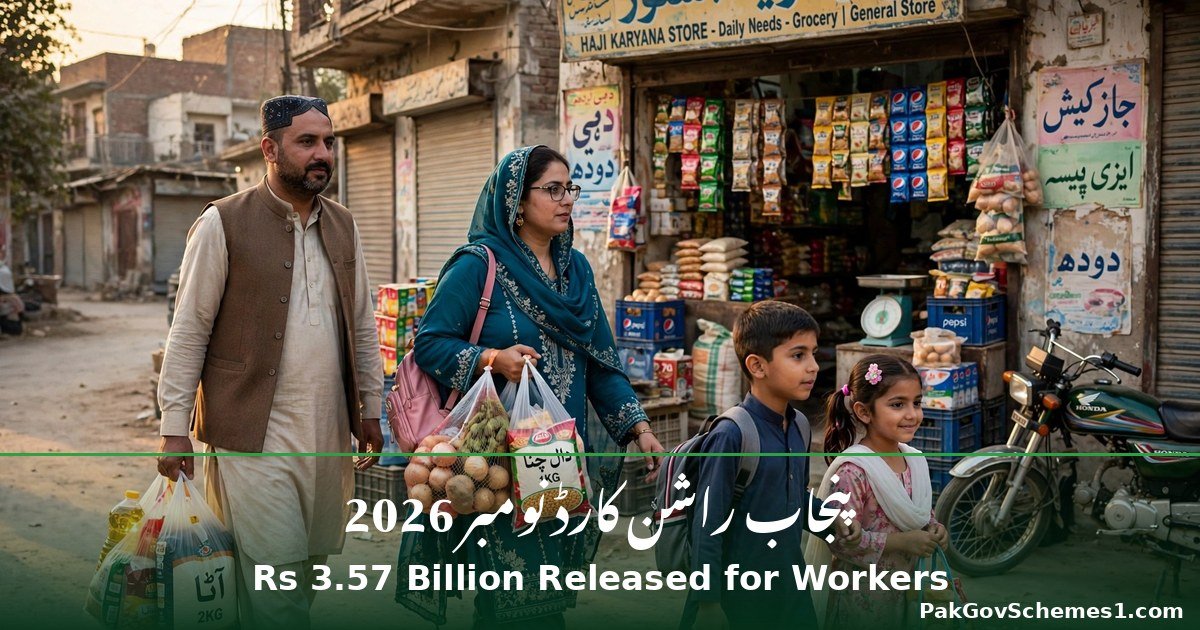
The Punjab government has released Rs 3.57 billion as the November 2026 instalment under the Maryam Nawaz Ration Card scheme, giving more than 1.2 million registered workers a Rs 3,000 monthly grocery subsidy. The money is loaded onto a digital smart card and can be spent on flour, rice, sugar, ghee or cooking oil and pulses at registered karyana shops and utility stores across Punjab. This guide explains who gets the November payment, how the card works, how workers join the scheme, and the two confusions — a “Rs 10,000 payment” and a “public application form” — that you should not fall for.
Quick Overview: Punjab Ration Card November 2026 Instalment
| Information | Details |
|---|---|
| Scheme name | Maryam Nawaz Ration Card (Punjab Ration Card) |
| Run by | Punjab Employees Social Security Institution (PESSI), under the Labour and Social Security Department, Government of Punjab |
| November 2026 instalment | Rs 3.57 billion released (reported 15–16 November 2026) |
| Monthly subsidy | Rs 3,000 per eligible worker |
| Workers covered | More than 1.2 million registered workers |
| Launched | 30 April 2025 |
| Where it can be spent | Registered karyana shops and utility stores across Punjab (about 62,000, per a July 2026 government briefing; PESSI’s own page lists 28,000 — see the note below) |
| What it buys | Flour, rice, sugar, ghee/cooking oil, pulses |
| Scheme budget FY 2026-27 | Rs 43.2 billion approved in July 2026 |
| Total disbursed so far | Rs 28 billion distributed by July 2026 (Chief Minister’s review meeting, 27 July 2026) |
| New-worker enrolment | No public application form — workers join through employer and PESSI registration |
| Exact credit date for November | Not officially announced |
| Last updated | 23 November 2026 |
Latest Update: Rs 3.57 Billion Released for November 2026
The Punjab government released Rs 3.57 billion as the November 2026 instalment of the Maryam Nawaz Ration Card scheme, according to reports published on 15–16 November 2026 (UrduPoint and APP on 15 November; The Nation on 16 November). The instalment covers more than 1.2 million registered workers, each receiving the standard Rs 3,000 monthly grocery subsidy on their digital smart card.
One detail has not been announced: the exact date on which the November Rs 3,000 reaches individual cards. The release of funds to the scheme and the crediting of individual cards are two different steps, and the government has not published a card-by-card credit date. Workers should check their card balance at a registered shop rather than relying on a date circulating on social media. If your card has not been credited a few days after the release, contact PESSI or your employer — do not pay anyone who offers to “activate” the payment.
What Is the Punjab Ration Card?
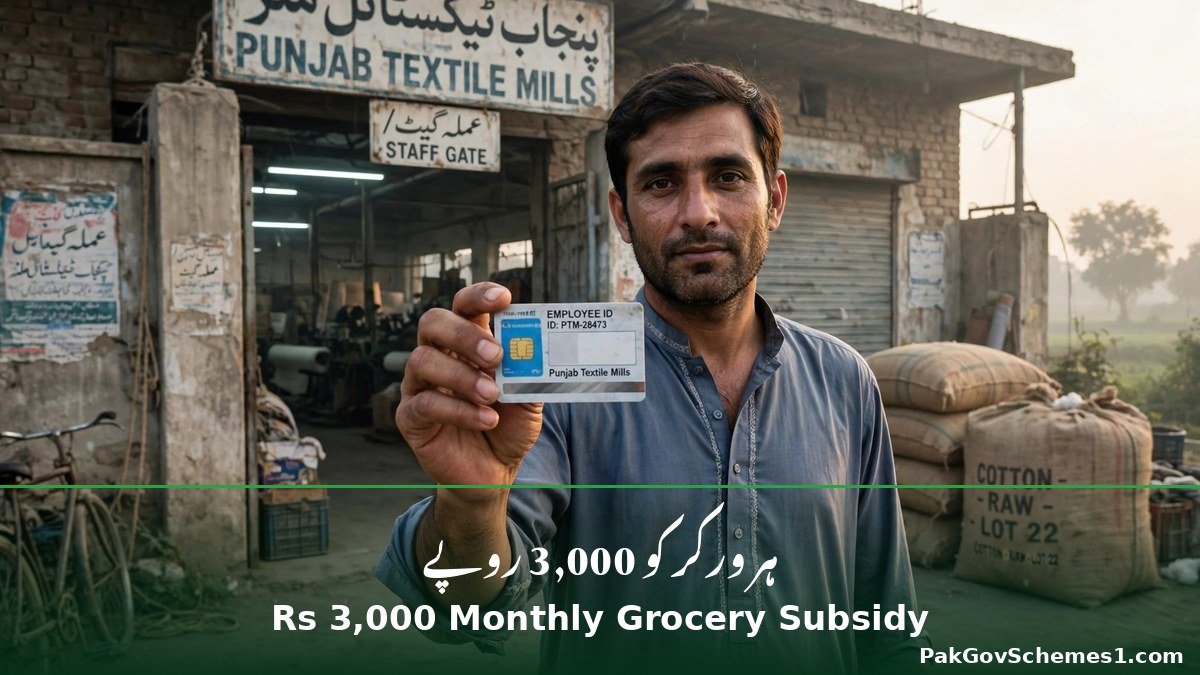
The Maryam Nawaz Ration Card is a grocery subsidy scheme for registered workers in Punjab. It was launched on 30 April 2025 by the Punjab government and is run by PESSI, the Punjab Employees Social Security Institution, under the Labour and Social Security Department. It covers PESSI-registered workers and miners, including workers of the Suthra Punjab programme, whose employment is registered with the social security system.
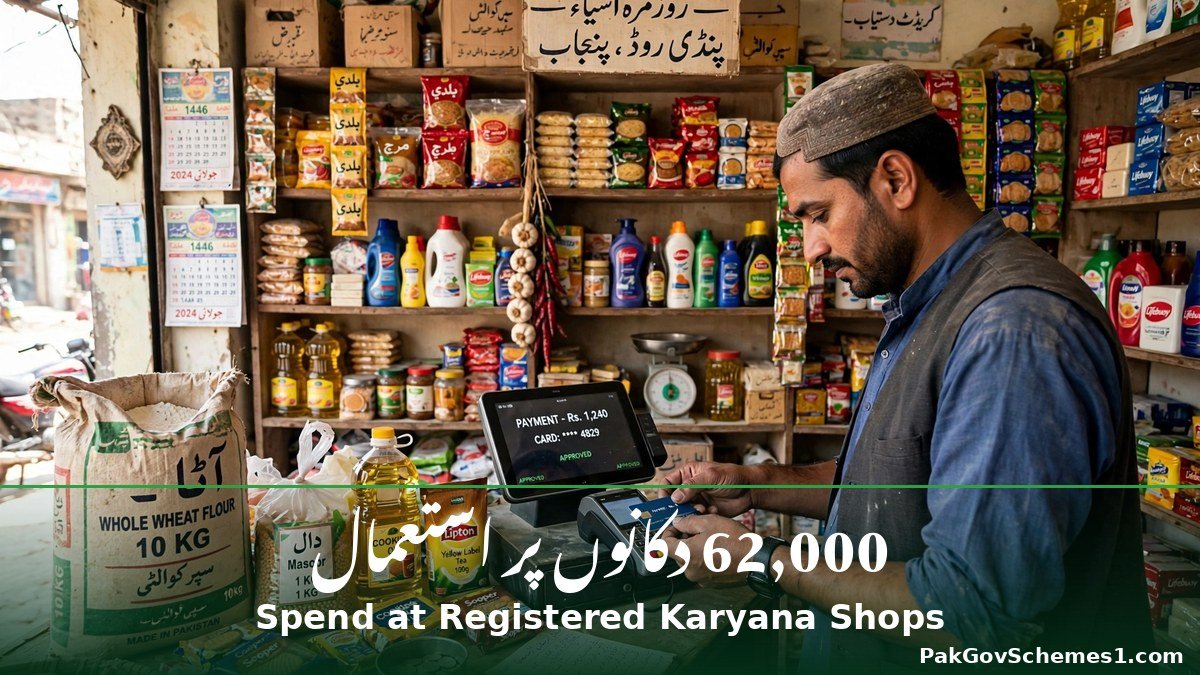
Each eligible worker receives Rs 3,000 a month, loaded onto a digital smart card. The card works like a payment card at registered karyana shops and utility stores: the worker buys essential groceries — flour, rice, sugar, ghee or cooking oil, and pulses — and the Rs 3,000 is deducted from the card balance. The card cannot be used to withdraw cash, and it cannot be used at shops that are not registered with the programme.
The scale of the scheme is large. As of July 2026, 1,244,130 cards had been issued to 1,403,063 registered workers, according to The Nation on 28 July 2026, and about 62,000 shops across Punjab take part, according to the same July 2026 government briefing — although PESSI’s own programme page lists 28,000 shops, so the exact current number of participating shops is not settled. The Punjab government approved Rs 43.2 billion in July 2026 to run the scheme in the financial year 2026-27, and Rs 28 billion had already been distributed to 1.2 million registered workers by that date.
Who Gets the Rs 3,000? Eligibility
The card is for PESSI-registered workers only. That is the single most important eligibility fact, because most of the confusion about the scheme comes from people who are not registered workers applying for it.
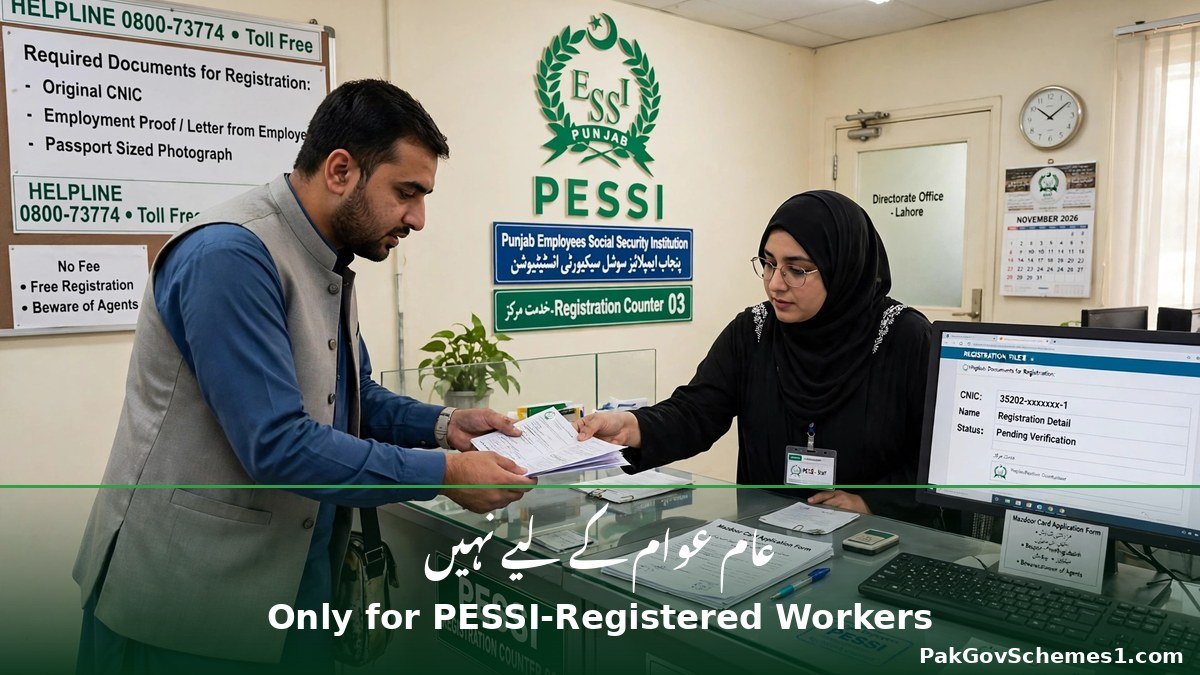
Registered industrial and factory workers whose employers have registered them with PESSI. Miners registered under the same system. Suthra Punjab workers and other workers whose employment is registered with PESSI. Workers join the scheme through their employer and PESSI registration — there is no public application form, no walk-in registration for the general public, and no online form for unregistered citizens.
The card is not open to the general public. A daily-wage labourer, a shopkeeper, a farmer or a housewife who is not a PESSI-registered worker cannot get this card. If you are a worker and your employer has not registered you with PESSI, ask your employer to complete the registration — that is the only route in. Our Punjab Ration Card apply guide explains the registration route in detail.

How to Use the Ration Card: Step by Step
- Check your balance. Before shopping, confirm that the November Rs 3,000 has been credited to your card. The exact credit date for November has not been announced, so check at a registered shop.
- Go to a registered shop. Use one of the registered karyana shops or utility stores in Punjab. Unregistered shops cannot accept the card.
- Buy eligible groceries. The subsidy covers flour, rice, sugar, ghee or cooking oil, and pulses. It does not cover other grocery items, and it cannot be converted into cash.
- Pay with the card. Present the card at the shop. The amount is deducted from your Rs 3,000 balance. Keep the receipt showing the deduction.
- Use the balance within the month. The subsidy is a monthly amount. Check with PESSI or the shop whether an unspent balance carries forward, because the scheme’s rules on carry-forward have not been published in the sources checked.
- Report problems to PESSI. If a shop refuses the card, overcharges, or deducts more than the bill, note the shop’s name and report it to PESSI or the Labour Department. Keep your receipt as proof.
How to Check Your Ration Card Balance and Status
There is no public status-check portal announced for the ration card. The PSER portal and the SMS number 8070, which many guides mention, belong to the separate Nigehban Ramzan Package — do not use them for the ration card, and do not confuse the two schemes. The practical way to check your ration card balance is at a registered karyana shop or utility store, where the shop’s terminal shows the balance when the card is presented.

If your card shows no balance. First, check whether the November instalment has been credited — the release was reported on 15–16 November, but individual crediting takes time. If the balance is still zero after a few days, ask your employer whether your PESSI registration is active, and contact PESSI with your card number. Do not pay anyone to check or “activate” your card. Balance checks at registered shops are part of the scheme, and no agent is needed.
The Rs 10,000 Confusion: Ramazan Is Not the Monthly Amount
Many social media posts claim ration card holders receive Rs 10,000. That figure belongs to a different scheme. During Ramazan 2026, cardholders received Rs 10,000 instead of Rs 3,000 as a one-time increase under the Nigehban Ramzan Package. The regular monthly amount is Rs 3,000, and the Ramazan increase does not apply in November 2026.
The Nigehban Ramzan Package is a separate, once-a-year programme. Its 2026 cycle is over, and the next cycle is expected in early 2027, before Ramazan. Posts that promise “Rs 10,000 ration card payment in November” are mixing up the two schemes. The November instalment reported here is Rs 3,000 per worker, funded by the Rs 3.57 billion release.
Required Documents
There is no public application form for the ration card, so there is no public document list either. Workers join through employer and PESSI registration, which normally requires:
- Valid CNIC of the worker.
- PESSI registration through the employer, with the worker’s employment record.
- Registered mobile number for scheme messages.
If you are a registered worker and have not received a card, ask your employer first — the employer is responsible for the PESSI registration that triggers card issuance. As of July 2026, cards had been issued to 1,244,130 of 1,403,063 registered workers, so a minority of registered workers were still waiting for cards at that time. If you are in that group, follow up with your employer and PESSI rather than applying anywhere else.
Troubleshooting: Problems Workers May Face
Card not credited for November. The release was reported on 15–16 November, but individual crediting takes time. Wait a few days, check the balance at a registered shop, then contact PESSI with your card number.
Shop refuses the card. Only registered karyana shops and utility stores can accept it. If a registered shop refuses, note its name and report it to PESSI. If the shop is not registered, use a registered one instead.

Shop overcharges or deducts extra. Keep the receipt, note the amount, and report the shop to PESSI or the Labour Department. Deductions beyond the bill are not allowed.
You are a worker but have no card. Ask your employer whether your PESSI registration is complete. Cards are issued on the basis of that registration, and the employer is the first point of contact.
Someone offers to get you a card for a fee. It is a scam. There is no public application, no agent route, and no fee for joining. Report the person to PESSI or the police.
Confusion with the Nigehban Ramzan Package. The PSER portal and SMS 8070 belong to the Ramazan package, not the ration card. Do not send your details there for ration card matters.
Official Helpline and Complaint Procedure
Our Punjab Ration Card apply guide lists the scheme’s helplines as 1105 (ration card line) and 0800-73774 (PESSI toll-free). Use those numbers for questions about your card, balance or registration, and for complaints about a shop. When complaining about a shop — refusal, overcharging or wrong deductions — keep the receipt and give the shop’s name and location. For fraud, including agents charging a fee for a card, report to the police or the FIA Cybercrime Wing (helpline 1991) if the fraud happened online. If the helplines above do not connect, contact PESSI directly or visit your nearest PESSI office with your card.
Common Mistakes to Avoid
Applying as a member of the public. The card is only for PESSI-registered workers. General-public applications do not exist, and agents who promise one are fraudsters.
Expecting Rs 10,000. The monthly amount is Rs 3,000. The Rs 10,000 figure was a one-time Ramazan increase, not the regular payment.
Using the PSER portal or SMS 8070 for the ration card. Those belong to the Nigehban Ramzan Package, a separate scheme. They will not show your ration card balance.
Paying an agent. There is no fee to join, no fee to check your balance, and no agent route. Anyone charging money is running a scam.

Shopping at unregistered shops. The card works only at registered karyana shops and utility stores. Unregistered shops cannot accept it.
Believing the issuing-bank rumours. Guides disagree on whether the card is issued by the Bank of Punjab or JS Bank (Zindigi). Neither has been confirmed as the issuing bank, so do not rely on either claim.
Confusing the release with the credit date. The Rs 3.57 billion release was reported on 15–16 November, but the date the money reaches individual cards has not been announced. Check your balance rather than trusting a date on social media.

Frequently Asked Questions
How much is the Punjab Ration Card November 2026 payment?
Rs 3,000 per eligible worker. The Punjab government released Rs 3.57 billion as the November 2026 instalment, reported on 15–16 November 2026, covering more than 1.2 million PESSI-registered workers across Punjab. The exact date the money reaches individual cards has not been announced.
Who gets the Punjab Ration Card?
PESSI-registered workers and miners in Punjab, including Suthra Punjab workers whose employment is registered with PESSI. The card is not open to the general public — workers join through their employer and PESSI registration, and there is no public application form for unregistered citizens.
How can I apply for the Punjab Ration Card?
There is no public application form. Workers join through their employer’s PESSI registration, which is the only route into the scheme. If you are a worker and your employer has not registered you with PESSI, ask your employer to complete the registration so that a card can be issued to you.
Where can I spend the ration card?
At registered karyana shops and utility stores across Punjab — about 62,000 according to a July 2026 government briefing, although PESSI’s own page lists 28,000. The card buys flour, rice, sugar, ghee or cooking oil, and pulses. It cannot be used to withdraw cash or at unregistered shops.
When will the November Rs 3,000 be credited to my card?
The exact credit date for individual cards has not been officially announced. The Rs 3.57 billion release was reported on 15–16 November 2026. Check your balance at a registered shop, and contact PESSI if it has not arrived after a few days.
How do I check my ration card balance?
At a registered karyana shop or utility store, where the terminal shows the balance when the card is presented. There is no public status-check portal for the ration card — the PSER portal and SMS 8070 belong to the separate Nigehban Ramzan Package.
Is the ration card payment Rs 10,000?
No. The regular monthly amount is Rs 3,000. The Rs 10,000 figure was a one-time increase during Ramazan 2026 under the Nigehban Ramzan Package, a separate once-a-year scheme. Its 2026 cycle is over, and the next cycle is expected in early 2027, before Ramazan.
How many workers have received the ration card?
As of July 2026, 1,244,130 cards had been issued to 1,403,063 registered workers, according to The Nation on 28 July 2026, and 4,984 more cards were being printed. More than 1.2 million workers benefit from the November 2026 instalment of Rs 3,000 each.

Which bank issues the Punjab Ration Card?
That has not been confirmed. Guides disagree between the Bank of Punjab and JS Bank (Zindigi) as the issuing bank, and neither claim comes from an official announcement. Do not treat either as confirmed until PESSI or the Punjab government announces it.
What should I do if a shop overcharges me?
Keep the receipt, note the shop’s name and location, and report it to PESSI or the Labour and Social Security Department. Shops that overcharge or deduct extra can lose their registration, so your complaint matters — but keep the receipt as proof, because the department needs those details to act.
Important Safety Notice
Use your ration card only at registered karyana shops and utility stores, keep your receipts, and never pay anyone to get a card, check a balance or “activate” a payment. There is no public application form and no fee for the scheme. PakGovSchemes1.com is an independent informational website and is not affiliated with any government department. Information here is compiled from available announcements and other identified sources and may change — always verify eligibility, payments and deadlines through the relevant official government website before taking action.
Conclusion
The Punjab government has released Rs 3.57 billion for the November 2026 instalment of the Maryam Nawaz Ration Card, giving more than 1.2 million PESSI-registered workers their regular Rs 3,000 grocery subsidy on a digital smart card. The card buys flour, rice, sugar, ghee and pulses at about 62,000 registered shops — but it is only for registered workers, the exact credit date has not been announced, and the Rs 10,000 figure on social media belongs to the separate Ramazan package. Workers should check their balance at a registered shop, keep their receipts, and report any overcharging to PESSI.
Sources
- The Nation, “Punjab releases Rs3.57b Maryam Nawaz Ration Card scheme”, 16 November 2026 — nation.com.pk — Rs 3.57 billion released as the November 2026 instalment, 1.2 million-plus workers, Rs 3,000 per worker.
- UrduPoint, “Punjab releases Rs3.57 billion under Maryam Nawaz Ration Card scheme”, 15 November 2026 — urdupoint.com — release reported 15 November 2026, via APP.
- The Nation, “CM approves expansion of Ration Card Programme”, 28 July 2026 — nation.com.pk — Rs 43.2 billion approved for FY 2026-27, Rs 28 billion already distributed to 1.2 million workers, 1,403,063 registered workers, 1,244,130 cards issued, 4,984 more being printed.
- 24NewsHD, “Rs43b more to be distributed under Maryam Nawaz Rashan Card Scheme”, 27 July 2026 — 24newshd.tv — Chief Minister’s review meeting of 27 July 2026, same figures, about 62,000 shops.
- PakGovSchemes1.com, “Punjab Ration Card 2026 – Rs 3,000/Month for Workers” — pakgovschemes1.com — our own apply guide: helplines 1105 and 0800-73774, and the note that PESSI’s own page lists 28,000 shops against the July 2026 briefing figure of 62,000.
- Suno News, “Punjab Ration Card November payment begins: here’s how to claim yours” — english.sunonews.tv — November payment details, Rs 3,000 monthly subsidy, registered shops.
- PESSI (Punjab Employees Social Security Institution), Labour and Social Security Department, Government of Punjab — scheme operator; no separate ration card helpline announced.
Disclaimer: PakGovSchemes1.com is an independent informational website and is not affiliated with any government department. Information is compiled from available official announcements and other identified sources and may change. Please verify eligibility, registration status, payment details, and deadlines through the relevant official government website before taking action.

