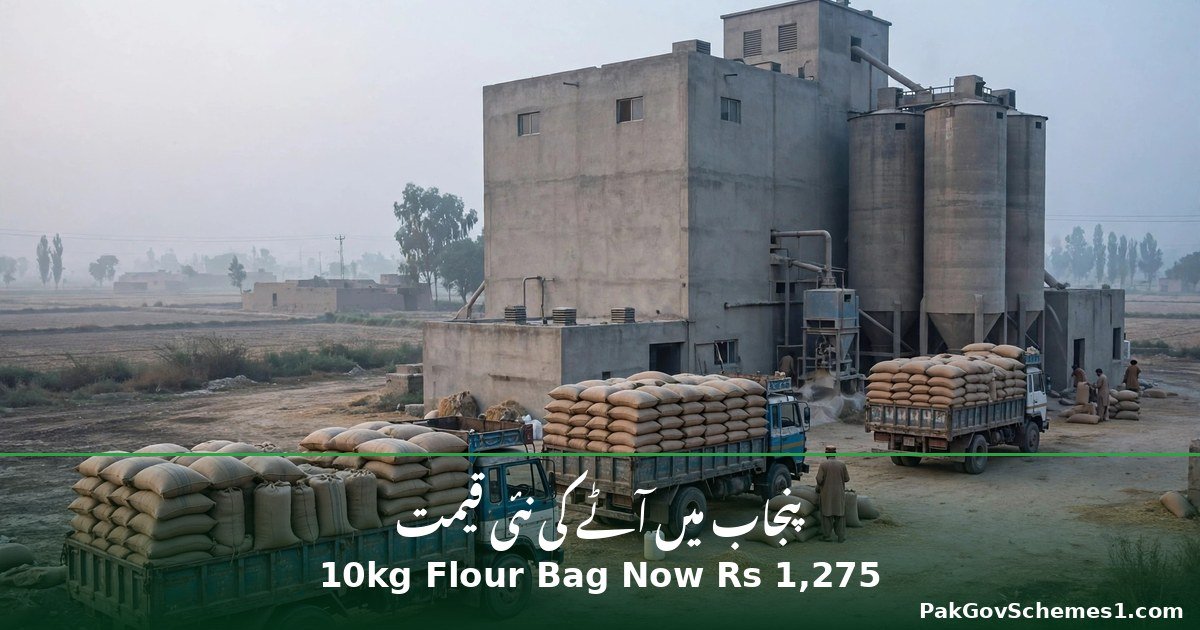
The Punjab government has notified the Punjab Wheat Release and Flour Distribution Order 2026, fixing the release price of government wheat at Rs 4,500 per 40kg for flour mills and the retail price of a 10kg bag of flour at Rs 1,275. The order replaces the previous pricing order of 19 October 2026, raises the wheat price by Rs 700 per maund and the flour price by Rs 175 per bag, and introduces daily digital monitoring of flour mills through the Food Department Inventory Management System (FDIMS). This guide explains the new prices, who gets government wheat, how district quotas work, the penalties for violations, and what the order means for ordinary buyers.
Quick Overview: Punjab Wheat Release and Flour Distribution Order 2026
| Information | Details |
|---|---|
| Order name | Punjab Wheat Release and Flour Distribution Order 2026 |
| Issued by | Food Safety and Consumer Protection Department, Government of Punjab, on approval of the provincial cabinet |
| Order dated | 20 November 2026 (The News); notification issued Friday 20 November 2026 |
| In force from | Weekend of 21–22 November 2026 (reports differ — see below) |
| Government wheat price | Rs 4,500 per 40kg (Rs 112.50 per kg), up from Rs 3,800 |
| Flour price (10kg bag) | Rs 1,275 (Rs 127.50 per kg), up from Rs 1,100 |
| Supplied to | Approved operational flour mills with valid foodgrains licences, and licensed or registered atta chakkis |
| Extraction ratio | 70% flour, 18% fine flour, 12% bran |
| Monitoring | Daily reporting through FDIMS; inspections by food officials |
| Daily release quota | Increased to 6,000 tonnes a day for flour mills (Food Minister, 18 November 2026) |
| Replaces | Previous wheat pricing order of 19 October 2026 |
| Last updated | 23 November 2026 |
Latest Update: Order Notified, Prices in Force
The Punjab Wheat Release and Flour Distribution Order 2026 was dated 20 November 2026 and notified by the Secretary of the Food Safety and Consumer Protection Department on Friday, after approval by the provincial cabinet. Dawn reported the notification on 21 November 2026, The News reported the same day that flour prices had gone up by 18 per cent, and The Nation and Business Recorder reported the order coming into effect over the weekend.
Reports differ slightly on the exact day the order took effect: Business Recorder reported on 21 November that it would come into effect that day, while The Nation reported on 22 November that it would come into effect on Sunday 22 November. Either way, the order is in force now, and the new prices — Rs 4,500 per 40kg of government wheat and Rs 1,275 for a 10kg flour bag — are the official prices. The order replaces the previous pricing order issued on 19 October 2026, under which wheat was Rs 3,800 per 40kg and a 10kg flour bag was Rs 1,100.
The order comes after an agreement between the Food Safety and Consumer Protection Department and the Pakistan Flour Mills Association on outstanding issues. Punjab Food Minister Salma Butt said on 18 November 2026 that the daily government wheat release quota for flour mills had been increased to 6,000 tonnes to ensure adequate supply and maintain market stability.
The New Prices: Wheat and Flour
| Item | Old price | New price | Change |
|---|---|---|---|
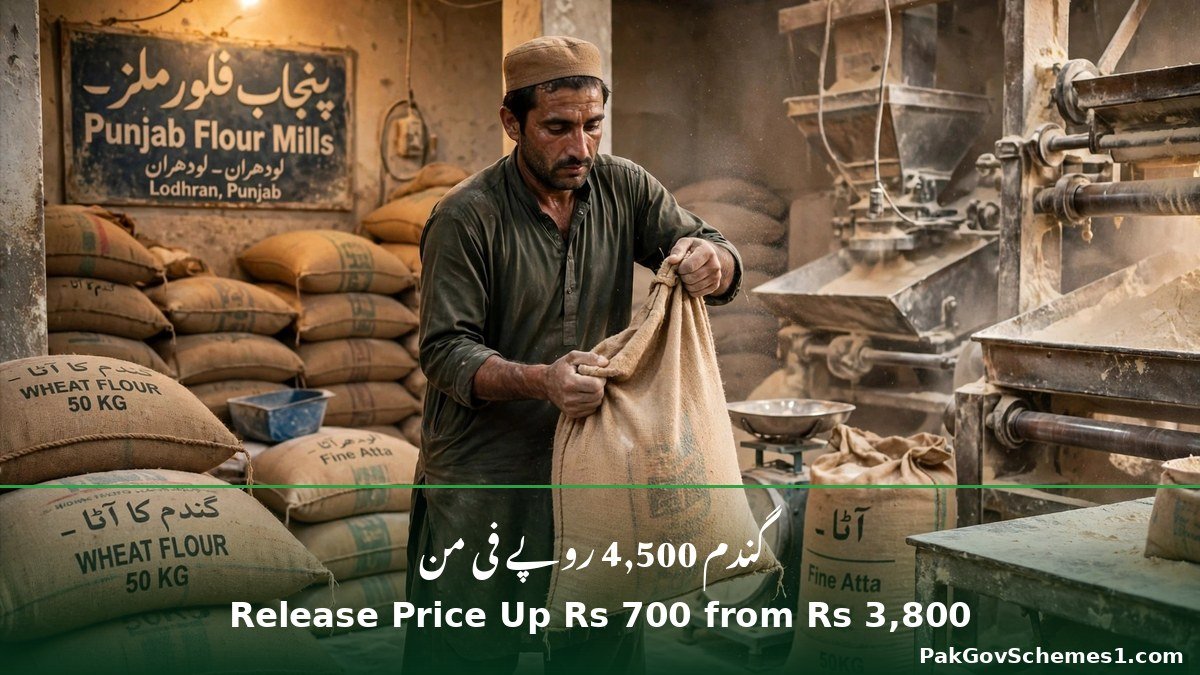
| Government wheat (per 40kg / maund) | Rs 3,800 | Rs 4,500 | Up Rs 700 |
| Government wheat (per kg) | Rs 95 | Rs 112.50 | Up Rs 17.50 |
| Flour, 10kg bag | Rs 1,100 | Rs 1,275 | Up Rs 175 (about 18%) |
| Flour (per kg) | Rs 110 | Rs 127.50 | Up Rs 17.50 |
Two points need to be understood clearly. First, Rs 4,500 per 40kg is the release price — the price at which the government supplies wheat to flour mills. It is not a new farm-gate support price for growers. The indicative wheat support price of Rs 4,500 per maund for farmers was already set on 23 October 2026 and is covered in our Punjab wheat support programme guide; the same figure appearing in both places is a coincidence of timing, not a single price. Second, the Rs 1,275 price applies to a 10kg bag of flour made from government wheat. Flour milled from privately purchased wheat is not covered by this fixed price, although mills may process private wheat alongside government wheat under the order’s conditions.
Who Gets Government Wheat?
Government wheat under the order is supplied only to approved, operational flour mills holding valid foodgrains licences, and to licensed or registered atta chakkis. Mills must enter into agreements with their District Food Controller, and wheat is released only against advance or pre-deposited payment into designated bank accounts, after the District Food Controller verifies the bank receipts.
District Food Controllers allocate wheat to mills and chakkis according to standard operating procedures issued by the Directorate General of Food (DGF) and the Cane Commissioner, Punjab. District-wise quotas are set on the basis of population and demand, and transfers are allowed from surplus districts to deficit districts so that no district runs out while another holds extra stock.
Supplies come through PASSCO, aggregators and imported wheat, under a mix-and-match mechanism. Mills with outstanding government dues will receive no further allocations until their dues are cleared. This is meant to stop the pattern of mills taking subsidised wheat while owing the government money.

Digital Monitoring: Daily Reporting Through FDIMS
The order makes digital monitoring and daily reporting mandatory, which is its main change from the old system. Flour mills must report their daily operations through the Food Department Inventory Management System (FDIMS), and food officials may inspect mills and chakkis at any time. Daily verification of flour-sale proceeds is also mandatory.
The aim is transparency in the supply chain: the department wants to know how much wheat each mill received, how much flour it produced, and where that flour was sold. Under-reporting, hoarding, or selling above the fixed price are the behaviours the monitoring is designed to catch. The order also prescribes a milling extraction ratio of 70:18:12 — from every 100kg of government wheat, a mill must produce 70kg of flour, 18kg of fine flour and 12kg of bran. Under-milling — producing less flour than the ratio requires — triggers financial recoveries against the mill.

Penalties for Violations
The order sets out clear penalties, and the government has said they will be enforced:
- Under-milling: financial recoveries against the mill for producing less flour than the prescribed extraction ratio.
- Hoarding wheat or milling less than the allocated quota: severe penalties, including licence action.
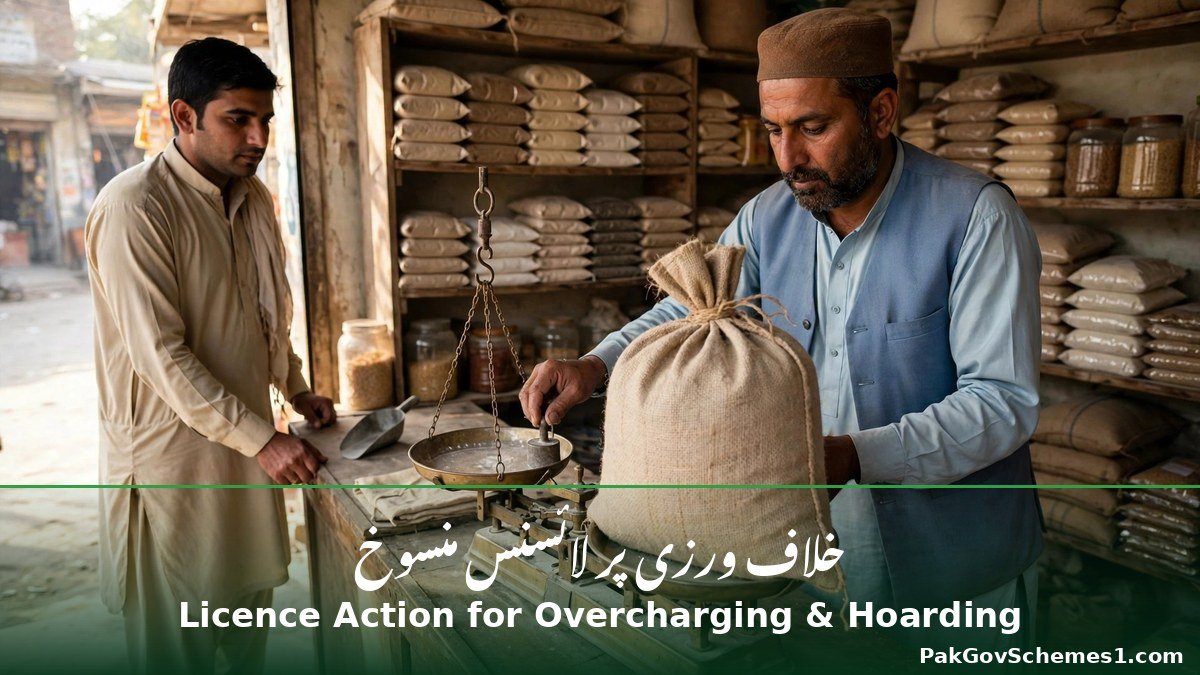
- Charging more than Rs 1,275 for a 10kg bag: severe penalties, including licence suspension or cancellation.
- Other violations of the order: licence suspension or cancellation.
- Outstanding government dues: no further wheat allocations until dues are cleared.
Mills may process privately procured wheat alongside government wheat, but the inter-provincial transport of products made from private wheat requires electronic permits. This condition is meant to prevent government wheat from being diverted out of the province disguised as private stock.

What the Order Means for Ordinary Buyers
For households, the direct effect is the price: a 10kg bag of flour made from government wheat now costs Rs 1,275 instead of Rs 1,100 — Rs 175 more per bag. A family using one 10kg bag a week will pay about Rs 700 more a month for the same flour. The government says the higher release quota — 6,000 tonnes a day — and the monitoring system should keep flour available and stop the shortages and black-market prices that have appeared in past wheat crises.
Buyers should check the price before paying. If a shop charges more than Rs 1,275 for a 10kg bag of flour made from government wheat, that is a violation of the order. Keep the receipt, note the shop’s name and location, and report it to your District Food Controller or the Punjab Food Department. No separate public complaint helpline has been announced under this order, so the District Food Controller’s office is the correct first contact. Do not confuse this with the market price of flour from private wheat, which is not fixed by this order and may differ.
Documents and Records for Mills
The order is aimed at mills and chakkis rather than individual citizens, so there is no application form for the public. Mills and chakkis need:
- Valid foodgrains licence (for flour mills) or registration (for atta chakkis).
- Agreement with the District Food Controller for the supply of government wheat.
- Advance or pre-deposited payment into the designated bank accounts, with bank receipts verified by the District Food Controller.
- Daily FDIMS reporting of mill operations and flour sales.
- Electronic permits for inter-provincial transport of products made from privately procured wheat.
Troubleshooting: Problems Buyers and Mills May Face
Shop charging more than Rs 1,275. Note the shop name, location and price, keep the receipt, and report it to the District Food Controller. The order provides for licence action against overcharging shops and mills.
Flour not available in your area. District quotas are set by population and demand, and transfers from surplus to deficit districts are allowed. If your district is short, the District Food Controller is the authority that can reallocate supply.

Confusion between government-wheat and private-wheat flour. The Rs 1,275 price applies to flour from government wheat. Ask the shopkeeper which wheat the flour was milled from; if the price is higher, it may be private-wheat flour, which is not covered by this order.
Mill’s wheat allocation stopped. Allocations stop for mills with outstanding government dues or for violations of the order. The mill must clear its dues or answer the violation before allocations resume.
Reports of hoarding. Hoarding is a violation under the order and carries severe penalties, including licence cancellation. Report suspected hoarding to the District Food Controller or the Punjab Food Department.
Official Helpline and Complaint Procedure
No public complaint helpline has been announced under this order. Complaints about flour prices, availability or mill conduct should go to the District Food Controller of your district, or to the Food Safety and Consumer Protection Department, Government of Punjab. The Directorate General of Food (Punjab) issues the standard operating procedures under the order. When complaining, keep the shop receipt, the date and the exact price charged, because the department needs those details to act. The order’s penalties — financial recoveries, licence suspension and licence cancellation — are enforced through the district food administration.
Common Mistakes to Avoid
Confusing the release price with the support price. Rs 4,500 per 40kg here is the price at which the government supplies wheat to mills. The farmers’ support price is a separate matter, covered in our Punjab wheat support programme guide.
Paying more than Rs 1,275 without checking. Always check the price of a 10kg bag of government-wheat flour before paying, and keep the receipt.
Assuming all flour is covered. The fixed price applies to flour made from government wheat. Private-wheat flour is priced by the market.
Believing old prices. The previous order of 19 October 2026 (Rs 3,800 wheat, Rs 1,100 flour) no longer applies. Social media posts quoting those prices are out of date.
Ignoring the monitoring system. Mills that do not report daily through FDIMS are in violation. The system is the government’s main tool for catching diversion and hoarding.

Expecting the price to fall soon. The order fixes the new prices with no expiry date announced. The price will change only if the government issues a new order.

Frequently Asked Questions
What is the new price of a 10kg flour bag in Punjab?
Rs 1,275 for a 10kg bag of flour made from government wheat, under the Punjab Wheat Release and Flour Distribution Order 2026. The previous price was Rs 1,100, so the increase is Rs 175 per bag, or about 18 per cent.
What is the government wheat release price?
Rs 4,500 per 40kg (Rs 112.50 per kg), up from Rs 3,800 per 40kg. This is the price at which the government supplies wheat to approved flour mills and licensed atta chakkis, not the price farmers receive for their crop.
When did the Punjab wheat order come into effect?
The order was dated 20 November 2026 and notified on Friday 20 November 2026. Reports differ on whether it took effect on Saturday 21 November or Sunday 22 November, but it is in force now. It replaces the previous pricing order of 19 October 2026.
Who receives government wheat under the order?
Approved operational flour mills holding valid foodgrains licences, and licensed or registered atta chakkis. They must have an agreement with their District Food Controller and pay in advance into designated bank accounts, with the receipts verified before any wheat is released.
How are district wheat quotas decided?
Quotas are allocated to districts on the basis of population and demand, and District Food Controllers distribute them among eligible mills and chakkis under standard operating procedures from the Directorate General of Food. Transfers from surplus districts to deficit districts are allowed.
What is FDIMS?
FDIMS is the Food Department Inventory Management System. Under the order, flour mills must report their daily operations through FDIMS, and food officials may inspect mills and chakkis at any time. Daily verification of flour-sale proceeds is also mandatory under the order.

What is the 70:18:12 extraction ratio?
From every 100kg of government wheat, a mill must produce 70kg of flour, 18kg of fine flour and 12kg of bran. The ratio is prescribed by the order, and under-milling — producing less flour than the ratio requires — triggers financial recoveries against the mill.
What happens to mills that overcharge or hoard wheat?
They face severe penalties, including licence suspension or cancellation, under the Punjab Wheat Release and Flour Distribution Order 2026. Mills with outstanding government dues also receive no further wheat allocations until the dues are cleared in full. Report suspected hoarding or overcharging to your District Food Controller with the mill’s name and the price charged.
Does the Rs 1,275 price apply to all flour in Punjab?
No. It applies to a 10kg bag of flour made from government wheat. Flour milled from privately procured wheat is not covered by this fixed price, although mills may process private wheat alongside government wheat under the order’s conditions, with electronic permits for inter-provincial transport.
Where do I complain if a shop overcharges for flour?
Report it to your District Food Controller or the Punjab Food Safety and Consumer Protection Department, with the shop’s name, location, date and receipt. No separate public helpline has been announced under this order, so the District Food Controller’s office is the correct first contact for buyers.
Important Safety Notice
Pay only the official price for government-wheat flour and keep your receipt. Report overcharging and hoarding to your District Food Controller. Do not trust social media posts quoting old prices — the previous order of 19 October 2026 no longer applies. PakGovSchemes1.com is an independent informational website and is not affiliated with any government department. Information here is compiled from available announcements and other identified sources and may change — always verify prices and procedures through the relevant official government website before taking action.
Conclusion
The Punjab Wheat Release and Flour Distribution Order 2026 raises the government wheat release price to Rs 4,500 per 40kg and the 10kg flour bag to Rs 1,275, replacing the October order and adding daily digital monitoring through FDIMS, district quotas by population and demand, and licence penalties for hoarding and overcharging. For households, the change means about Rs 175 more per 10kg bag; for mills, it means advance payment, daily reporting and a fixed 70:18:12 extraction ratio. Buyers who are overcharged should keep the receipt and report the shop to their District Food Controller.
Sources
- Dawn, “Punjab fixes wheat release price”, 21 November 2026 — dawn.com — release price Rs 4,500 per 40kg, 10kg flour bag Rs 1,275, digital monitoring and daily reporting mandatory, notification by the Secretary, Food Safety and Consumer Protection Department.
- The News, “Wheat, flour prices go up by 18pc”, 21 November 2026 — thenews.pk — order dated 20 November 2026, replaces the 19 October 2026 order, wheat up Rs 700 from Rs 3,800, flour up Rs 175 from Rs 1,100.
- The Nation, “Punjab Wheat Release and Flour Distribution Order 2026 to take effect from today”, 22 November 2026 — nation.com.pk — effective 22 November 2026, extraction ratio 70:18:12, prices Rs 4,500 and Rs 1,275.
- Business Recorder, “Punjab Wheat Release, Flour Distribution Order to take effect today”, 22 November 2026 — brecorder.com — order notified, prices and extraction ratio confirmed.
- Business Recorder, “PFMA demands govt ensure supply of quality wheat”, 19 November 2026 — brecorder.com — daily release quota increased to 6,000 tonnes, Food Minister Salma Butt, agreement with the Flour Mills Association.
- Profit (Pakistan Today), “Punjab fixes government wheat price at Rs 4,500 per 40kg under new distribution order”, 22 November 2026 — profit.pakistantoday.com.pk — advance payment, district quotas, FDIMS daily reporting, penalties, mix-and-match supplies.
- Dunya News, “Punjab enforces Wheat Release and Flour Distribution Order 2026 fixing flour price at Rs 1,275” — dunyanews.tv — cabinet approval, notification by the Food Safety and Consumer Protection Department, extraction ratio.
Disclaimer: PakGovSchemes1.com is an independent informational website and is not affiliated with any government department. Information is compiled from available official announcements and other identified sources and may change. Please verify eligibility, registration status, payment details, and deadlines through the relevant official government website before taking action.

