How to Collect BISP Payment from Biometric ATM 2026 – HBL & Bank Alfalah
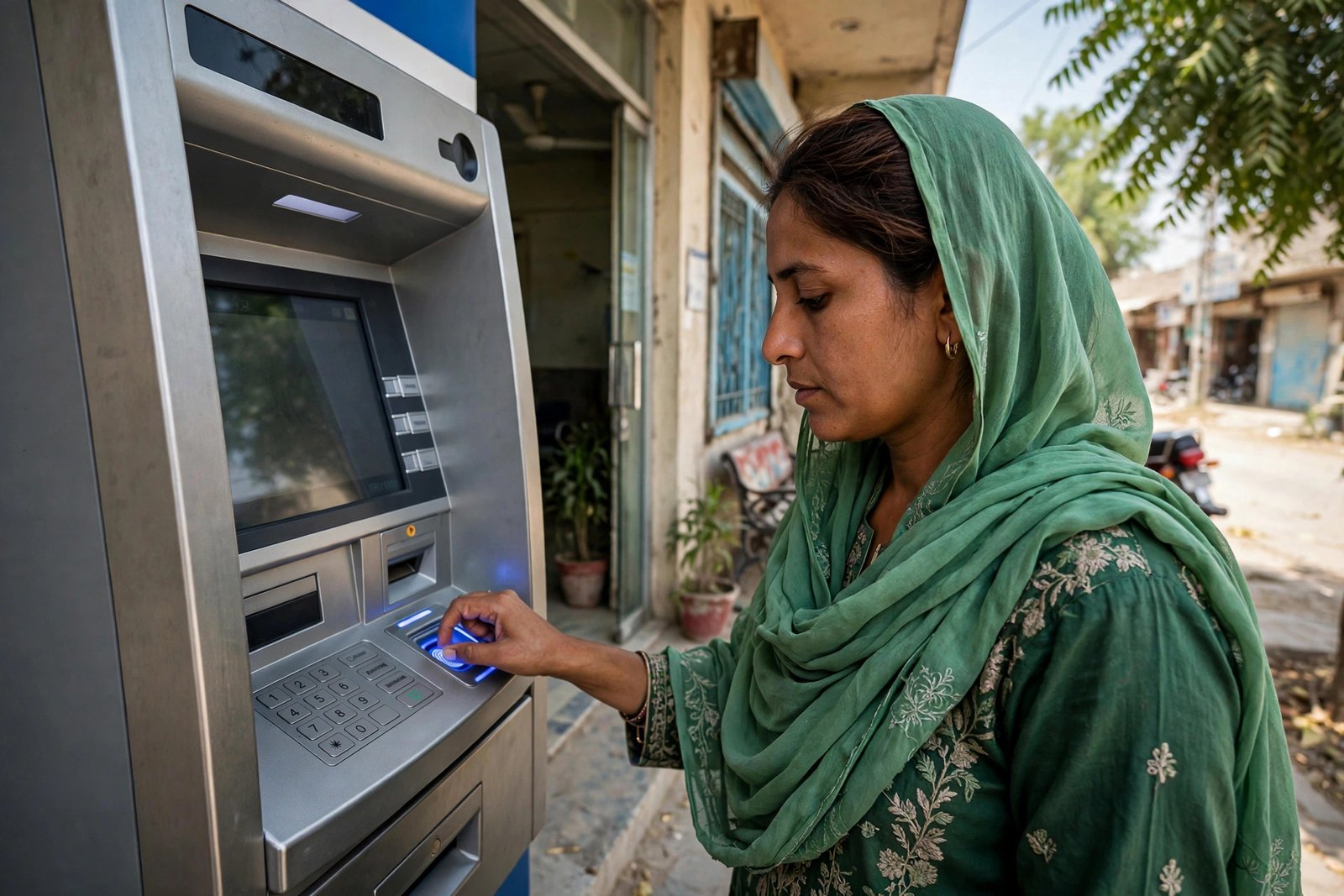
No card. No PIN. No bank account to open. Your thumb is the key. The BISP biometric ATM network — run through HBL and Bank Alfalah — lets beneficiaries withdraw the Rs. 14,500 quarterly installment with nothing but their CNIC number and a fingerprint. For women who have never used an ATM in their lives, this machine is the entire banking system.
Here is exactly how to use it, what to carry, and what to do when the fingerprint fails.
Why Biometrics (And Why It Matters to You)
Let’s step back for a second, because the design choice here is deliberate. BISP could have mailed cheques or used agents with cash boxes — and for years, agents with cash boxes were exactly how money leaked. Middlemen took cuts, ghost beneficiaries collected, and widows watched their installments shrink.
The biometric lock ended most of that. Your fingerprint, matched live against NADRA’s database, proves you are the person the money belongs to. No thumbprint match, no cash — which is also why no agent can “collect on your behalf,” no matter what story they tell. The inconvenience of the scanner is the price of the protection. It is worth it.
The Withdrawal: Step by Step
First-timers should go with someone who has done it before — not to operate the machine for you, but to stand nearby while you learn. Here are the steps:
Step 1: Go to a biometric-enabled ATM of HBL or Bank Alfalah. Not every ATM has the fingerprint scanner — look for the BISP or biometric payment option on the machine, or ask at the branch which of their ATMs is enabled.

Step 2: On screen, choose the BISP / government payments option. The menu wording varies slightly between the two banks, but both have a dedicated path for BISP disbursement.
Step 3: Enter your 13-digit CNIC number when prompted. No dashes.
Step 4: Place your thumb on the biometric scanner when asked. Hold still until the machine confirms the match against NADRA’s record.
Step 5: The machine dispenses your full Rs. 14,500 installment. Take the printed receipt, and — this is non-negotiable — count your cash before walking away.
Bring your original CNIC. You will not be asked to insert it anywhere, but carry it; if anything goes wrong, the branch staff need it to help you.
When the Fingerprint Fails
This is the most frustrating moment in the whole system, so let’s deal with it properly. Fingerprint mismatches happen for mundane reasons: worn prints from manual labor, dry skin, a dirty scanner, or outdated biometric data at NADRA.
If it fails once or twice: clean your thumb, try a different finger, and try once more. Do not hammer the same machine ten times — repeated failures can temporarily lock the attempt.
If it keeps failing: stop and switch. Try another biometric ATM of the same bank, or visit a retail agent or designated BISP payment camp instead — they use handheld biometric devices that sometimes read better than ATM scanners.

If nothing works anywhere: your fingerprints likely need updating at NADRA. Visit the nearest NADRA center, get your biometrics re-recorded (it is a free correction), and wait for the update to sync — usually within a day or two — before trying again.
And the golden rule for this entire section: never let anyone convince you they can bypass the biometric check for a fee. They cannot. The lock is the system.
ATM vs Agent vs Camp: Where Should You Collect?
| Option | Best for | Watch out for |
|---|---|---|
| Biometric ATM (HBL/Alfalah) | Anytime access, no queues | Must be a biometric-enabled machine |
| Retail agent | Nearby shops, familiar faces | Count cash; agents have cut payments before |
| BISP payment camp | First-timers, guided help | Crowded during payment weeks |
All three are free. Every rupee of the installment is yours — no commission, no “service charge,” no tip is legal. If anyone at any of these points deducts anything, that is a crime, not a fee. Report it on 0800-26477 with the location and date.
Payment Camps: When the ATM Isn’t an Option
Not everyone lives near a biometric ATM, and not every ATM is biometric-enabled. For those beneficiaries, BISP runs designated payment camps — announced locations, usually schools or community halls, where staff with handheld biometric devices disburse installments on set days.
Camps have one big advantage: human help. Staff guide first-timers through the fingerprint scan, resolve minor mismatches on the spot, and answer questions. For an elderly woman collecting for the first time, a camp is often less intimidating than a machine.

The price is crowds. Camps operate on announced schedules during payment phases, and the lines are longest in the first days. Go early in the day, carry water, and keep your CNIC and patience. And the same rule as everywhere: count the full Rs. 14,500 before leaving the premises. The presence of officials does not suspend the need to verify — in fact, it makes verification easier, because any shortage can be raised immediately with the staff running the camp.
A final word on receipts, because they are more useful than most people realize. The printed slip from the ATM shows the transaction amount, date, and a reference number. Keep it until the next quarter’s payment arrives safely. If a future dispute arises — a payment shown as released but never received — that slip is the first thing investigators ask for. A pocket full of old receipts is the cheapest insurance in the system, and it costs nothing to keep.
If you live far from both ATMs and camps, ask at the Tehsil Office about the nearest retail agent point. BISP’s agent network covers far more locations than the ATM network, including small towns and large villages. The agent uses a handheld biometric device linked to the same system — your thumbprint works the same way, and the full installment rule applies identically.
Whichever channel you use, make the count a visible ritual, not a secret one. Count aloud, in front of the agent or the queue. Thieves rely on the social pressure to hurry; a beneficiary who counts openly signals that the pressure will not work.
BISP Biometric ATM: Quick Answers
Which banks have a BISP biometric ATM? HBL and Bank Alfalah operate the BISP biometric ATM network. Look for biometric-enabled machines — not every ATM of these banks has the fingerprint scanner.
What do I need to use a BISP biometric ATM? Your 13-digit CNIC number and your thumbprint. A BISP biometric ATM needs no card and no PIN — but carry your original CNIC in case staff need to verify you.
What if my fingerprint fails at the BISP biometric ATM? Try another finger or another BISP biometric ATM. Persistent failure means updating your biometrics at NADRA, which is free — never pay anyone who claims to bypass the check.
Related Guides
- 8171 Web Portal 2026 – Check BISP Payment by CNIC
- BISP 8171 Complete Guide 2026 – Payments & Eligibility
- Asaan Karobar Finance Scheme 2026 – 0% SME Loans
Disclaimer: ATM procedures and partner banks can change with BISP announcements. Verify current collection points on bisp.gov.pk or the toll-free helpline 0800-26477.