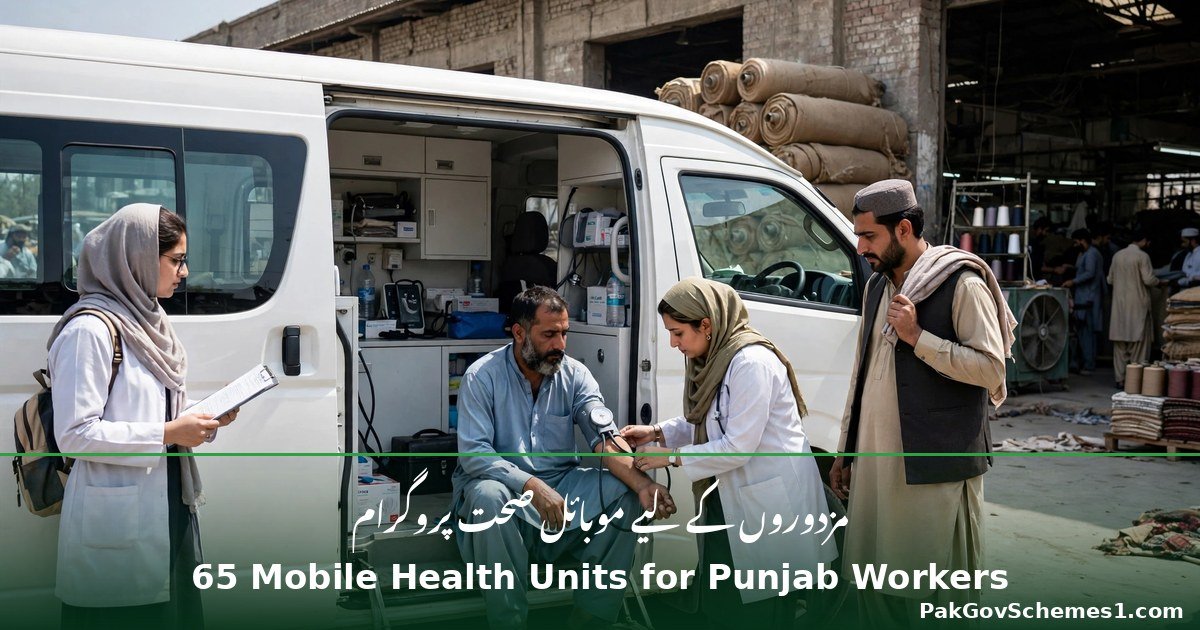
The Punjab mobile health workers programme brings free medical care to industrial workers and their families at their workplaces and doorsteps. Chief Minister Maryam Nawaz inaugurated the Social Security Mobile Health Programme on 12 October 2026, with 65 mobile health units run through the Punjab Employees Social Security Institution (PESSI). Instead of workers losing a day’s wages to visit a hospital, the hospital now comes to the factory gate and the workers’ neighbourhood. This guide explains who can use the service, which districts are covered first, what treatment is available, and how workers can get care when a unit visits.
Quick Overview
| Programme | Social Security Mobile Health Programme (PESSI) |
|---|---|
| Launched by | Chief Minister Maryam Nawaz, Punjab |
| Launch date | 12 October 2026 (reported 13 October 2026) |
| Total mobile units | 65 |
| First-phase districts | Lahore, Kasur, Sheikhupura |
| First-phase beneficiaries | More than 4.6 million workers and family members |
| Expansion target | 12 more districts by March 2027 |
| Run by | Punjab Employees Social Security Institution (PESSI) |
| Cost to registered workers | Services described at launch as part of PESSI healthcare; no separate fee was announced |
| Booking channel | Not officially announced — see “How Workers Get Care” below |
Latest Update — 29 October 2026
As of 29 October 2026, the programme is in its first phase, covering Lahore, Kasur and Sheikhupura, with expansion to 12 more districts planned by March 2027 (see the districts table below).
Two large screening drives are part of the programme: rheumatic heart disease (RHD) screening at 29,845 factories and workplaces in the three first-phase districts, and heart screening for around 54,000 children in workers’ welfare schools across Punjab. All units are linked to a digital hub at PESSI headquarters for real-time monitoring of routes and field operations.
One point needs care: some social media posts describe the programme as if any worker can book a visit online or by SMS. No such channel has been announced. The programme is outreach-based, so do not trust any website, form or number claiming to book a PESSI mobile visit unless published by an official Punjab government or PESSI channel.
What Is the Programme?
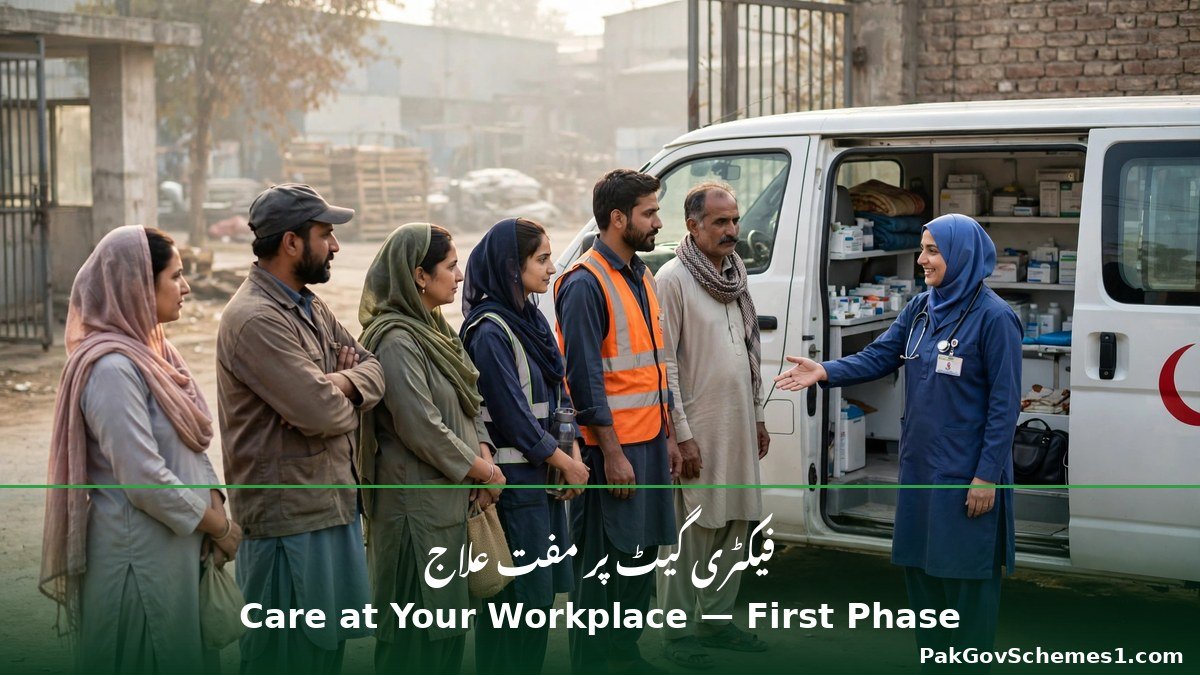
The Social Security Mobile Health Programme is a PESSI initiative that takes healthcare to registered industrial workers instead of asking them to travel to a hospital. Punjab already runs 24 social security hospitals and 250 medical outlets under PESSI, serving more than 10 million workers and family members. The mobile units extend that system to the factory gate and the doorstep.
At the launch, at the Nawaz Sharif Social Security Hospital in Lahore, the Chief Minister inspected the mobile hospitals, dental unit, motorcycles and scooters, and visited the hospital’s outpatient department and Rehmatul-lil-Alameen Cardiac Centre. The stated aim is early diagnosis and treatment, easier access for workers and their families, and less pressure on crowded hospitals.

This is a different programme from Clinics on Wheels, Punjab’s separate doorstep clinic service for the general public.
Who Is Eligible?
Eligibility follows the PESSI social security system. The programme is for registered industrial workers and their families — the exact wording used in every launch report.
- Registered industrial workers: workers registered with PESSI through their employer.
- Family members: family members of registered workers, seen at their doorstep when a unit visits their area.
- Workers in covered districts: in the first phase, workers in Lahore, Kasur and Sheikhupura. Workers in the 12 expansion districts will be covered as the rollout reaches them by March 2027.
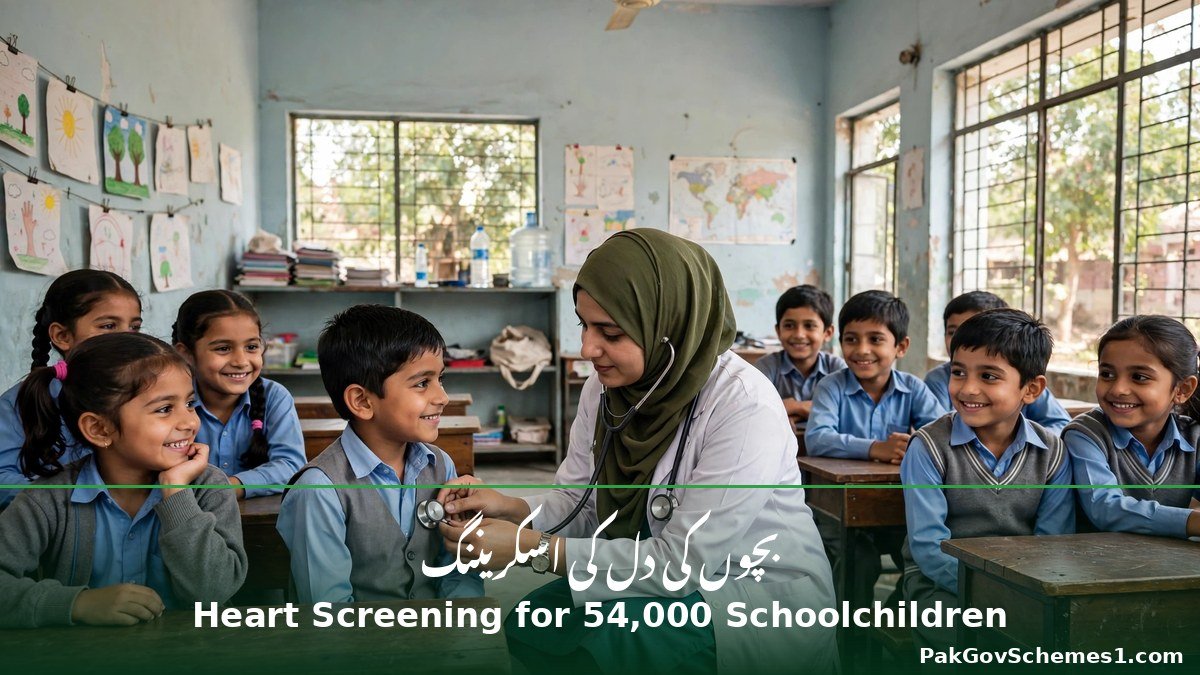
- Workers’ welfare schoolchildren: around 54,000 children in workers’ welfare schools across Punjab are included in the heart-condition screening drive.
Not officially announced: whether unregistered or informal workers are covered. The launch reports do not say that they are, so this guide does not claim it. If unsure, check with your employer or a social security hospital help desk — do not assume coverage from a social media post.
How Workers Get Care: Step by Step
There is no confirmed online booking form, SMS code or public helpline for requesting a visit, so the steps below describe how the outreach model works in practice, from the official launch details. They are not a confirmed booking process.
- Watch for the unit’s visit. Units visit factories, establishments and workers’ neighbourhoods on routes monitored from the PESSI digital hub. Ask your factory administration or supervisor whether a visit is scheduled.
- Keep your documents ready. Carry your CNIC, your PESSI card if you hold one, and any previous medical reports or prescriptions. This is general preparation, not a published requirement list.
- Attend the unit at your workplace or doorstep. Tell the medical team your symptoms clearly, including how long you have had them and any medicines you already take.
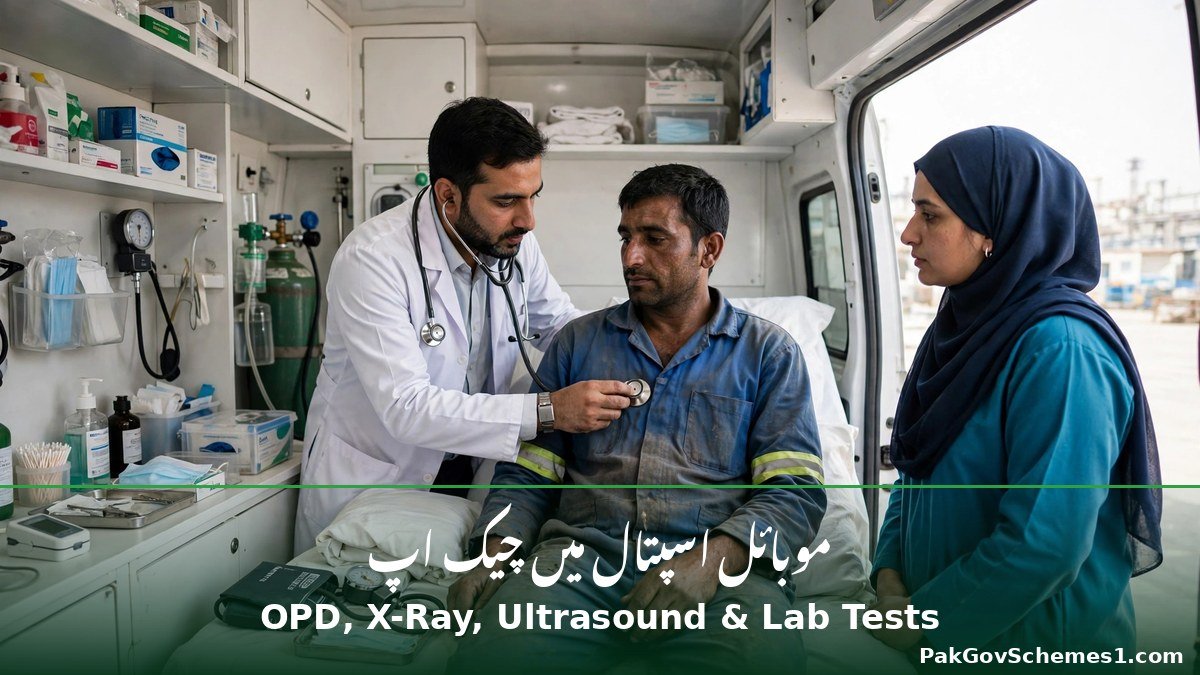
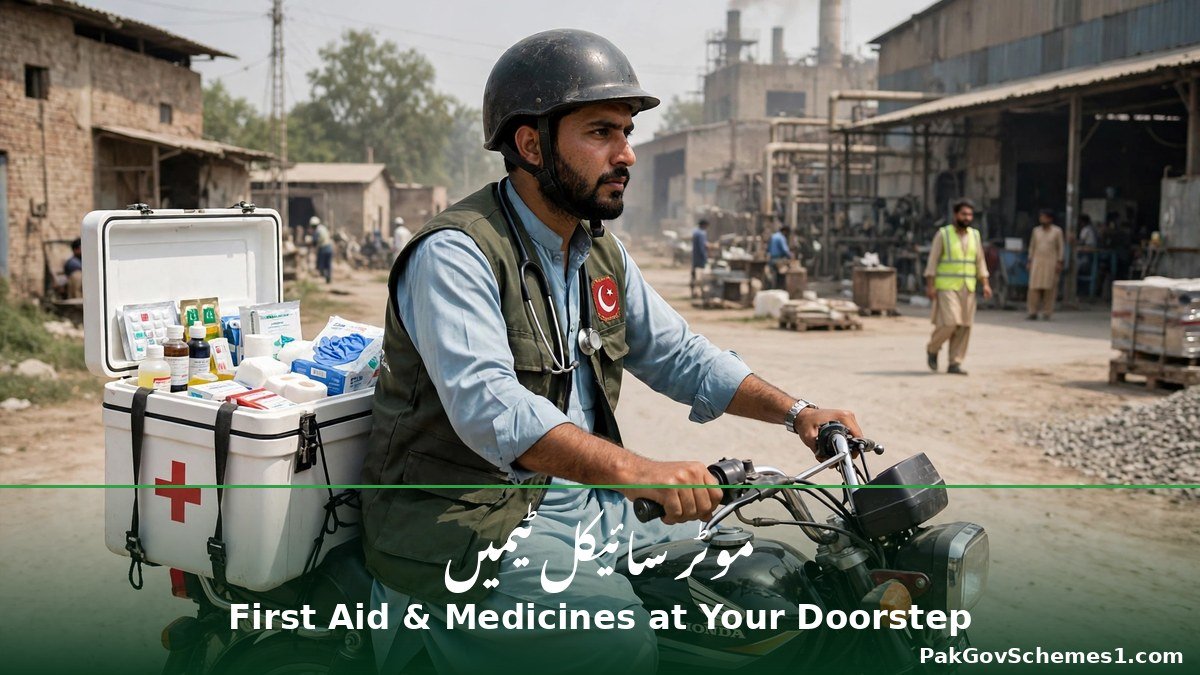
- Get examined and tested on the spot. Mobile hospitals offer outpatient consultations, X-ray and ultrasound, basic laboratory tests and medicines. Mobile clinics also offer telemedicine, so a doctor can consult a specialist remotely.
- Take the prescription and advice home. If the team gives you medicines or a referral, keep the prescription slip safe and follow it up at the nearest social security hospital or PESSI outlet.
- For family members at home: when a unit visits your neighbourhood, family members can attend the same way, with the patient’s CNIC and medical record ready.
- For schoolchildren: heart screening in workers’ welfare schools is arranged through the schools — parents should follow school notices, not try to book separately.
How to Check a Visit or Your Status
Not officially announced: there is no published online tracker, SMS check or phone line for visit timings. Beware of any third-party site claiming to offer such a check.
The practical checks available today are:
- Ask your factory administration whether a PESSI mobile unit visit is scheduled.
- Ask at the help desk of your nearest social security hospital or PESSI medical outlet. Punjab has 24 social security hospitals and 250 PESSI medical outlets.
- Follow notices from your child’s workers’ welfare school for the school heart-screening drive.
- Watch official Punjab government and PESSI announcements for any future booking channel, and ignore unofficial booking links.
Services Available: What Each Unit Offers
| Unit | Number | Services reported at launch |
|---|---|---|
| Mobile hospitals | 10 | Outpatient departments, X-ray and ultrasound, radiology, basic pathology laboratories, medicines; staff include male and female doctors, radiologists, nurses, laboratory and X-ray technicians |
| Mobile clinics | 5 | Medical consultations, telemedicine facilities, diagnostic services, medicines |
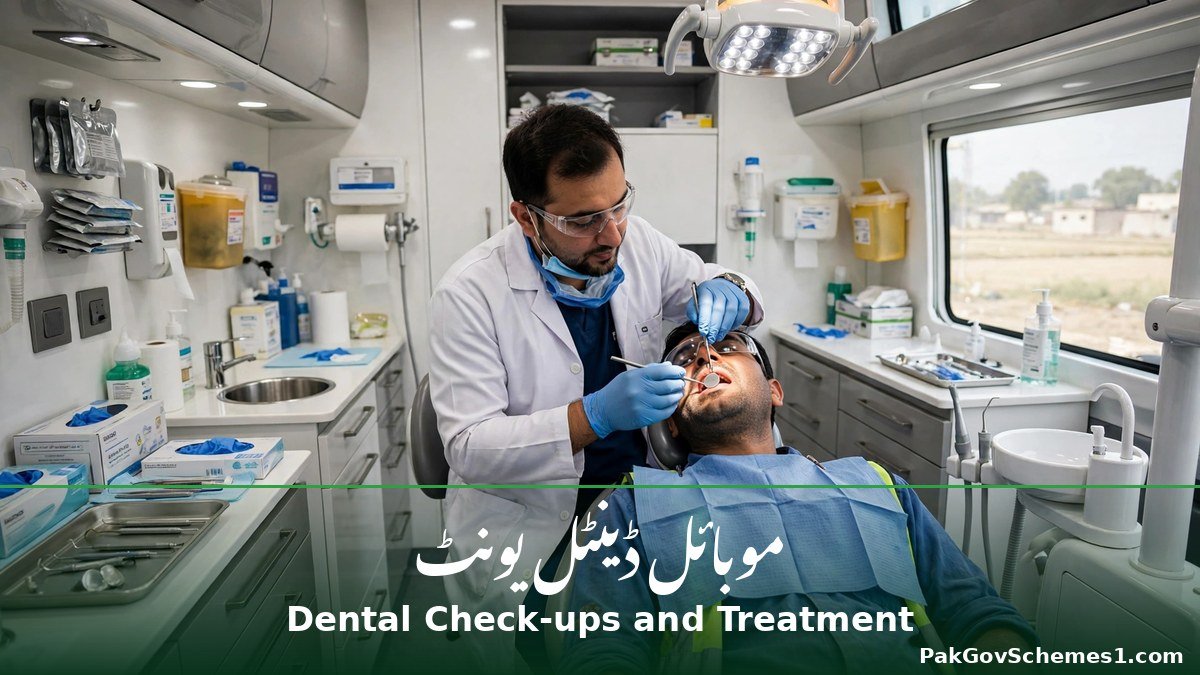
| Mobile dental unit(s) | Specialised unit(s) | Dental examination and treatment; dental surgeons and technicians, dental X-ray, intraoral camera systems, telemedicine |
| Mobile cardiac unit(s) | Specialised unit(s) | Initial cardiac screening and consultations, including rheumatic heart disease screening |
| Motorcycles | 40 | Basic medical assistance, first aid, essential medicines, health awareness |
| Scooters | 10 | Basic medical assistance, first aid, essential medicines, health awareness |
Together, the fleet provides consultations, diagnostics, medicines, first aid, telemedicine and health awareness. The launch reports did not break down the dental and cardiac units separately, so this guide does not invent a figure for them.
Districts Covered and Expansion Plan
| Phase | Districts | Scale |
|---|---|---|
| First phase (live now) | Lahore, Kasur, Sheikhupura | More than 4.6 million workers and family members |
| Expansion by March 2027 | Gujranwala, Sialkot, Gujrat, Faisalabad, Sargodha, Sahiwal, Multan, Muzaffargarh, Dera Ghazi Khan, Bahawalpur, Rahim Yar Khan, Rawalpindi | 12 more districts |
The expansion date is March 2027 as stated at launch. No district-by-district start dates have been announced, so workers in expansion districts should not expect a visit on a particular date until their rollout is confirmed.
Documents to Keep Ready
No official document list for a mobile unit visit has been published. The following is sensible general preparation only, not a confirmed requirement:
- Your CNIC (original, not only a photocopy, if possible).
- Your PESSI card, if you hold one.
- Any previous prescriptions, test reports or hospital discharge slips.
- A short note of your symptoms, allergies and current medicines.
- For a family member: that person’s CNIC or B-Form, and their previous medical record if any.
If the team asks for a document you do not have, ask what alternative they accept. Genuine PESSI services do not require payment to a middleman.
Troubleshooting: Common Problems
The unit has not visited your factory yet. The first phase covers only three districts and units follow planned routes — ask your factory administration, and use your nearest social security hospital meanwhile.
You are in an expansion district. The expansion is targeted for March 2027; until then, use the existing social security hospitals and outlets.
You need follow-up treatment. Mobile units handle check-ups, tests and basic treatment; serious conditions need a social security hospital, so keep your prescription and reports.
Helpline and Complaints
No dedicated helpline or complaint number for this programme has been officially announced, so this guide does not publish one. For questions or complaints, contact the help desk at your nearest social security hospital or PESSI outlet, or raise the matter through your factory administration.
Mistakes to Avoid
- Do not trust an unofficial booking form or SMS code — no such channel has been announced.
- Do not assume unregistered workers are covered; the programme is for registered workers and their families.
- Do not wait at home for a unit in an emergency — go to the nearest hospital immediately.
- Do not pay any agent who promises to arrange a visit or faster treatment.
- Do not confuse this programme with Clinics on Wheels, a separate general-public service.
- Do not skip follow-up: take any screening result needing hospital care to a social security hospital promptly.
- Do not share CNIC details or document photos with unknown pages claiming to register you.
Frequently Asked Questions
What is the Punjab mobile health workers programme?
It is the Social Security Mobile Health Programme run by PESSI, launched on 12 October 2026 by Chief Minister Maryam Nawaz. It uses 65 mobile health units to bring medical care to registered industrial workers and their families at workplaces and doorsteps, starting in Lahore, Kasur and Sheikhupura.
Who can use the mobile health units?
Registered industrial workers and their families can use the service, according to every launch report. The first phase covers Lahore, Kasur and Sheikhupura. Whether unregistered or informal workers are covered has not been officially announced, so this guide does not claim coverage for them.
How many mobile health units are there?
There are 65 units in total. The confirmed fleet includes 10 mobile hospitals, 5 mobile clinics, 40 motorcycles and 10 scooters, plus specialised mobile dental and cardiac units. The larger units carry outpatient, X-ray, ultrasound and laboratory facilities for on-the-spot diagnosis.

Which districts are covered in the first phase?
Lahore, Kasur and Sheikhupura are covered first, benefiting more than 4.6 million workers and family members. Twelve more districts — including Faisalabad, Multan, Rawalpindi, Gujranwala and Sialkot — are planned to join by March 2027, subject to official confirmation as the rollout proceeds.
Can I book a mobile health unit visit online or by SMS?
No booking channel has been officially announced. The programme works by outreach: units visit factories, establishments and neighbourhoods on planned routes. Be cautious of any website or SMS number claiming to book a visit, and confirm schedules through your factory administration or a social security hospital.
What treatment is available in a mobile hospital?
Mobile hospitals offer outpatient consultations, X-ray and ultrasound, basic laboratory tests and medicines, staffed by doctors, female doctors, radiologists, nurses and technicians. Mobile clinics add telemedicine, dental units provide dental treatment, and motorcycle teams give first aid and essential medicines.
What is the heart screening drive for workers and children?
A rheumatic heart disease screening initiative will visit 29,845 factories and establishments in Lahore, Sheikhupura and Kasur. Separately, around 54,000 children in workers’ welfare schools across Punjab will be screened for heart conditions, with the cardiac unit providing initial screening and consultations.

Is there a fee for using the mobile health service?
No separate fee for registered workers was announced at launch. The service is part of PESSI healthcare for registered workers and their families, which already runs through 24 social security hospitals and 250 medical outlets. If anyone demands payment to arrange a visit, treat it as a scam warning sign.
How is this different from Clinics on Wheels?
Clinics on Wheels is a separate Punjab doorstep clinic service for the general public. This mobile health programme is specifically for registered industrial workers and their families and is run through PESSI and the social security hospital system, with its own fleet, screening drives and rollout plan.
What should I do if the unit has not reached my area?
First check whether your district is in the first phase or the March 2027 expansion list. Then ask your factory administration or the nearest social security hospital help desk about the visit schedule. For urgent or ongoing illness, do not wait — visit the nearest social security hospital or PESSI outlet directly.
Safety Notice
PakGovSchemes1.com is an independent informational website and is not a government department. This article summarises launch reports from Dawn, The Nation, The Express Tribune, Business Recorder and 24NewsHD. Rollout details and any future booking channel may change. Never pay an agent for a visit, never share CNIC details with unofficial pages, and for an emergency go to the nearest hospital at once.
Conclusion
The Punjab mobile health workers programme is a practical step for workers who often cannot afford a day off for a hospital visit. With 65 units, on-the-spot tests, dental and cardiac care, and screening for 29,845 workplaces and 54,000 schoolchildren, it puts basic healthcare where workers actually are. Its main limitation: no way for an individual worker to request a visit has been announced, and coverage is confirmed only for registered workers in the first-phase districts. Workers in Lahore, Kasur and Sheikhupura should watch for workplace visits, keep their CNIC and PESSI card ready, and use their nearest social security hospital for anything urgent.
Related reading on this site: Punjab Ration Card for workers, Sindh Worker Welfare Card, and Sehat Card registration and eligibility.
Sources
- Dawn — “Mobile healthcare scheme for industrial workers, families” — https://www.dawn.com/news/2036787
- The Nation — “Punjab launches 65 mobile health units for industrial workers” (13 October 2026) — https://www.nation.com.pk/13-Oct-2026/punjab-launches-65-mobile-health-units-industrial-workers
- The Express Tribune — “Industrial workers offered mobile health service” (13 October 2026) — https://tribune.com.pk/story/2634532/industrial-workers-offered-mobile-health-service
- Business Recorder — “Industrial workers: Punjab launches mobile health services” — https://www.brecorder.com/news/40443858/industrial-workers-punjab-launches-mobile-health-services
- 24NewsHD — “CM Maryam launches 65 doorstep mobile health units for workers in Punjab” (12 October 2026) — https://www.24newshd.tv/12-Oct-2026/cm-maryam-launches-65-doorstep-mobile-health-units-workers-punjab
Disclaimer: PakGovSchemes1.com is an independent informational website and is not affiliated with any government department. Information is compiled from available official announcements and other identified sources and may change. Please verify eligibility, registration status, payment details, and deadlines through the relevant official government website before taking action.

