
The Punjab Mobile Health Programme 2026 brings hospital care directly to the factory gate. Launched by Chief Minister Maryam Nawaz Sharif on 12 October 2026, the Social Security Mobile Health Programme sends 65 mobile healthcare units — hospitals, clinics, a dental hospital, a cardiac unit, motorcycles and scooters — to registered industrial workers and their families at their workplaces and homes. In the first phase it covers Lahore, Kasur and Sheikhupura, reaching more than 4.6 million workers and family members. This guide explains who can use it, what treatment the units offer, which districts come next, and what is still unannounced.
Quick Overview Table
| Information | Details |
|---|---|
| Program Name | Social Security Mobile Health Programme (Punjab Mobile Health Programme 2026) |
| Responsible Department | Punjab Employees Social Security Institution (PESSI), under the Labour & Human Resource Department, Government of Punjab |
| Launched On | 12 October 2026 by Chief Minister Maryam Nawaz Sharif, Lahore |
| Total Mobile Units | 65 (10 mobile hospitals, 5 mobile clinics, mobile dental hospital, mobile cardiac unit, 40 motorcycles, 10 scooters) |
| Eligible Beneficiaries | Registered industrial workers and their families covered under PESSI |
| First-Phase Districts | Lahore, Kasur and Sheikhupura — more than 4.6 million workers and family members |
| Expansion Target | 12 more districts by March 2027 (reported at launch) |
| Services | OPD consultations, X-ray, ultrasound, laboratory tests, dental treatment, ECG and cardiac screening, medicines, first aid, telemedicine |
| Registration Method | No separate registration announced — units visit factories and workplaces; service is for PESSI-registered workers |
| Fee | Not officially announced as a charged service; the government has described check-ups, lab tests and medicines as free in its announcements |
| Official Website | pessi.gop.pk (PESSI official website) |
| Last Updated | 14 November 2026 |
Latest Update: Punjab Mobile Health Programme 2026
The programme was inaugurated on Monday, 12 October 2026, when Chief Minister Maryam Nawaz Sharif visited the Nawaz Sharif Social Security Hospital in Lahore, inspected the mobile hospitals, dental unit, motorcycles and scooters, and was briefed on the medicines and equipment. She also visited the hospital’s outpatient department and cardiac centre and spoke to patients. Dawn reported the programme aims to ensure timely diagnosis and treatment, expand access to medical facilities and reduce the burden on public hospitals.
On 11 November 2026, Secretary Labour and Human Resource Saman Rai and PESSI Commissioner Zulfiqar Ali Kharal visited a factory in Nishtar Town, Lahore, and inspected the mobile health services in operation — a general mobile hospital, a dental hospital, mobile clinics, bikes and scooters — reviewing dental, ECG, laboratory, X-ray and ultrasound facilities. Commissioner Kharal said the service would expand across Punjab. The full fleet had also reached Sundar Industrial Estate, where Labour Minister Muhammad Manshaullah Butt reviewed the service at a private factory. These visits confirm the units are actively working in Lahore’s industrial areas.
As of 14 November 2026, no online registration portal, SMS code or published visit schedule has been officially announced, so workers should not expect a website form or a text-message step. The practical route is the workplace: units visit factories and establishments on planned routes, and families receive care at their doorstep. If no unit has reached your factory yet, the access section below explains what to do.
What Is the Punjab Social Security Mobile Health Programme?
The programme is a workplace healthcare service run by PESSI, the Punjab Employees Social Security Institution, which already provides treatment and medicines to more than 10 million workers and family members through 24 social security hospitals and 250 medical outlets. Instead of asking a sick worker to leave the factory and lose a day’s wages travelling to a hospital, it sends the hospital to the worker.
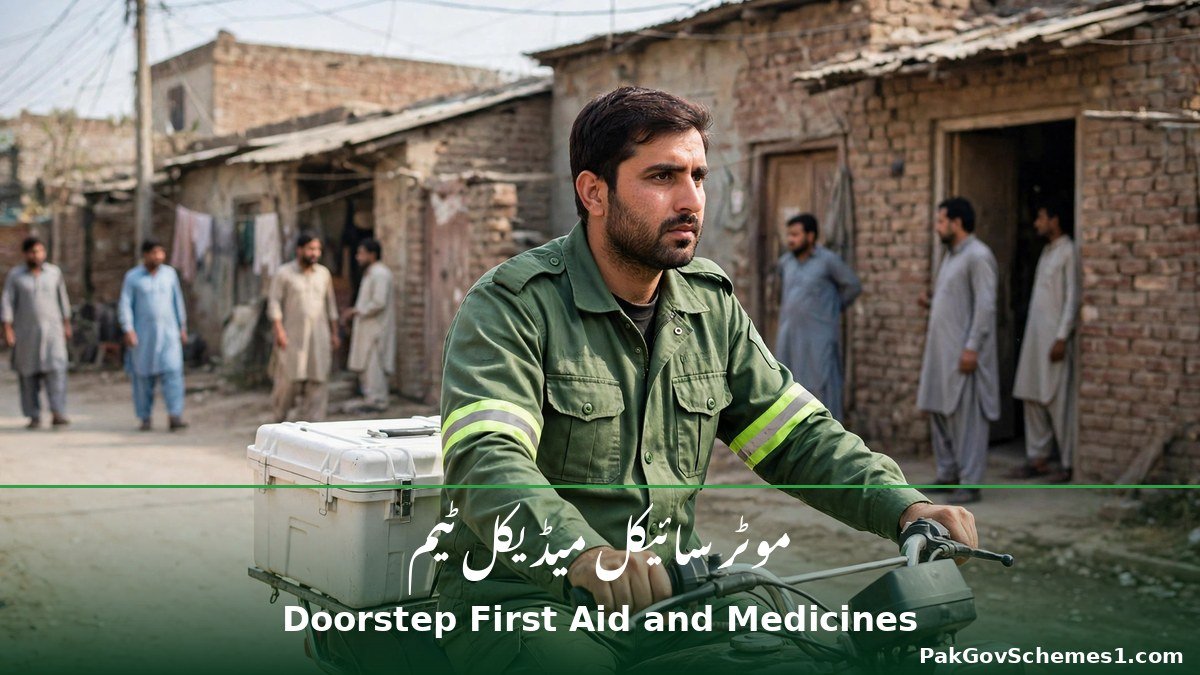
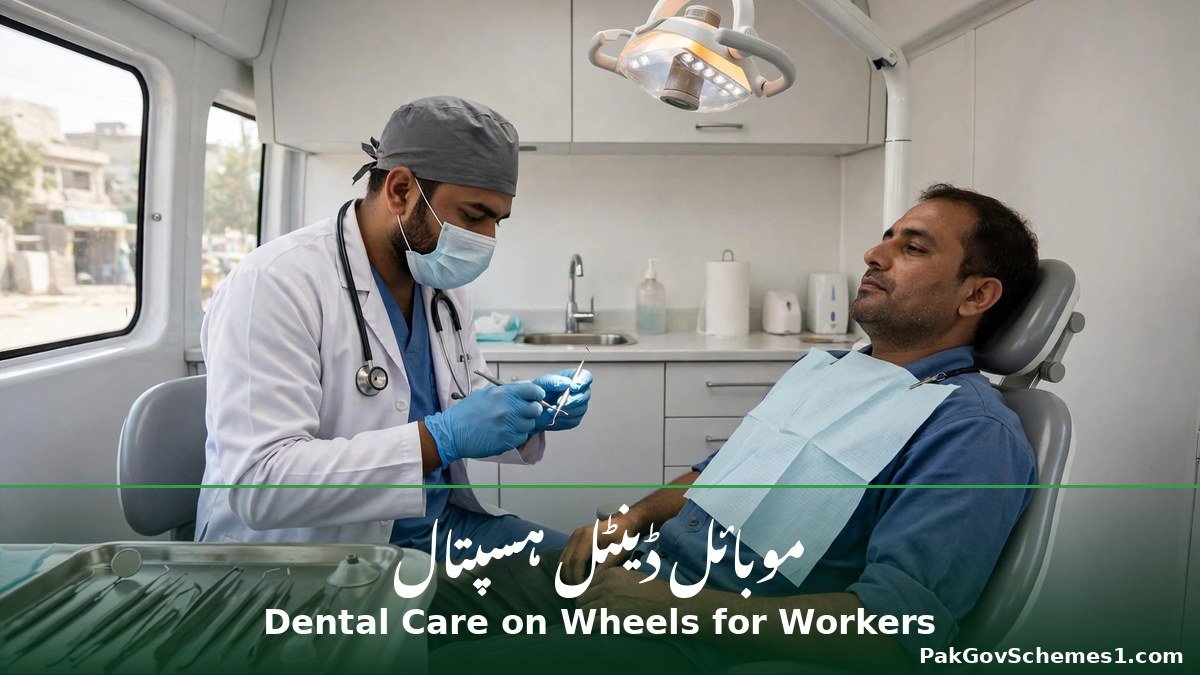
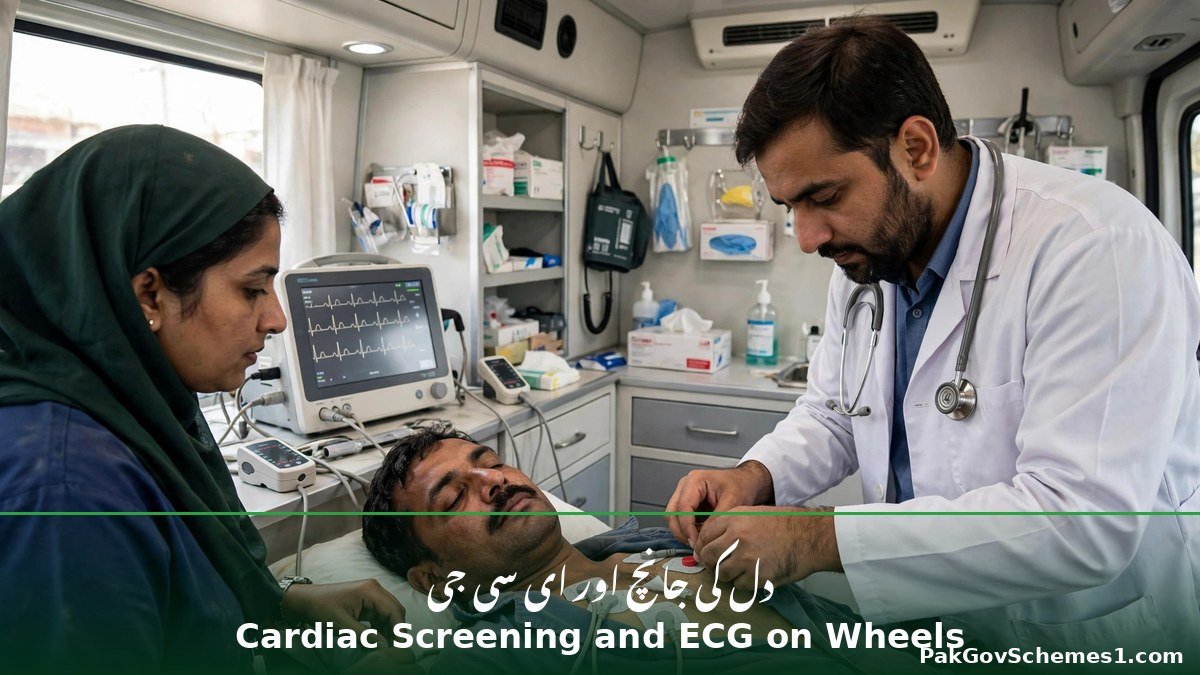
The 10 mobile hospitals are the largest units. They carry outpatient departments, radiology and pathology laboratories, staffed with female doctors, radiologists, nurses, and laboratory and X-ray technicians. The 5 mobile clinics provide general consultations and basic diagnostics at smaller sites. The mobile dental hospital carries dental surgeons and technicians, a dental X-ray facility, intraoral camera systems and telemedicine links. The mobile cardiac unit provides preliminary heart diagnosis. Finally, 40 motorcycles and 10 scooters carry medical kits, first-aid supplies and essential medicines to streets and homes where a large vehicle cannot easily go.
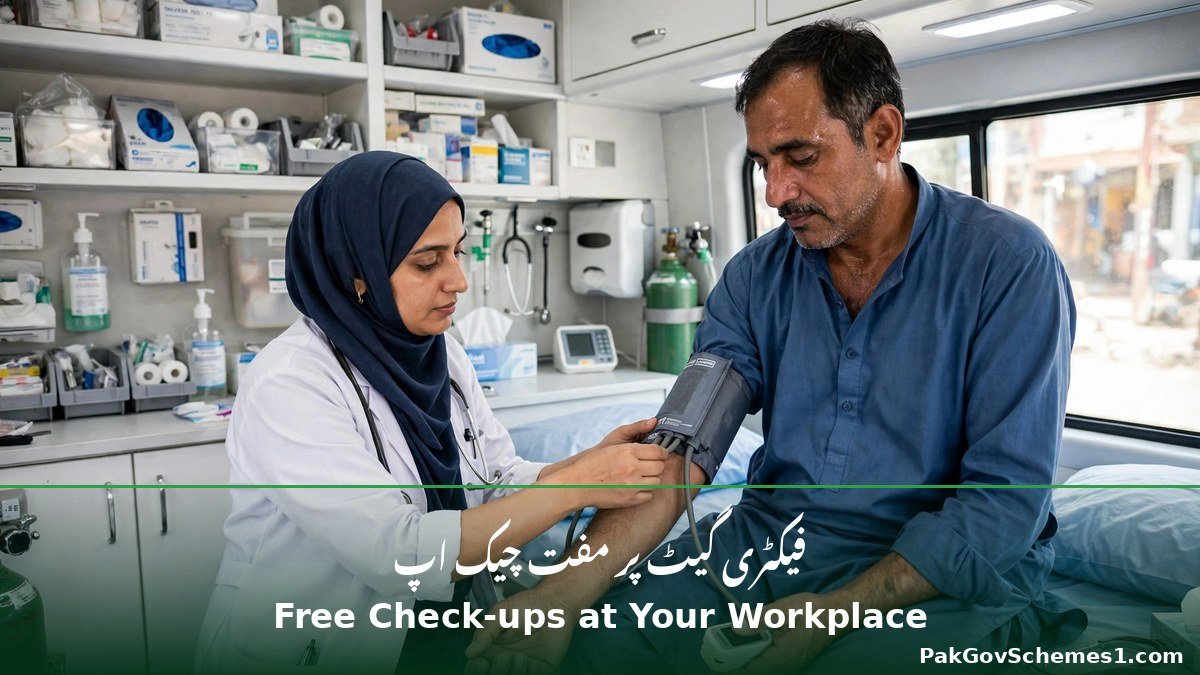
All 65 units are linked to a digital hub at the PESSI head office, which monitors their locations, routes and field operations in real time. This lets PESSI see which factories and areas have been covered and which have not.
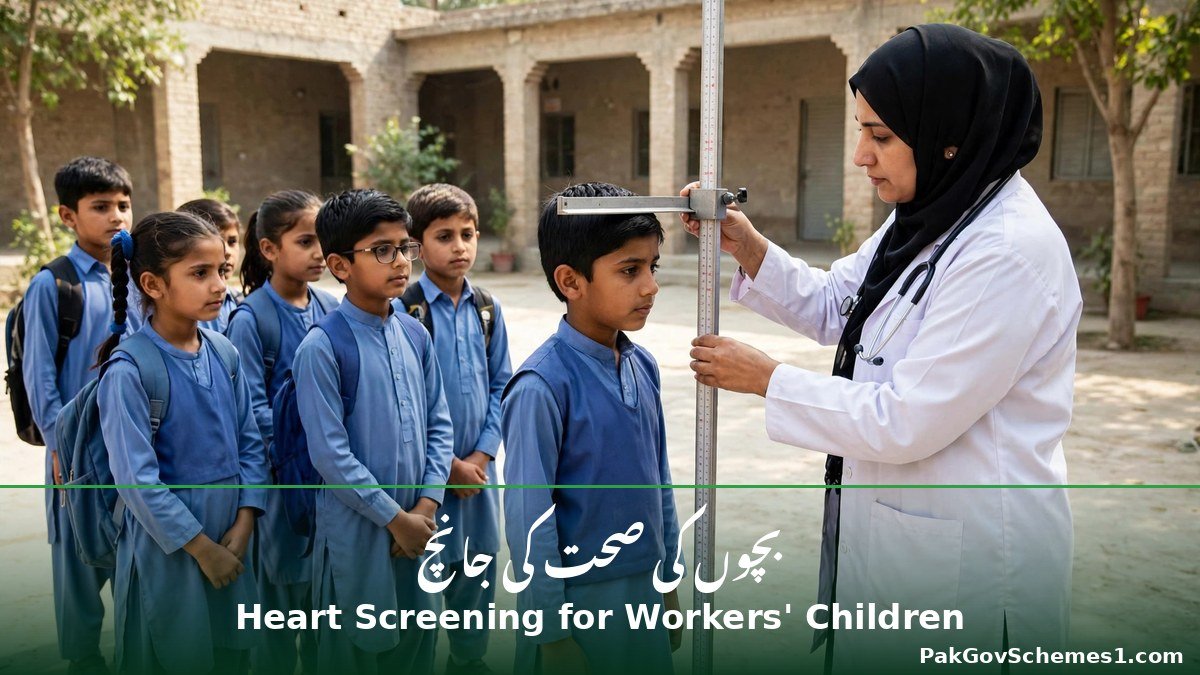
The programme also includes a Mobile Rheumatic Heart Disease (RHD) screening unit. According to the launch briefing, screening teams will visit 29,845 factories and other establishments in Lahore, Sheikhupura and Kasur to support early detection of rheumatic heart disease. The mobile units will also screen around 54,000 children in workers’ welfare schools across Punjab for heart conditions — important, because this disease often goes unnoticed until it becomes serious.
Punjab Mobile Health Programme vs Clinic on Wheels: What Is the Difference?
Many readers confuse this programme with the Punjab government’s Clinic on Wheels project, because both use green mobile health vehicles and were launched by the same chief minister. They are two different programmes, run by different departments, for different people.
| Feature | Social Security Mobile Health Programme | Clinic on Wheels |
|---|---|---|
| Run by | PESSI (Labour & Human Resource Department) | Primary & Secondary Healthcare Department |
| Who it serves | Registered industrial workers and their families | The general public, especially in rural and underserved areas |
| Size of fleet | 65 units | 911 units (reported) |
| Where it works | Factories, industrial estates and workers’ homes | Villages, towns and neighbourhoods across Punjab |
| First-phase districts | Lahore, Kasur, Sheikhupura | Province-wide rollout |
If you are a factory worker, this PESSI programme is the one meant for you. Members of the general public looking for a mobile clinic in their village or town should look for Clinic on Wheels instead. Our detailed guide to that project is available here: Punjab Clinic on Wheels 2026. Neither programme has announced a paid registration process, so do not pay anyone who claims to register you for either one.

Who Is Eligible for the Punjab Mobile Health Programme?
Eligibility is linked to PESSI registration, not to a new application. According to the launch announcement, the service is for registered industrial workers and their families. In PESSI’s system, a “registered” or “secured” worker is one whose employer is registered and pays social security contributions. The worker’s spouse and children are covered under the same arrangement, so the programme promises care at the workplace for the worker and at the doorstep for the family.
Three conditions decide whether the service can reach you today. First, you must be a PESSI-registered worker. Second, your workplace or home must be in Lahore, Kasur or Sheikhupura. Third, the mobile unit’s route must have reached your factory or area. No application form, income limit, PMT score or BISP-style eligibility test has been announced for it. Do not apply BISP or Ehsaas rules to this scheme; it is a labour welfare programme, not cash assistance.
Women workers and workers’ wives can be examined by the female doctors on the mobile hospitals, which matters where women hesitate to visit a male doctor. Children of workers are covered twice: they can receive care with their families at the doorstep, and around 54,000 children in workers’ welfare schools across Punjab are to be screened for heart conditions.
It is not yet verified whether informal-sector workers — daily-wage labourers whose employers never registered with PESSI — can use the service; no official statement on this point has been found. If your employer has not registered you, your coverage is unconfirmed: ask your employer or the nearest PESSI directorate about registration rather than assuming the mobile unit will treat you. The same applies outside the first-phase districts: expansion to 12 more districts is a stated target for March 2027, not a service that exists today.
How to Access the Mobile Health Units: Step by Step
No online form, SMS code or mobile app has been announced, so do not search for one or trust any website offering to register you. Access works through your workplace and residential area, as explained below.
- Confirm your PESSI registration. Ask your factory’s HR or administration office whether you are registered with PESSI as a secured worker. Your employer is responsible for registration and contributions, so the HR office is the first place to check.
- Ask about the unit’s visit schedule. The mobile units visit factories and industrial establishments on planned routes. Ask your HR office or factory management when the next visit is expected, and whether workers will be called in groups or by shift.
- Keep your CNIC ready. No official document list has been published for the mobile units, but a valid CNIC is the standard identity document for any government health service in Pakistan. Keep it with you on the day of the visit. If your employer has given you any PESSI document or card, keep that ready as well.
- Attend the unit at your workplace. On the visit day, report to the mobile hospital or clinic at the time your factory announces. Describe your symptoms clearly, mention any regular medicines you take, and ask the doctor to explain any test result or prescription you do not understand.
- Use the motorcycle and scooter teams for basic care. For minor illness, first aid or essential medicines, the motorcycle and scooter teams can reach your street or home. These teams carry medical kits and first-aid supplies for basic healthcare.
- Ask for a referral if needed. The mobile units provide OPD care, diagnostics and first treatment. If your condition needs hospital treatment, ask the medical staff whether you should go to the nearest social security hospital. PESSI runs 24 such hospitals, and treatment there is part of the same social security system.
- Follow up if your factory has not been visited. If months pass without a visit, raise it with your factory management and contact the PESSI office for your area. The helpline and contact details are given in the complaints section below.
How to Check Your Registration or Visit Status
No SMS code, online portal or tracking page has been announced for checking when a mobile unit will visit your factory, and no status-check service for this programme has been published. Any website or social media post asking you to send your CNIC number by SMS, or to enter it on an unknown website, is not part of this programme and should be ignored.
To check whether you are a registered worker, ask your employer: the employer registers the establishment and its workers, so the factory HR office can confirm your status. If it cannot, visit the PESSI directorate for your city or the nearest social security hospital with your CNIC and employment details and ask them to check your record. PESSI’s website, pessi.gop.pk, lists its directorates, hospitals and a health complaint option, but no page for the mobile units’ visit schedule was found there.
The digital hub at PESSI head office tracks the units’ routes in real time, but that is for the institution’s own management, not a public tracking service, so workers cannot follow a unit’s live location. If PESSI later publishes a public schedule or helpline, this article will be updated.
Services Offered and What They Cost
The table below is based on the official launch briefing and the follow-up inspection reports, and separates what is confirmed from what is not.
| Service | Available On | Verified Status |
|---|---|---|
| General OPD consultation | Mobile hospitals and clinics | Confirmed at launch |
| X-ray and ultrasound | Mobile hospitals | Confirmed at launch and in 11 Nov inspection |
| Laboratory tests (pathology) | Mobile hospitals | Confirmed at launch and in 11 Nov inspection |
| Dental treatment | Mobile dental hospital | Confirmed, including dental X-ray and intraoral camera |
| ECG and cardiac screening | Mobile cardiac unit | Confirmed, including RHD screening of 54,000 schoolchildren |
| Medicines | All units | Confirmed — essential medicines carried on units |
| First aid | Motorcycles and scooters | Confirmed |
| Telemedicine consultation | Mobile hospitals and dental unit | Confirmed at launch |
| Health awareness sessions | All units | Confirmed at launch |

On cost, no fee, charge or payment schedule for the mobile units has been officially announced. Government announcements have described the check-ups, laboratory tests and medicines as free, and PESSI’s wider system provides treatment and medicines to registered workers without charging at the point of care. Workers should not pay unit staff for a consultation, a test or medicines. If anyone asks you for money, note the unit and location and report it through the complaint channels below. Because no formal fee notification was found, this article reports what the government has announced rather than presenting free treatment as a guaranteed legal entitlement.
Documents to Keep Ready
No official document list has been published for the mobile units, so the list below is practical guidance based on how PESSI and other government health services normally work, not a formal requirement for this programme.
- Valid CNIC — the basic identity document. Keep the original with you, not only a photocopy or a photo on your phone.
- Any PESSI document from your employer — if your factory has issued you a social security card, registration slip or similar paper, bring it. It helps the staff confirm that you are a registered worker.
- Previous prescriptions or medical records — if you have an ongoing illness such as diabetes, blood pressure or a heart condition, bring your old prescriptions and test reports so the mobile unit doctor can treat you correctly.
- Children’s B-Form — for the school heart-screening programme, the school normally handles the record, but parents should keep the child’s B-Form available if the school asks for it.
- Registered mobile number — keep your own active mobile number ready in case the medical staff need to share a test result or a follow-up instruction.
Never hand your original CNIC or any original document to a stranger claiming to collect papers for the programme. The mobile units examine patients; they do not collect documents door to door.
Problems Workers May Face and What to Do
The unit has not visited your factory yet. The first phase covers only Lahore, Kasur and Sheikhupura, where the units follow planned routes across 29,845 factories and establishments. If your factory has not been reached, ask HR to contact the PESSI directorate for your area.
Your district is not covered. If you work in Gujranwala, Faisalabad, Multan, Rawalpindi or another of the 12 expansion districts, the service is not available to you yet. The government’s stated target is March 2027. Until then, use the nearest social security hospital or PESSI medical outlet.
A medicine or test is not available on the unit. The units carry essential medicines and basic diagnostic equipment, but they are not full hospitals. If a medicine is out of stock or a test cannot be done on the spot, ask the staff to write down what is needed and whether the nearest social security hospital can provide it.

You are told you are not registered. This usually means your employer has not registered you with PESSI or paid contributions. Raise it in writing with your employer first, because registration is the employer’s responsibility. You can also approach the PESSI directorate for your city with your employment details.
Someone asks for money for registration or a visit. No fee for registration or treatment has been announced under this programme. Do not pay. Report the person and location to the PESSI head office or the Labour Department helpline below.
You see fake posts about the programme online. Fake announcements, fake registration links and fake “mobile hospital booking” pages follow every popular government scheme. Only trust information from pessi.gop.pk, the Punjab government’s official channels, or established newspapers such as Dawn. Do not click links in WhatsApp groups that promise registration.
Official Helpline and Complaint Procedure
No dedicated helpline for the programme itself has been officially announced — an important gap. Workers should not trust any phone number circulating on social media as the programme’s helpline unless PESSI or the Punjab government publishes it. The verified contact routes below are the ones workers can use today.
- Labour & Human Resource Department Punjab helpline: 1314 — listed as active on the Punjab Portal’s official helpline page. This is the department that oversees PESSI, so it is the correct first call for complaints about the mobile health service.
- PESSI Head Office — 3-A, Gulberg-V, Jail Road, Lahore. The head office telephone number 042-99263107 is listed in public directories for the institution. Use it during office hours for registration and service complaints.
- PESSI official website — pessi.gop.pk — which lists the institution’s directorates, hospitals and a health complaint option. Visit your city’s PESSI directorate in person if a phone complaint does not resolve the issue.
- Nearest social security hospital — PESSI runs 24 social security hospitals and 250 medical outlets. The staff there work in the same system and can guide you on registration and referrals.
When you complain, be specific: name, CNIC number, factory name and address, date, and what happened. A written complaint is harder to ignore than a phone call, so follow up a call in writing where possible. For related worker welfare support, see also: Punjab Workers Welfare Marriage and Death Grants 2026.
Common Mistakes to Avoid
- Confusing this programme with Clinic on Wheels. The PESSI programme serves registered industrial workers only; Clinic on Wheels serves the general public. Going to the wrong service wastes your time.
- Paying an agent for registration. There is no announced registration process and no fee for this programme. Anyone charging you for enrolment is not part of it.
- Sharing your CNIC photo or OTP online. No genuine part of this programme asks for your CNIC image, OTP or bank details on WhatsApp, Facebook or an unknown website.
- Trusting fake visit schedules on social media. Only the factory management, PESSI or the Punjab government can confirm when a unit will visit. Viral lists of dates are unverified.
- Assuming your district is already covered. Only Lahore, Kasur and Sheikhupura are in the first phase. The other 12 districts are a March 2027 target, not a current service.
- Skipping the hospital referral. The mobile unit is for OPD care and screening. If the doctor refers you to a social security hospital, go — delaying a referral can turn a treatable problem into a serious one.
- Believing old news is new. The launch was on 12 October 2026. Posts that re-share the launch as if it happened this week, or that promise a new phase without an official announcement, should be checked against pessi.gop.pk or a reputable newspaper before you act on them.
Frequently Asked Questions
What is the Punjab Mobile Health Programme 2026?
It is the Social Security Mobile Health Programme launched by Chief Minister Maryam Nawaz Sharif on 12 October 2026. Its 65 mobile units, run by PESSI, provide medical care to registered industrial workers and their families at workplaces and homes, starting in Lahore, Kasur and Sheikhupura.
Who can use the mobile health units?
Registered industrial workers covered under PESSI and their family members can use the service. In the first phase it covers workers in Lahore, Kasur and Sheikhupura. Workers whose employers have not registered them with PESSI do not have confirmed coverage and should check their status with their employer.
How many mobile health units are there?
There are 65 units in total: 10 mobile hospitals, 5 mobile clinics, a mobile dental hospital, a mobile cardiac unit, 40 motorcycles and 10 scooters. The motorcycles and scooters carry medical kits, first-aid supplies and medicines to workers and families in residential areas.
Which districts are covered in the first phase?
Lahore, Kasur and Sheikhupura are covered in the first phase, reaching more than 4.6 million industrial workers and their families. The government aims to expand to 12 more districts by March 2027, including Faisalabad, Multan, Gujranwala, Sialkot, Rawalpindi, Gujrat, Sargodha, Sahiwal, Muzaffargarh, Dera Ghazi Khan, Bahawalpur and Rahim Yar Khan.
Is treatment on the mobile units free?
No fee has been officially announced, and government announcements describe the check-ups, laboratory tests and medicines as free. Workers should not pay unit staff for consultations, tests or medicines. If anyone demands payment, report it to PESSI or the Labour Department helpline 1314.
How do I register for the mobile health programme?
No separate registration process has been announced for this programme. It serves workers already registered with PESSI through their employers. Confirm your registration with your factory HR office, and the mobile units will visit your workplace on their planned route.

What services do the mobile hospitals provide?
They provide OPD consultations, X-ray, ultrasound, laboratory tests, dental treatment, ECG and cardiac screening, medicines, first aid, telemedicine and health awareness. The mobile hospitals also have female doctors, radiologists, nurses and laboratory and X-ray technicians on board, while motorcycle and scooter teams deliver first aid and medicines at workers’ homes.
Will the mobile unit visit my factory?
The screening teams plan to visit 29,845 factories and other establishments in Lahore, Sheikhupura and Kasur. Ask your factory management when the unit is expected. If your factory has not been visited, raise it with HR and the PESSI directorate for your area.
What is the heart screening for workers’ children?
The programme includes a Mobile Rheumatic Heart Disease screening unit, which will screen around 54,000 children in workers’ welfare schools across Punjab for heart conditions, helping to detect the disease early when treatment works best. The same unit also visits factories to check workers.
How is this different from Clinic on Wheels?
Clinic on Wheels is a separate, larger project with 911 units run by the Health Department for the general public. This PESSI programme has 65 units, is run by the Labour Department, and serves only registered industrial workers and their families.
Important Safety Notice
Use only verified official channels: pessi.gop.pk, the Punjab government’s official announcements, and established newspapers. Never share your CNIC image, OTP, passwords or bank details with anyone claiming to register you, and never pay an agent for enrolment or a unit visit. PakGovSchemes1.com is an independent informational website, not affiliated with PESSI, the Labour Department or any government department. Verify eligibility, coverage and visit schedules through the official sources below before taking time off work.
Conclusion
The Punjab Mobile Health Programme 2026 is a practical step for Punjab’s industrial workers: 65 mobile units — hospitals, clinics, dental and cardiac units — now take OPD care, diagnostics, medicines and screening to factories and homes in Lahore, Kasur and Sheikhupura, with 12 more districts targeted by March 2027. If you are a PESSI-registered worker, your route to the service is your workplace: confirm registration with your employer, keep your CNIC ready, and ask your factory when the unit will visit. Check pessi.gop.pk or helpline 1314 for updates.
Official Sources
- Dawn, 13 October 2026 — “Mobile healthcare scheme for industrial workers, families” (launch details, fleet composition, 4.6 million beneficiaries, RHD screening, 29,845 factories, digital hub, expansion districts)
- ProPakistani, 12 October 2026 — “Punjab Launches Mobile Health Units for Industrial Workers” (launch date, fleet, expansion by March 2027, screening figures)
- 24NewsHD, 12 October 2026 — “CM Maryam launches 65 doorstep mobile health units for workers in Punjab” (launch details and fleet)
- UrduPoint, 11 November 2026 — “Punjab Labour Secretary Reviews Mobile Health Services for Factory Workers” (Nishtar Town inspection, services reviewed, expansion statement)
- The Nation, 13 October 2026 — “Punjab launches 65 mobile health units for industrial workers” (250 PESSI medical outlets, motorcycle services)
- Punjab Employees Social Security Institution — pessi.gop.pk (official website; institution background, directorates, hospitals, health complaint option)
- Punjab Portal — Helplines (Labour & Human Resource Department helpline 1314, listed as active)
Disclaimer: PakGovSchemes1.com is an independent informational website and is not affiliated with any government department. Information is compiled from available official announcements and other identified sources and may change. Please verify eligibility, registration status, payment details, and deadlines through the relevant official government website before taking action.

