
BISP Kafalat for Divorced Women 2026 – Eligibility Guide
BISP Kafalat for divorced women in 2026 works through the same Benazir Kafaalat programme that supports all poor households — there is no separate divorced-women-only scheme, and no special form to fill in. A divorced woman heading her household alone is a priority group, but eligibility is decided by the household survey and poverty score, not by marital status alone. This guide explains the step that matters most — updating your marital status at NADRA with a registered divorce certificate — then the free Dynamic Survey at a BISP Tehsil Office, the reported Rs 14,500 quarterly payment, and how to check your status on 8171.
Quick Overview
| Information | Details |
|---|---|
| Programme | Benazir Income Support Programme (BISP) — Benazir Kafaalat |
| Responsible department | Benazir Income Support Programme, Government of Pakistan |
| Separate divorced-women scheme | None — eligibility runs through the NSER survey and PMT score |
| Priority group | Divorced women heading a household alone |
| Main eligibility test | PMT score — reported cut-off 32 or below (37 with a disabled member) |
| First step | Update marital status at NADRA with a registered divorce certificate |
| Registration method | In person at a BISP Tehsil Office — Dynamic Survey (no online form) |
| Status check | SMS your 13-digit CNIC to 8171, or visit 8171.bisp.gov.pk |
| Current payment (if eligible) | Rs 14,500 per quarter, Oct–Dec 2026 (reported) |
| Official helpline | 0800-26477 (toll-free) |
| Official website | bisp.gov.pk |
| Last updated | 7 November 2026 |
Latest Update — 7 November 2026
The current Benazir Kafaalat installment for the October–December 2026 quarter is reported at Rs 14,500, released district by district in phases. No national payment date has been officially announced — check your own status on 8171. Rs 18,000 from January 2027 is reported only, as a proposal.
On 29 October 2026, BISP officials briefing First Lady Bibi Asifa Bhutto Zardari highlighted the removal of the “ever-married” condition for the Kafaalat payee — the old rule that only a married or formerly married woman could receive the payment. This was reported by the Associated Press of Pakistan, but BISP has not yet published it as a formal rule on bisp.gov.pk, and no start date has been announced. For divorced women the effect is limited: you were already in the ever-married group. BISP is also moving payments into Social Protection Digital Wallets linked to free Benazir SIMs (9.7 million SIMs activated, 9.3 million beneficiaries paid through wallets). A 31 December 2026 date is reported as the target for complete digitalisation — not a registration deadline.
Eligibility Criteria
There is no separate eligibility list for divorced women. Your household qualifies — or does not — on the same test as every other household, and your divorce matters because it changes which household the system sees. BISP eligibility runs on the National Socio-Economic Registry (NSER) — the survey record of your household — and a poverty score called the PMT (Proxy Means Test) score. The widely reported BISP cut-off is 32 or below, or 37 or below where a household member has a disability.

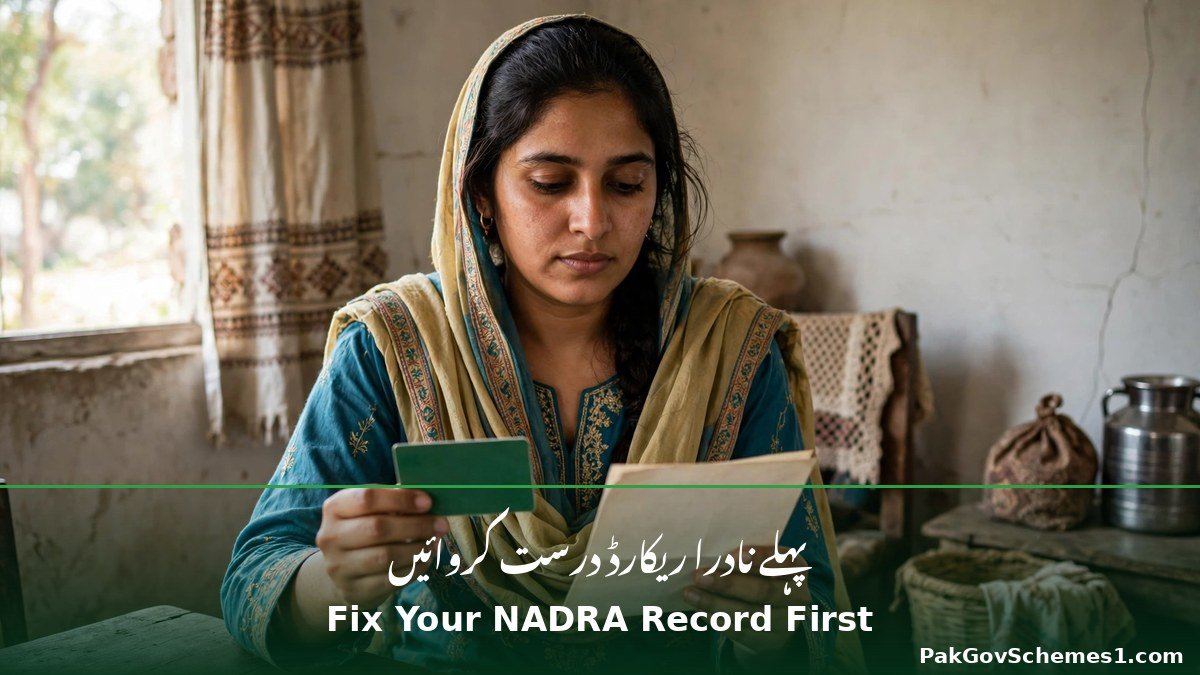
The payee must hold a valid Computerised National Identity Card, and BISP reads your marital status from NADRA’s database. If your CNIC still says “married”, the system assesses you as part of your former husband’s household — his income, his assets, his record. Divorced women raising children alone, and divorced women living with their parents, are priority groups. Priority is not automatic approval: the household must still score within the PMT cut-off, and exclusion filters apply — a government-employed household member, vehicle ownership, or frequent air travel are reported flags.
Your living situation shapes the survey. A divorced woman living independently with her children is normally surveyed as a female-headed household. A divorced woman living with her parents is assessed as part of that household, so the survey must capture the real setup. A divorce still pending in court leaves the record showing “married” until it is finalised and registered.
Registration Procedure: Step by Step
There is no online registration form for BISP Kafalat, and no fee at any stage. The route is in person — NADRA first, BISP second.
- Register the divorce at the Union Council. A verbal or unregistered separation does not change official records. A divorce must be notified to the Union Council, which observes a 90-day reconciliation period before it takes effect, then issues a Divorce Registration or Effectiveness Certificate — or, for a court divorce, a khula decree serves the same purpose.
- Update your marital status at NADRA. Visit a NADRA Registration Centre with the Union Council divorce certificate and your original CNIC, and apply for a marital-status modification — from “married” to “divorced”. Both former spouses must separately update their own records. Also update your address if you have moved, and the children’s B-Forms if custody changed. NADRA’s stated window is 10 to 15 working days, but a 2026 research brief found real cases taking five weeks to eight months.
- Check your 8171 status before travelling. Send your 13-digit CNIC by SMS to 8171, or check on 8171.bisp.gov.pk, to see whether a record already exists.
- Visit your BISP Tehsil Office for the Dynamic Survey. With corrected NADRA records, go to the Dynamic Registration Desk and complete the NSER survey as your real household. If your household was already surveyed before the divorce, ask for a roster update instead — staff issue a roster-update token for changes such as divorce, birth, or death. Reported guidance says a household generally cannot repeat its full survey within two years.
- Answer the survey honestly and complete biometric verification. Give true household details — family members, income, housing, assets, education — and give your thumb impression.
- Keep your survey slip safe as proof the survey was completed. Photograph it as a backup.
- Wait for the decision, then re-check on 8171. BISP publishes no fixed turnaround; guides commonly report a few weeks. If nothing changes after several weeks, return to the Tehsil Office with your slip and CNIC.

CNIC Check and Application Status
Use only the two official methods. By SMS: send your 13-digit CNIC number, without dashes or spaces, to 8171. By portal: open 8171.bisp.gov.pk, enter the CNIC and the picture code, and submit. Both read the same record, so the results should agree. Never share your CNIC number, OTPs, or PINs in website comments, WhatsApp groups, or with callers claiming to be from BISP.
The reply tells you what the system currently holds. “Eligible” means your household qualifies on the current record — it is not yet a payment confirmation. “Under verification” means BISP is still checking your record, usually against NADRA data. “Not eligible” usually means the PMT score came out above the cut-off, or the record is outdated — for a divorced woman, the most common cause is a NADRA record that still shows “married”. BISP has not published an official glossary of exact portal and SMS wording, so these labels are reported wording.
Payment Details and Schedule
| Detail | Verified Information |
|---|---|
| Assistance amount | Rs 14,500 per quarter, Oct–Dec 2026 (reported) |
| Payment schedule | Quarterly, released district by district; no national date announced |
| Payment method | Social Protection Digital Wallet linked to a free Benazir SIM |
| Cash withdrawal charge | Rs 280 per withdrawal; online and RAAST transfers free |
| Payment status check | SMS CNIC to 8171 or the official portal 8171.bisp.gov.pk |
| Payment collection | Authorised payment point after the 8171 SMS, with CNIC and biometric verification |
| Future amount | Rs 18,000 from January 2027 — reported only, not the current amount |
| Deduction complaints | Toll-free helpline 0800-26477 or your BISP Tehsil Office |
Payments begin only after your household is declared eligible. Back payments for earlier quarters are not officially announced, so do not expect them. Count the full amount at the counter and ask for a receipt.

Required Documents
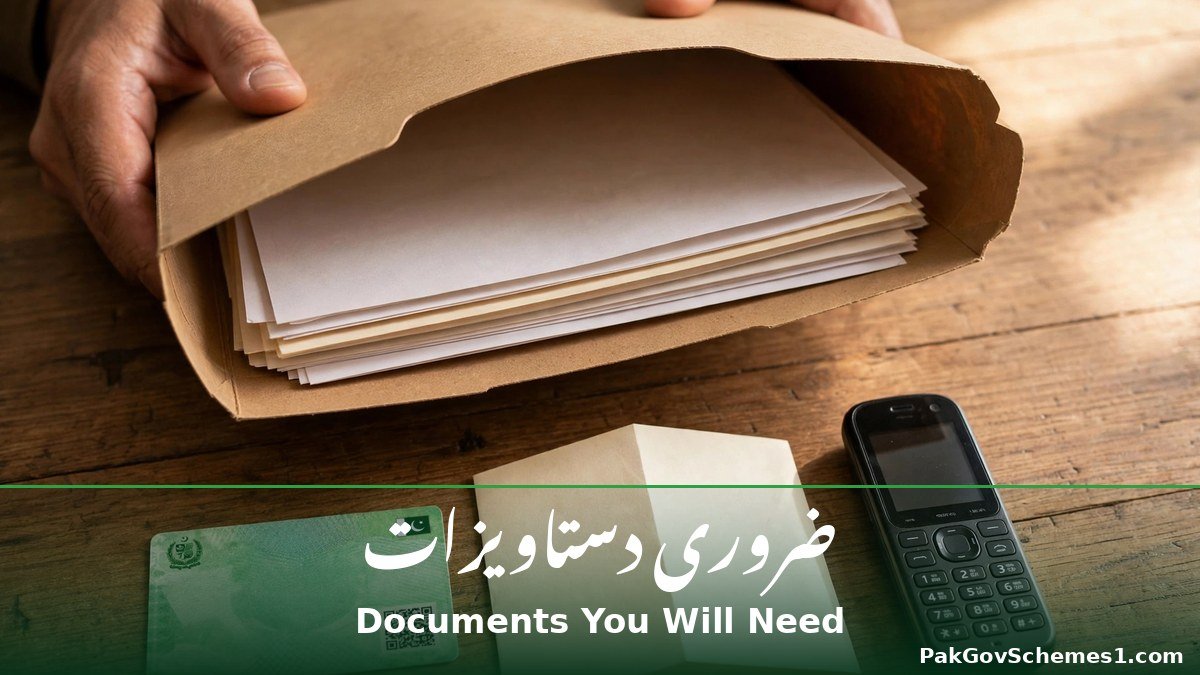
Carry originals — photocopies alone are usually not accepted. Take your original valid CNIC (renew it at NADRA first if expired); the registered divorce certificate from the Union Council, or a khula decree if the divorce went through a family court; adult family members’ CNICs; children’s B-Forms; a recent utility bill; and a mobile number registered in your own name. A disability certificate supports the higher PMT cut-off of 37 where relevant. BISP registration and the survey are free.

Troubleshooting
- CNIC still shows “married”: the Union Council certificate is missing or the NADRA update was never filed. Complete the Union Council registration first.
- Former spouse still on your family record: NADRA does not remove a former spouse automatically. Both former spouses must separately update their own records with the computerised divorce certificate.
- Divorce not registered: an unregistered divorce leaves you legally “married” in every database that matters. Register it at the Union Council first.
- 8171 says “not eligible” after the survey: ask the Tehsil Office for the recorded reason. If the survey ran on the old “married” record, correct NADRA first, then ask about a re-survey.
- Under verification for weeks, biometrics fail, or no SMS reply: re-check on 8171, then visit with your survey slip; update fingerprints at NADRA first.
Official Helpline and Complaint Procedure
BISP’s toll-free helpline is 0800-26477 — use it to report an incorrect status, an unauthorised deduction, or anyone demanding money for registration, surveys, or payments. You can also complain in person at your Tehsil Office; ask for a complaint or token number before you leave. Official BISP messages come only from 8171.

Fake Claims Debunked
Divorced women are a favourite target for BISP scams, because the rules are widely misunderstood. These claims are false or unconfirmed: a special Rs 25,000 payment for divorced women does not exist — the current Kafaalat amount is Rs 14,500 per quarter for every eligible household. There is no online BISP registration form, so any website collecting your CNIC and divorce details for a fee is harvesting your data. Rs 18,000 from January 2027 is reported and proposed only. No national payment date for the October–December 2026 quarter has been officially announced. Every genuine BISP step is free, and no agent can change a PMT score. The 31 December 2026 wallet date is a reported digitalisation target, not a registration deadline.
Common Mistakes to Avoid
- Going to the BISP office before fixing NADRA.
- Treating a verbal separation as a divorce — without Union Council registration, the law still treats you as married.
- Paying an agent who promises guaranteed approval.
- Using a fake online registration website.
- Trusting SMS from any number other than 8171.
- Sharing CNIC photos, OTPs, or wallet PINs.
- Visiting a payment point before the 8171 SMS confirms your payment.
Frequently Asked Questions
Are divorced women eligible for BISP Kafalat in 2026?
Yes. Divorced women heading a household alone are a priority group for Benazir Kafaalat. Eligibility is decided on the actual current household through the NSER survey and the PMT score, so a divorced woman qualifies only if her household scores within the reported cut-off of 32, or 37 with a disabled member.
Is there a separate BISP scheme only for divorced women?
No. There is no separate divorced-women-only BISP scheme, no special form, and no separate payment. A divorced woman applies through the same Benazir Kafaalat programme as everyone else, and her divorce matters because it changes which household the survey assesses.
What is the first step for a divorced woman applying for BISP?
Update your marital status at NADRA with the registered divorce certificate from the Union Council. BISP reads marital status from NADRA’s database, so while your CNIC still says “married”, the system judges you on your former husband’s household and cannot see your real situation.
Can I apply for BISP if my divorce is not registered?
Not effectively. An unregistered divorce leaves you legally “married” in official records, so BISP cannot assess you as a divorced woman. Register the divorce at the Union Council first — it is the legal foundation for BISP eligibility and for your other rights.

What documents does a divorced woman need for BISP registration?
Your original valid CNIC, the registered divorce certificate from the Union Council or a khula decree, adult family members’ CNICs, children’s B-Forms, a recent utility bill, and a mobile number registered in your own name. A disability certificate helps only where a household member has a disability.
How much does BISP pay a divorced woman in 2026?
The same as any eligible household: Rs 14,500 per quarter for the October–December 2026 quarter, as reported. There is no extra amount for divorced women. Payments are released district by district, and only after the 8171 SMS confirms the payment.
How do I check my BISP status after a divorce?
Send your 13-digit CNIC number, without dashes, by SMS to 8171, or enter it on the official portal at 8171.bisp.gov.pk. If the reply says “not eligible” and your NADRA record still shows “married”, correct NADRA first, then ask the Tehsil Office about a re-survey.
Is there any fee for BISP registration as a divorced woman?
No. BISP registration, surveys, and payments are completely free. Only NADRA and the Union Council charge their own official documented fees. Anyone demanding a BISP “approval fee”, or offering to register you online for money, is running a scam — report it on 0800-26477.
Important Safety Notice
Use only verified official portals — 8171.bisp.gov.pk and bisp.gov.pk. Never share OTPs, passwords, or unnecessary personal information with unknown people. PakGovSchemes1.com is an independent informational website, not a government department.

Conclusion
BISP Kafalat for divorced women in 2026 is not a separate scheme — it is the same Benazir Kafaalat programme, reached by fixing your records in the right order. Register the divorce at the Union Council, update your marital status at NADRA, then complete the free Dynamic Survey at your BISP Tehsil Office. If eligible, the reported payment is Rs 14,500 per quarter. Check your status on 8171 before you travel, pay no one for any BISP step, and return here for verified updates.
Related Guides
BISP Ever-Married Condition Removed 2026 — the 29 October 2026 change. BISP New Family Registration 2026 — the full Dynamic Survey process. 8171 New Registration 2026 — what 8171 can and cannot do. BISP 8171 Status Messages Explained 2026 — what each 8171 reply means.
Official Sources
- Benazir Income Support Programme — bisp.gov.pk (official programme website, read 7 November 2026)
- 8171 web portal — 8171.bisp.gov.pk (official status check)
- Associated Press of Pakistan, 29 October 2026 — BISP briefing to the First Lady; ever-married removal reported, not yet a formal rule
- NADRA clarification on removing an ex-spouse’s name after divorce, reported 1 August 2026 — both former spouses must separately update their records
- CDPR research brief, August 2026 — NADRA post-divorce documentation barriers
- BISP guidance on the PMT cut-off and Dynamic Survey, as reported in independent guides — see research.md
Disclaimer: PakGovSchemes1.com is an independent informational website and is not affiliated with any government department. Information is compiled from available official announcements and other identified sources and may change. Please verify eligibility, registration status, payment details, and deadlines through the relevant official government website before taking action.

