
The CM Punjab Dialysis Programme 2026 provides free dialysis treatment to kidney patients in Punjab through hospitals empanelled by the Punjab Health Initiative Management Company (PHIMC). Treatment is arranged at the hospital itself, not through an online application form. This guide explains what is officially confirmed, what has only been reported in the news, and what has not been announced at all, so patients and their families can take the right next step without falling for fake online “card” offers. All facts below were last checked on 28 October 2026.
Quick Overview Table
| Information | Details |
|---|---|
| Program Name | Chief Minister’s Dialysis Programme (CM Punjab Dialysis Programme) |
| Responsible Department | Punjab Health Initiative Management Company (PHIMC) |
| Program Purpose | Free dialysis treatment for kidney patients at empanelled hospitals in Punjab |
| Eligible Beneficiaries | Kidney patients in Punjab whose need for dialysis is confirmed by a hospital (detailed official criteria: Not officially announced) |
| Assistance Amount | Free at empanelled hospitals; any per-patient cap: Not officially announced |
| Registration Method | Visit an empanelled hospital with your CNIC and medical records; the hospital registers and verifies you |
| Required Documents | Valid CNIC and medical records confirming kidney disease and the need for dialysis |
| Official Website | No programme-specific official portal confirmed; confirm empanelment at the hospital help desk or through PHIMC |
| Last Updated | 28 October 2026 |
Latest Update: Peritoneal Dialysis Approved, Sessions Cross 2.29 Million
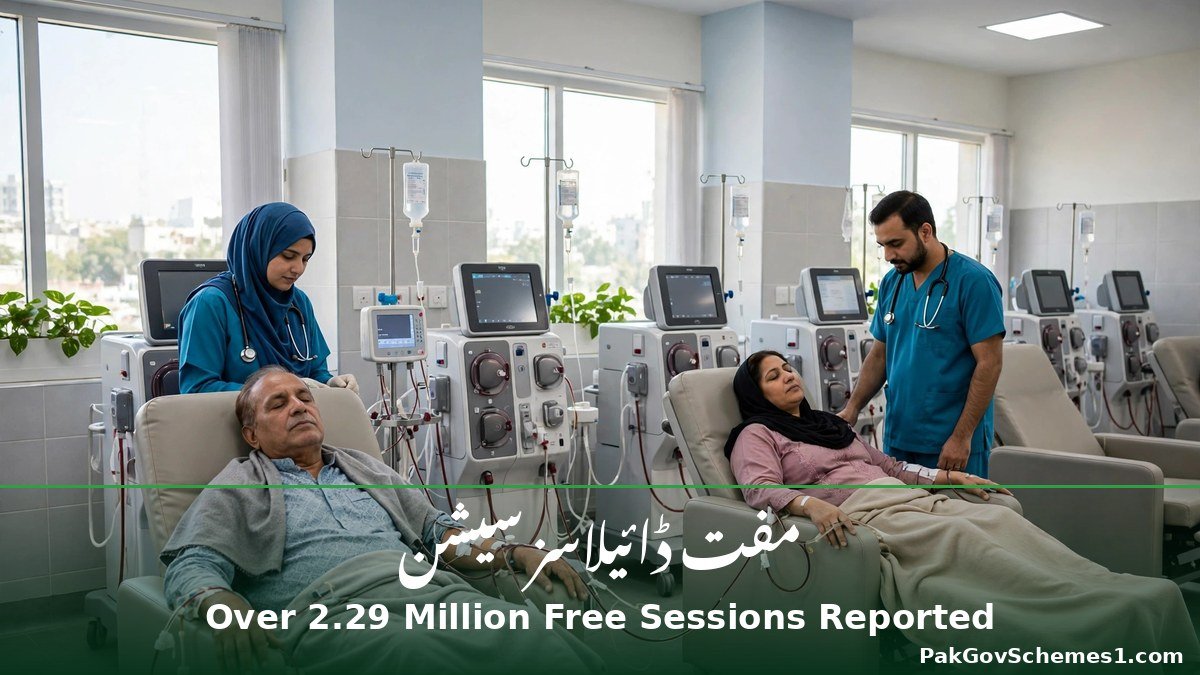
On 8 September 2026, the 119th meeting of the PHIMC Board of Directors, chaired by Provincial Health Minister Khawaja Salman Rafique, formally approved the inclusion of peritoneal dialysis in the Chief Minister’s Dialysis Programme. Peritoneal dialysis — dialysis done through the abdomen, often at home after training — differs from the usual machine-based haemodialysis done in a hospital unit. Which hospitals offer it, and from what date, has not been officially announced, so patients interested in it should ask specifically about it at an empanelled hospital.
At the same meeting, the minister reported updated figures: more than 2.295 million dialysis sessions provided free of cost, and more than 48,406 patients registered at hospitals for dialysis services. These replace the August 2026 figures of more than 2.16 million sessions and over 46,834 patients, reported at the 118th PHIMC board meeting on 12 August 2026. Treat these totals as minister statements reported by APP through UrduPoint, not as a live PHIMC dashboard counter.
The same briefing gave the wider context. Free treatment worth more than Rs 18.5 billion has been provided so far across all of the Chief Minister’s special healthcare programmes combined through empanelled hospitals — not under the dialysis programme alone, a distinction that matters because some blogs present the Rs 18.5 billion as a dialysis-only figure. For comparison, the minister cited more than Rs 3 billion a year under the Adult Cardiac Surgery Programme, around Rs 13 billion a year for cancer patients, and more than Rs 3 billion a year for stroke patients. The board also directed that patients’ problems at empanelled hospitals be resolved on a priority basis.
What the Programme Covers
The programme covers dialysis treatment itself, free of charge, at empanelled hospitals. Dialysis is life-saving treatment for people whose kidneys can no longer clean their blood properly, and a single private session can cost thousands of rupees, repeated several times a week. Whether medicines, laboratory tests, or transport are covered, and whether there is any annual limit per patient, has not been officially announced. Blogs publish detailed benefit breakdowns, but none comes from an official PHIMC announcement, so this guide does not repeat them.
Eligibility Criteria
No detailed official eligibility rulebook for the dialysis programme has been published in the sources checked. The confirmed points are:
- Residence in Punjab: a Punjab government programme run through PHIMC, designed for patients in Punjab. Whether patients from other provinces can be treated under it has not been officially announced — confirm at the hospital before travelling.
- A confirmed kidney diagnosis: a doctor must confirm that dialysis is medically needed. Bring your diagnosis and past treatment records; the hospital’s medical team, not a website form, makes that assessment.
- A valid CNIC: hospital registration is done against the patient’s CNIC. Keep the original ready and make sure it is valid and not expired.
What has not been officially announced includes any income limit, age limit, rule about which stage of kidney disease qualifies, or rule about previous treatment. Blogs sometimes publish such criteria, but those are blogger claims, not official rules, and are not repeated here as conditions. If you meet the three points above, visit an empanelled hospital and let its team assess you. No one can guarantee approval: eligibility is confirmed by the hospital after medical verification.
Step-by-Step Access via Empanelled Hospitals

There is no confirmed official online registration portal or “dialysis card” application form for this programme. Access works through the hospital:

- Find an empanelled hospital with a dialysis unit near you. District and Tehsil Headquarters Hospitals (DHQs/THQs) with dialysis units are the first places to check, along with the hospitals named below. Confirm empanelment before travelling far.
- Visit the hospital’s help desk or dialysis unit. Ask whether the hospital is empanelled for dialysis and whether it offers haemodialysis, peritoneal dialysis, or both.
- Present your CNIC and medical records. Hand over your original CNIC, kidney diagnosis, recent test reports, and any record of previous sessions. The hospital will register and verify you.
- Complete the hospital’s medical assessment. Doctors will confirm your diagnosis and set your treatment plan, including session frequency — a medical decision, not something an online form can set.
- Begin treatment as scheduled. Once registered and assessed, your sessions at that hospital are free. Keep your hospital record and session card safe and bring them to every visit.
- If the hospital cannot help, ask for a referral to a nearby empanelled hospital, and ask for that guidance in writing if possible.
A note on the “dialysis card” advertised online: several blogs describe a card you apply for on a website. No official card-application page was found in the sources checked, and no official announcement describes a card delivered to your home. Do not fill in an online form asking for your CNIC number, photograph, or payment in exchange for a “dialysis card”. Real registration happens at the hospital and costs nothing.
Hospitals: A Reported Example from Sargodha Division
There is no officially published, province-wide hospital list in the sources checked, so this guide does not claim to list every empanelled centre. News coverage has reported a Sargodha Division rollout, updated in September 2026, naming these hospitals as providing free dialysis. Treat this as a reported example, and confirm at the hospital before travelling:
| District | Hospitals reported as providing free dialysis |
|---|---|
| Sargodha | District Headquarters Hospital; Tehsil Headquarters Hospital, Bhera |
| Mianwali | District Headquarters Hospital; Tehsil Headquarters Hospital, Isa Khel; Obaid Noor Hospital |
| Khushab | Tehsil Headquarters Hospitals, Quaidabad, Noshehra and Nurpur Thal |
| Bhakkar | Azhar Mehboob Memorial Hospital; Brigadier Shafiq Trust Hospital |
Patients in other divisions should check with their nearest DHQ or THQ hospital, or with PHIMC, rather than assuming a hospital near them is empanelled. Never pay anyone for a “confirmed hospital list”.
CNIC and Status Check: What to Present at the Hospital
There is no confirmed online CNIC status-check portal or SMS code for this programme, so there is no website where you can type your CNIC and see an approval status. Your “status check” is the hospital record itself:
- At registration: the hospital records your CNIC details and medical file. Ask staff to confirm your registration has been entered, and keep any receipt, slip, or session card they give you.
- At each visit: bring your CNIC and session card or file. Staff will match your record before each session.
- If your record is not found: check you are at the hospital where you registered, and that the CNIC number on your slip matches your card. Small digit errors are the most common cause.
- If you are told you are not eligible: ask the team to explain the reason in plain words, and whether a re-assessment is possible. Only the hospital’s team can decide — not an agent.
Never share your CNIC number, photograph, or one-time password with anyone online claiming to check your dialysis status. No official process for this programme asks for those details over social media or WhatsApp.

Payment and Cost Details

| Detail | Verified Information |
|---|---|
| Cost to the patient at an empanelled hospital | Free — dialysis sessions provided free of cost (reported by the Health Minister, September 2026) |
| Per-patient cap or annual limit | Not officially announced |
| Payment schedule / method | Not applicable — treatment is provided directly at the hospital, not as cash to the patient |
| Medicines, tests and transport coverage | Not officially announced |
| Peritoneal dialysis availability | Inclusion approved September 2026; hospitals and start date: Not officially announced |
| Session frequency | Decided by the treating doctor; no fixed number officially announced |
The key cost fact is simple: at an empanelled hospital, the dialysis session itself is free. Families should still budget for travel and for anything the hospital says is outside the programme. Because no per-patient cap has been officially announced, any website guaranteeing a fixed total coverage amount is guessing. If payment is demanded for a session that should be free, raise it at the hospital help desk first.
Required Documents
- Your original, valid CNIC.
- Medical records confirming kidney disease — diagnosis reports, recent blood and urine test results, and any nephrologist’s notes you have.
- Record of any previous dialysis sessions, if you have already started treatment elsewhere.
- Any referral letter from your treating doctor, if you have one (helpful, but no official announcement makes it compulsory).
- Your hospital file or session card from any earlier visit, if you are already registered.
Keep photocopies of everything you hand over, and never hand your original CNIC to an agent or stranger. If you attend on behalf of an elderly or very ill patient, take your own CNIC as well.
Troubleshooting: Common Problems and What to Do
- Hospital says it is not empanelled: ask which nearby hospital is empanelled and go there with your records. One refusal does not mean the programme has ended.
- Record not found: check the CNIC number on your slip, confirm you are at the hospital where you registered, and ask the help desk to search again.
- Told to pay for a session: ask the help desk, in writing if possible, why it is not covered. Do not pay an agent.
- Peritoneal dialysis not available: inclusion was approved in September 2026, but availability by hospital has not been announced. Ask which empanelled hospital already offers it.
- Long wait for a session slot: units have limited machines, so slots can be tight. Keep appointments and arrive on time — missed sessions are hard to reschedule.
- Asked to fill an online “card” form: stop. No official online card form has been confirmed; real registration is at the hospital.
- Confused with the Sehat Card: this programme is separate from the general Sehat Card (Sehat Sahulat) scheme. Ask the hospital which route applies to you.
Helpline and Complaint Procedure

No dialysis-programme-specific helpline has been confirmed on an official PHIMC page in the sources checked. However, news coverage of the Sargodha Division rollout — by The Markhor Times and the Pakistan Observer — gives a PHIMC helpline, 0800-09009, described as available 24 hours a day for guidance about dialysis services. Treat it as reported, not officially confirmed: try it for guidance, but confirm anything important — especially hospital empanelment — at the hospital help desk.
For complaints: first, the hospital help desk — raise the problem there and note who you spoke to and when. Second, PHIMC offices, which oversee the programme and its empanelled hospitals; the September 2026 board direction that patients’ problems be resolved on a priority basis supports asking for a prompt answer. You may also try the reported helpline 0800-09009 for guidance. Never pay anyone who offers to “speed up” a complaint or booking.

Common Mistakes to Avoid
- Applying through a fake online “dialysis card” form: no official online form exists; registration is at the hospital.
- Paying an agent for registration or a session slot: both are free at empanelled hospitals; agents cannot guarantee either.
- Sharing your CNIC image or personal details online: no official process asks for these over social media or WhatsApp.
- Believing a guaranteed coverage amount from a blog: no per-patient cap is officially announced, so any fixed figure is unverified.
- Confusing this programme with the Sehat Card: they are separate schemes; ask the hospital which one covers your treatment.
- Travelling far on a blog hospital list: confirm empanelment at the hospital first — online lists may be out of date.
- Missing sessions or arriving without CNIC and session card: dialysis only works on schedule, and the hospital needs your record at every visit.
Frequently Asked Questions
Is dialysis really free under the CM Punjab Dialysis Programme?
Yes, at empanelled hospitals. The Punjab Health Minister reported in September 2026 that more than 2.295 million dialysis sessions had been provided free of cost under the programme, and over 48,406 patients had been registered at hospitals for dialysis services. Treatment is arranged at the hospital, not paid as cash to the patient.
How do I register for the CM Punjab Dialysis Programme?
Visit an empanelled hospital with your CNIC and medical records confirming kidney disease. The hospital registers you, verifies your diagnosis, and schedules your sessions after a medical assessment. No official online registration portal or card-application form has been confirmed, so do not trust websites offering online registration.
Is there an online form for the dialysis card?
No official online dialysis card form has been found in the sources checked for this article. Blogs that advertise one are not official sources, and no official announcement describes a card delivered to your home. Do not enter your CNIC or pay money on such websites; register at an empanelled hospital instead.
Who is eligible for free dialysis in Punjab?
Kidney patients in Punjab whose need for dialysis is confirmed by a hospital after medical assessment. No detailed official eligibility rulebook — covering income limits, age limits, or disease-stage rules — has been published in the sources checked, so the hospital’s assessment decides each case individually.
Which hospitals offer free dialysis under the programme?
Empanelled hospitals across Punjab, including DHQ and THQ hospitals with dialysis units. News coverage names hospitals in Sargodha, Mianwali, Khushab and Bhakkar districts as a reported example. Always confirm empanelment at the hospital itself before travelling, as lists online may be incomplete.
Is peritoneal dialysis covered?
Its inclusion in the programme was formally approved by the PHIMC board in September 2026. However, which hospitals offer peritoneal dialysis and from what date has not been officially announced, so ask your empanelled hospital directly whether it provides this method or can refer you onward.
Is there a limit on how much treatment I can receive?
No per-patient cap or annual limit has been officially announced in the sources checked. Session frequency is decided by your treating doctor after medical assessment, based on your condition. Any fixed coverage figure published on blogs is unverified and should not be relied upon.
What is the PHIMC helpline for dialysis patients?
News coverage of the Sargodha Division rollout reports a PHIMC helpline, 0800-09009, available 24 hours a day for guidance about dialysis services. It is reported, not confirmed on an official PHIMC page checked for this article, so confirm important details — especially hospital empanelment — at the hospital help desk.
Is this programme the same as the Sehat Card?
No. The Chief Minister’s Dialysis Programme is a separate Punjab initiative run through PHIMC and empanelled hospitals, with its own hospital registration route. It should not be confused with the general Sehat Card (Sehat Sahulat) scheme, which has its own rules, cards, and hospital arrangements.
Important Safety Notice
Use only verified official and reputable sources, and never share your CNIC image, one-time passwords, or unnecessary personal information with unknown individuals online. No genuine representative of this programme will ask you for money to register you, book a session, or issue a card. PakGovSchemes1.com is an independent informational website, not an official government department, and this article cannot guarantee any individual’s eligibility or treatment.

Conclusion
The CM Punjab Dialysis Programme 2026 is a real, hospital-based route to free dialysis for kidney patients in Punjab, run through PHIMC and its empanelled hospitals, with more than 2.295 million free sessions reported by September 2026 and peritoneal dialysis newly approved for inclusion. The safest way to use it is the simplest: take your CNIC and medical records to an empanelled hospital, let its team register and assess you, and keep your session record safe. Do not trust online card forms, guaranteed coverage figures, or agents who charge for access.
Related Articles on PakGovSchemes1.com
- Punjab Children Heart Surgery Programme 2026 — another Chief Minister’s special health initiative run through empanelled hospitals.
- Sehat Card Hospital List 2026 — how the separate general Sehat Card hospital system works, so you do not mix the two schemes up.
Official Sources
- UrduPoint (APP), 8 September 2026: Punjab expands free healthcare initiatives — verifies the 119th PHIMC board, peritoneal dialysis approval, Rs 18.5 billion across all special programmes, and the 2.295 million sessions / 48,406 patients figures.
- UrduPoint (APP), 12 August 2026: Punjab provides free healthcare worth over Rs 18.5 billion — verifies the earlier 118th board figures (2.16 million sessions, 46,834 patients).
- The Markhor Times: These Hospitals Offer Free Dialysis in Punjab — verifies the reported Sargodha Division hospitals and the reported PHIMC helpline 0800-09009 (not officially confirmed).
Disclaimer: PakGovSchemes1.com is an independent informational website and is not affiliated with any government department. Information is compiled from available official announcements and other identified sources and may change. Please verify eligibility, registration status, payment details, and deadlines through the relevant official government website before taking action.

