
GB hepatitis C screening treatment 2026 is now free for every citizen of Gilgit-Baltistan. A free screening and treatment programme launched across the region on Wednesday, 18 November 2026, and Chief Minister Amjad Hussain has vowed to eliminate hepatitis C from Gilgit-Baltistan within six months. Under the programme, every citizen will be screened, and anyone diagnosed with the disease will receive free treatment and medicines. This guide explains what was announced, where to go, what it costs, and what is still not announced.
Quick Overview: GB Hepatitis C Screening and Treatment 2026
| Information | Details |
|---|---|
| Programme name | Free hepatitis C screening and treatment programme, Gilgit-Baltistan (part of the Prime Minister’s National Programme for the Elimination of Hepatitis C) |
| Launched in GB | 18 November 2026, by GB Chief Minister Amjad Hussain |
| Target | Eliminate hepatitis C from Gilgit-Baltistan within six months |
| Who is covered | Every citizen of Gilgit-Baltistan, according to the Chief Minister |
| Screening cost | Free |
| Treatment and medicines | Free for patients diagnosed with hepatitis C |
| PCR diagnostic test | Free (normally worth around Rs 8,000, according to official sources quoted by The Nation) |
| Treatment value | Free (normally worth between Rs 34,000 and Rs 68,000, according to official sources quoted by The Nation) |
| Screening centres in GB | Three centres, according to official sources quoted by The Nation on 1 November 2026; full list of locations not officially announced |
| Helpline | 1166 (toll-free), reported by The Nation and UrduPoint from official sources |
| Responsible bodies | Ministry of National Health Services (federal government); Gilgit-Baltistan Health Department |
| Registration portal | Not officially announced — no online registration has been confirmed |
| Last updated | 22 November 2026 |
Latest Update: Free Screening Drive Launched on 18 November 2026
On Wednesday, 18 November 2026, Gilgit-Baltistan Chief Minister Amjad Hussain launched a free hepatitis C screening and treatment programme across the region at the GB Chief Minister Secretariat. Dawn reported on 19 November 2026 that the Chief Minister himself took a hepatitis C screening test at the ceremony. He said the priority was to make Gilgit-Baltistan free of hepatitis C within six months through free screening and medicines, with health staff working round the clock at centres across the region.
He appealed to residents, scholars and civil society to join the campaign and get tested. He thanked Prime Minister Shehbaz Sharif and Federal Health Minister Mustafa Kamal for launching the initiative in Gilgit-Baltistan, Azad Jammu and Kashmir and Islamabad.
This launch follows an earlier step. On 1 November 2026, the Associated Press of Pakistan (APP) reported that free hepatitis C screening, testing and treatment had been introduced in Gilgit-Baltistan and Azad Jammu and Kashmir under the Prime Minister’s National Programme for the Elimination of Hepatitis C, with three centres in Gilgit-Baltistan and six in Azad Jammu and Kashmir. The 18 November ceremony was the formal GB launch.

What Is Hepatitis C?
Hepatitis C is an infection of the liver caused by the hepatitis C virus. Many people feel no symptoms for years, so the disease is often found late. Left untreated, it can cause serious liver damage and liver cancer. Early testing matters: a simple blood test can find the infection before it causes harm.
The virus can spread through contaminated blood, unsafe injections and infected shaving equipment, according to the health ministry, reported by The Nation. The good news is that hepatitis C is curable: modern medicines can cure most patients, and under this programme those medicines are provided free of cost. Around 11 million people in Pakistan are affected, and around 60 million worldwide, which is why the federal government runs a national elimination programme, now extended to Gilgit-Baltistan and Azad Jammu and Kashmir.
What the Programme Covers — and What It Costs
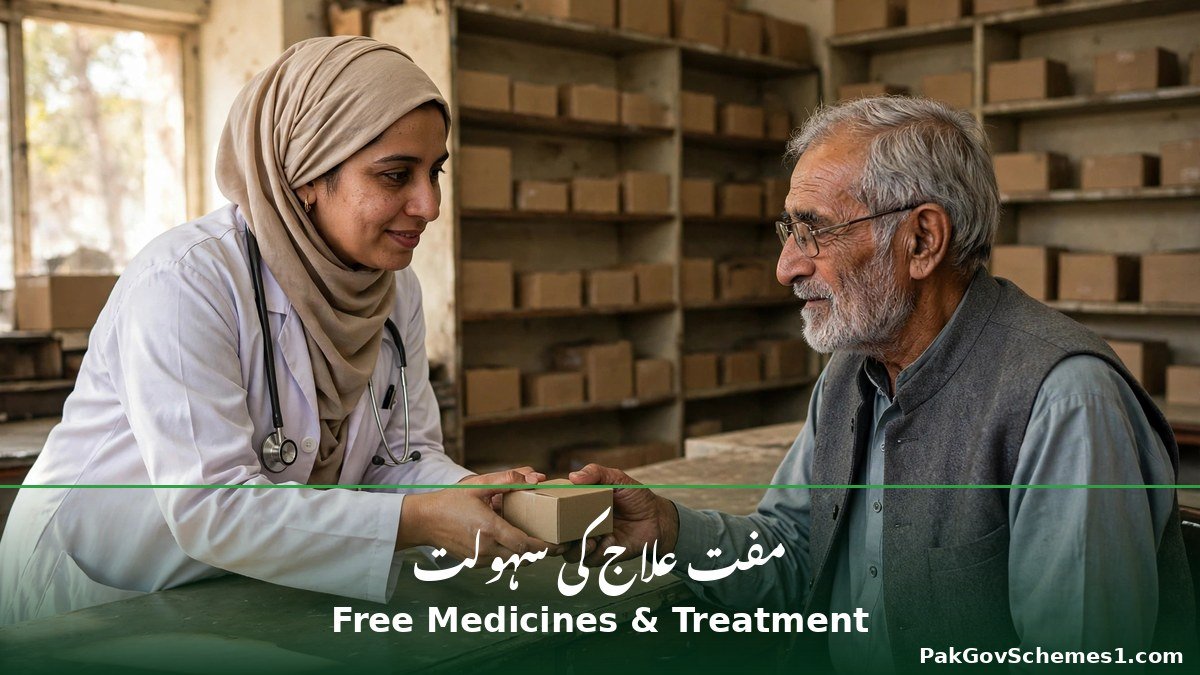
The programme covers the full journey from testing to treatment, free. Nobody should ask you for money — report any demand to the nearest government hospital or the helpline below.

| Detail | Verified Information |
|---|---|
| Initial screening test | Free for every citizen of Gilgit-Baltistan |
| PCR diagnostic test | Free; normally worth around Rs 8,000 (official sources, reported by The Nation, 1 November 2026) |
| Treatment and medicines | Free; normally worth between Rs 34,000 and Rs 68,000 (official sources, reported by The Nation, 1 November 2026) |
| Who pays | The government — patients do not pay for screening, diagnosis or treatment under the programme |
| Payment method | No payment is involved; this is a free government health service, not a cash scheme |
| Deadline to get tested | Not officially announced; the Chief Minister’s target is to eliminate the disease from GB within six months of the launch |
Who Is Eligible
Eligibility is simple. The Chief Minister said every citizen of the region will be screened, and anyone diagnosed will receive free treatment. There is no announced income or age limit, and no need to be a BISP beneficiary or hold any card.
The federal initiative also covers Azad Jammu and Kashmir and Islamabad. In Azad Jammu and Kashmir, six centres have been set up, according to official sources quoted by The Nation. This article focuses on Gilgit-Baltistan, where three centres have been set up. Residents of Azad Jammu and Kashmir and Islamabad should call helpline 1166. People who should get tested first include anyone who has had a blood transfusion, surgery or dental treatment, or shared razors or needles — but the Chief Minister’s message is that everyone should be tested, because many people carry the virus without knowing it.
How to Get Screened: Step by Step
There is no online registration portal announced for this programme. Screening is done in person at designated centres and government hospitals. The steps below mix confirmed facts with general guidance.
- Find your nearest screening point (confirmed options below). In Gilgit district, screening is available at the Deputy and Additional Deputy Commissioner offices in Gilgit and at the Assistant Commissioner offices in the three sub-divisions. Elsewhere, visit your nearest government hospital and ask for the screening centre. The full list of the three GB centres has not been announced, so call helpline 1166 to confirm the nearest point.
- Carry your CNIC (general guidance). Take your original CNIC and a registered mobile number so staff can contact you with results. No official document list has been published; the CNIC is standard practice at government health facilities.
- Give a blood sample for the screening test (confirmed). A health worker takes a small blood sample. The test is quick and free.
- Wait for the result and follow the health worker’s advice (general guidance). If it is negative, no further testing is needed — but ask the staff when to be tested again. If it is positive, you will need a PCR test to confirm the diagnosis. The PCR test is also free.
- Get free treatment if diagnosed (confirmed). If hepatitis C is confirmed, the government provides free treatment and medicines. Take the full course exactly as the doctor tells you. Stopping treatment early can let the virus come back.
- Tell your family to get tested too (advice from the health ministry). The health ministry has urged residents to spread awareness among their families and communities.
Where to Go: Screening Points in Gilgit-Baltistan
Three screening centres have been confirmed in Gilgit-Baltistan, but the full list of locations has not been announced. The one district with confirmed locations is Gilgit, where screening is available at the Deputy and Additional Deputy Commissioner offices in Gilgit city and at the Assistant Commissioner offices in the three sub-divisions, according to the health ministry, reported by APP on 11 November 2026.
For other districts, no confirmed list has been published yet. Until a full list appears, visit your nearest government hospital or call the toll-free helpline 1166. Do not trust a list shared only on social media — check it against the hospital or the helpline first. This programme is separate from the GB Sehat Hifazat OPD Card, whose pilot launched on 1 November 2026. You do not need an OPD card for a free test.

CNIC and Status Check
No online portal, SMS code or app has been announced for checking your test result. Results are given by the facility where you were tested, usually in person or by phone. Do not enter your CNIC number on any website that claims to check your hepatitis C result — no such website has been announced.

When you go for screening, carry your original CNIC. This is general guidance, not an official rule — hospitals normally record a patient’s CNIC. If you are under 18, take your B-Form and go with a parent or guardian. If you have not received your result, go back to the same centre or call helpline 1166. Do not share your CNIC photo, test report or OTP with strangers who offer to check your result.
Required Documents
No official document list has been published. The list below is general guidance on what government health facilities normally ask for. Take what you have; do not delay your test over one missing document.
- Original CNIC — for identification and your medical record.
- Registered mobile number — so staff can contact you about your result.
- B-Form — for children under 18 who do not have a CNIC yet.
- Any old medical reports — if you have been tested or treated for hepatitis before.
- List of medicines you already take — tell the doctor about them.
Troubleshooting: Problems You May Face
You cannot find a screening centre near you. Call helpline 1166, or ask at your nearest government hospital. The full list has not been published, so the hospital or the helpline is the reliable source.
Your screening test is positive and you are worried. A positive screening test does not by itself confirm hepatitis C — a PCR test is needed, and that test is also free. Even if confirmed, it is curable and the treatment is free. Follow the doctor’s instructions and finish the full course.
Someone asks you for money for the test or treatment. Screening, PCR testing, treatment and medicines are all free. Do not pay. Report the demand to the hospital administration or call helpline 1166.

Official Helpline and Complaint Procedure
For information about screening centres and treatment, call the toll-free helpline 1166. This number was reported by The Nation and UrduPoint from official sources when the programme was expanded to Gilgit-Baltistan and Azad Jammu and Kashmir. Calling 1166 is free, and the helpline can guide you to the nearest designated centre.
No separate complaint portal has been announced. If you face a problem — a centre refuses a free test, someone demands money, or medicines are not provided after a confirmed diagnosis — report it to the hospital administration or the Gilgit-Baltistan Health Department, or raise it through helpline 1166. Keep your test report and any paper the centre gives you. Other health schemes work in a similar way: KP readers can see our Sehat Card Plus KP 2026 guide, Balochistan residents the Balochistan Sehat Dehleez app, and Punjab residents the Punjab Clinic on Wheels service.
Common Mistakes to Avoid
- Thinking hepatitis C has no cure. Hepatitis C is curable, and the treatment is free under this programme. Do not avoid the test because you fear the result.
- Waiting for symptoms before getting tested. Most people with hepatitis C feel fine for years while the virus quietly damages the liver. This campaign exists to test people who feel healthy.
- Paying an agent for registration. There is no registration form, fee or agent. Screening is a walk-in service at designated centres and government hospitals.
- Sharing your CNIC photo or test report online. No real check for this programme asks for your documents on WhatsApp or Facebook. Keep your medical papers private.
- Stopping treatment halfway. If you are diagnosed, finish the full course of medicines and attend follow-up tests. Stopping early can let the virus return.
- Confusing this with the GB Sehat Hifazat OPD Card. That is a separate scheme for outpatient care — you do not need any card for a free hepatitis C test.
- Trusting a centre list from social media. Only Gilgit district locations are officially confirmed so far. Confirm any other location with helpline 1166 or your nearest government hospital.

Frequently Asked Questions
1. What is GB hepatitis C screening treatment 2026?
It is a free hepatitis C screening and treatment programme for Gilgit-Baltistan, launched on 18 November 2026 under the Prime Minister’s National Programme for the Elimination of Hepatitis C. Every citizen is to be screened, and anyone diagnosed receives free treatment.
2. Is the hepatitis C test really free?
Yes. The screening test, the PCR test (normally worth around Rs 8,000) and the full treatment (normally worth Rs 34,000 to Rs 68,000) are all free, according to official sources quoted by The Nation. Nobody should ask you for money.

3. Who can get the free hepatitis C test in Gilgit-Baltistan?
Every citizen of Gilgit-Baltistan, according to Chief Minister Amjad Hussain. There is no announced income or age limit, and no need to be registered in any other scheme or hold any health card. Children can also be screened; ask the health staff about testing for children in your family.
4. Where can I get tested in Gilgit-Baltistan?
In Gilgit district, screening is available at the Deputy and Additional Deputy Commissioner offices in Gilgit and at the Assistant Commissioner offices in the three sub-divisions. Elsewhere, visit your nearest government hospital or call helpline 1166. The full list of the three GB centres has not been announced.
5. What is hepatitis C in simple words?
Hepatitis C is a virus that infects the liver. Many people have it for years without feeling ill, but untreated it can cause serious liver damage and liver cancer. It spreads through contaminated blood, unsafe injections and infected shaving equipment, but it is curable when found early.
6. How is the test done?
A health worker takes a small blood sample from your arm. If that test is positive, a PCR test confirms the diagnosis, and both tests are free. If hepatitis C is confirmed, the doctor starts free treatment and arranges follow-up tests.
7. Do people in Azad Jammu and Kashmir and Islamabad also get free screening?
Yes. The federal initiative covers Gilgit-Baltistan, Azad Jammu and Kashmir and Islamabad. Six centres have been set up in Azad Jammu and Kashmir, and the programme was first introduced in Islamabad. Residents there should call helpline 1166, and the government plans to extend the free screening to other parts of the country.
8. Is there an online registration or a form to fill?
No. No registration portal, form or SMS code has been announced. Screening is a walk-in service at designated centres and government hospitals. Any website or agent claiming to register you online is not using an official process. Do not pay any agent who claims to register you.
9. What is the helpline number for the hepatitis C programme?
The toll-free helpline is 1166, reported by The Nation and UrduPoint from official sources. You can call it free of charge for information about screening centres and treatment services, and it can guide you to the nearest designated centre in your area.

10. What should I do if my test is positive?
Do not panic. A positive screening test needs a PCR test to confirm the diagnosis, and that test is free. If hepatitis C is confirmed, the treatment is free and the disease is curable. Take the full course exactly as the doctor tells you, and ask your family to get screened too.
Important Safety Notice
Use only verified official sources — the GB Health Department, the Ministry of National Health Services and reputable newspapers — for news about this programme. Never share your CNIC photo, medical reports, OTP or bank details with unknown individuals, and never pay anyone who promises a test, registration or treatment.
Conclusion
GB hepatitis C screening treatment 2026 gives every citizen of Gilgit-Baltistan a free way to find out whether they carry a curable disease that often shows no symptoms before it causes harm. The programme launched on 18 November 2026, the screening, PCR test and medicines are all free, and the Chief Minister has set a six-month target to eliminate the disease from the region. Go to your nearest government hospital with your CNIC, get tested, and take your family with you.
Sources
- Dawn, “Free hepatitis C screening, treatment drive launched in GB”, 19 November 2026 — dawn.com — GB launch on 18 November 2026, Chief Minister Amjad Hussain’s six-month elimination vow, every citizen to be screened, free treatment, federal collaboration, thanks to PM Shehbaz Sharif and Health Minister Mustafa Kamal, staff working round the clock.
- The Nation (APP), “Govt expands free hepatitis C screening and treatment programme to GB, AJK”, 1 November 2026 — nation.com.pk — Prime Minister’s National Programme for the Elimination of Hepatitis C, three screening centres in GB and six in AJK, free PCR test worth around Rs 8,000, treatment worth Rs 34,000–68,000, toll-free helpline 1166, around 11 million people affected in Pakistan, how the virus spreads, hepatitis C is curable.
- UrduPoint (APP), “Gilgit District Opens Free Hepatitis C Screening at Local Administration Offices”, 11 November 2026 — urdupoint.com — screening at the Deputy Commissioner and Additional Deputy Commissioner offices in Gilgit and Assistant Commissioner offices in all three sub-divisions of Gilgit district, free screening, PCR testing, treatment and medicines.
Disclaimer: PakGovSchemes1.com is an independent informational website and is not affiliated with any government department. Information is compiled from available official announcements and other identified sources and may change. Please verify eligibility, registration status, payment details, and deadlines through the relevant official government website before taking action.

