
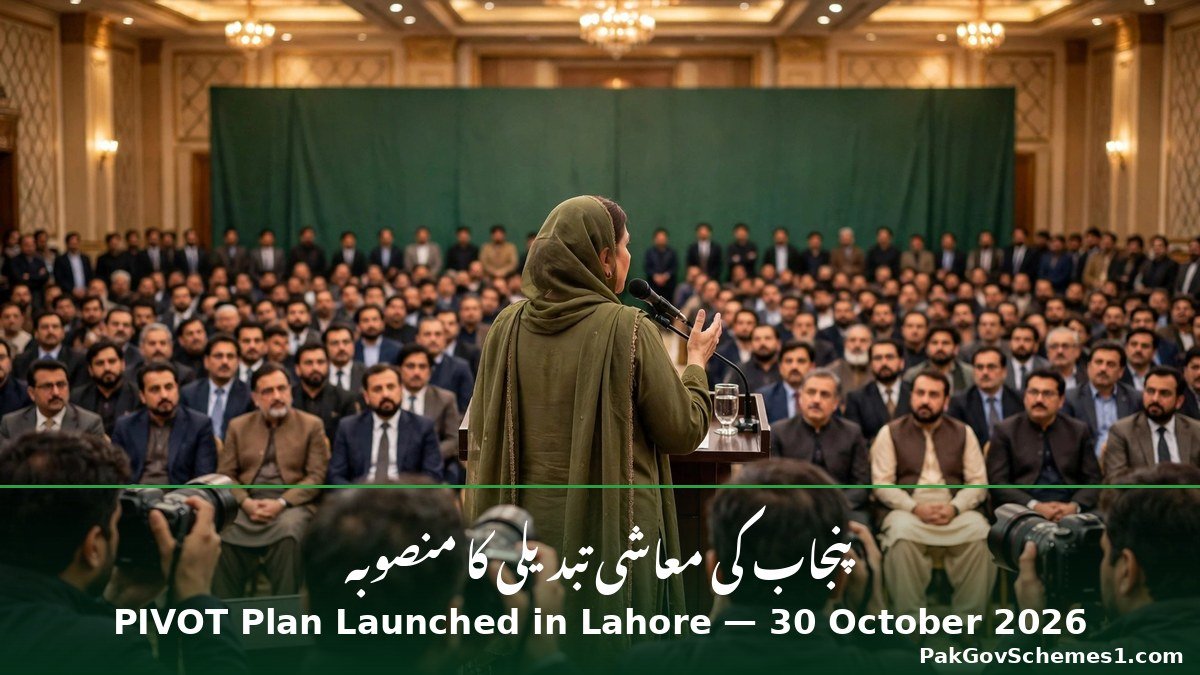
The Punjab PIVOT Plan 2026-29 is the Punjab government’s three-year economic transformation programme, launched in Lahore on 30 October 2026 by Chief Minister Maryam Nawaz Sharif. With a planned investment of Rs 1,995.3 billion, it aims to add $6.8 billion in exports, create 162,000 direct jobs and train 402,060 people. This guide explains what PIVOT is, who can benefit, and what young people, business owners, farmers and exporters can and cannot do right now. Every figure here is a government target, not a result already achieved.
Quick Overview: Punjab PIVOT Plan 2026-29
| Information | Details |
|---|---|
| Program Name | Punjab Innovation for Value, Opportunity and Transformation (PIVOT) Plan 2026-29 |
| Responsible Department | Government of Punjab — PIVOT Board chaired by Senior Provincial Minister Marriyum Aurangzeb; PIVOT Secretariat in the Planning and Development Department |
| Program Purpose | Turn Punjab into an export-led industrial hub through industry, value addition, agriculture processing, skills training, tourism and digital services |
| Program Period | Three years, 2026 to 2029 |
| Total Investment (Target) | Rs 1,995.3 billion — Rs 1,089 billion public investment + Rs 906 billion expected private investment |
| Export Target | Additional $6.8 billion in exports by 2029 |
| Jobs Target | 162,000 additional direct jobs; better livelihoods for over 1 million people |
| Skills Training Target | 402,060 people trained over three years |
| Main Financing Window | Strategic Trade Enhancement Programme (STEP) — Rs 300 billion in concessional financing at 0–5% interest, subject to programme terms |
| Industry Allocation | Rs 753.7 billion to strengthen the industrial sector |
| Registration Status | No public registration or application process has been announced. There is no verified PIVOT application form, portal link, deadline or helpline yet. |
| Official Website | No dedicated official PIVOT page has been published on punjab.gov.pk as of 14 November 2026 |
| Last Updated | 14 November 2026 |
Latest Update on the Punjab PIVOT Plan
The Punjab cabinet approved the main features of the plan on 19 October 2026 at its 37th meeting, chaired by Chief Minister Maryam Nawaz Sharif, after Senior Minister Marriyum Aurangzeb presented the programme. On Friday 30 October 2026, the Chief Minister formally launched the Punjab PIVOT Plan 2026-29 in Lahore, along with the STEP portal, at a ceremony attended by the State Bank Governor, leading industrialists, diplomats and development partners. She promised PIVOT’s implementation would be tracked and its results assessed.
Chief Secretary Zahid Akhtar Zaman confirmed that PIVOT would be operationalised within six months, which points to around April 2027. As of 14 November 2026, however, the government has not published the full plan document, a year-by-year schedule, or the detailed terms of the STEP financing window. Readers should treat any social media post claiming that PIVOT registration is open as unverified unless it is confirmed by the Government of Punjab.
What Is the Punjab PIVOT Plan?
PIVOT stands for Punjab Innovation for Value, Opportunity and Transformation. It is the province’s first programme of its kind: a single three-year framework that brings together industry, agriculture, tourism, skills development, technology, energy and exports, instead of running them as separate schemes. The idea is simple: Punjab sells too much produce and manufactures too many goods in raw form. PIVOT wants the province to process, finish and brand those goods at home, so the extra value and jobs stay in Punjab. The Nation’s analysis on 2 November 2026 suggested PIVOT could add about one percentage point to Punjab’s average annual growth — an analyst’s estimate, not an official promise.
One naming point needs clearing up. Some early reports after the 19 October cabinet meeting called the programme “PIYUT”, while the launch coverage on 30 October used “PIVOT”. Both names refer to the same Rs 1,995.3 billion programme, and this article uses PIVOT because that is the name used at the formal launch. Some launch reports expand the name slightly differently, but it is the same programme.
Where the Rs 1,995.3 Billion Is Meant to Go
The headline figure is a three-year investment framework, not money that has already been spent. The Punjab government plans to invest Rs 1,089 billion of public money, and it expects the private sector to invest a further Rs 906 billion. That second part is a target, not a signed commitment: no published account lists the private investors or the commitments behind the Rs 906 billion figure. The largest single allocation announced so far is Rs 753.7 billion for strengthening the industrial sector. Two smaller allocations were also announced: Rs 50 billion for solar power installations and Battery Energy Storage Systems, and Rs 50 billion for machinery duty reimbursements to help manufacturers upgrade factories and meet international quality standards.
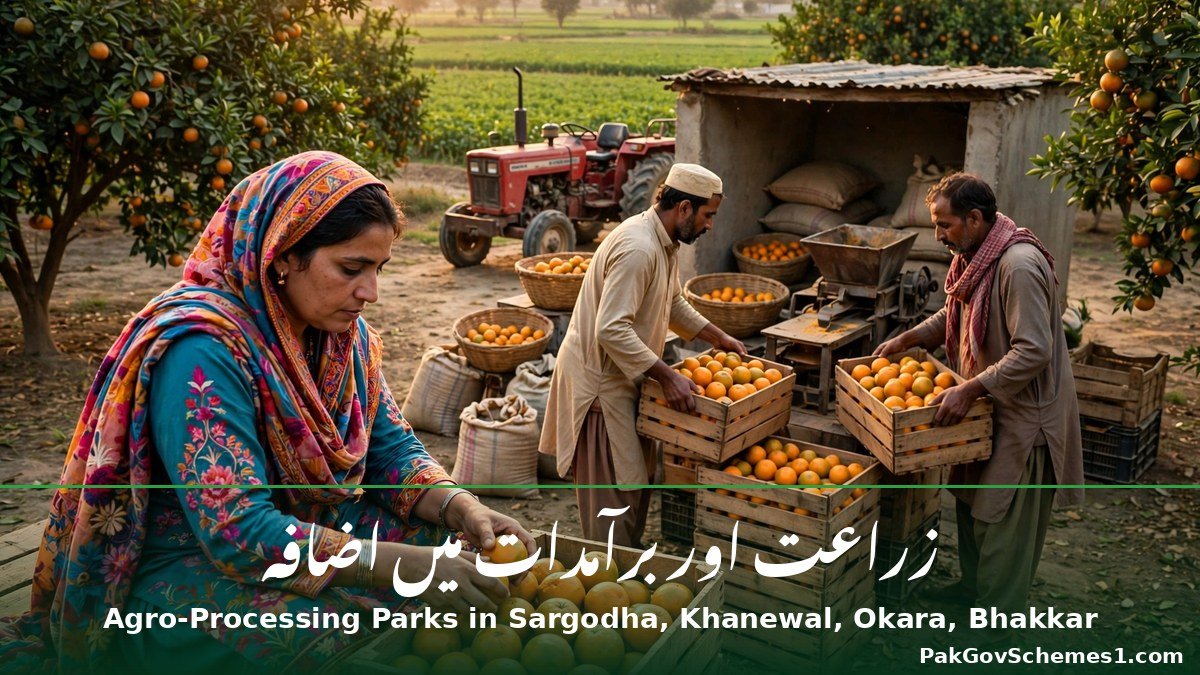
For agriculture, one report put the value-addition allocation at Rs 355.5 billion, but that is a single-source figure, not confirmed in the main launch reports. What is confirmed is that four specialised agro-processing parks will be built — one each in Sargodha, Khanewal, Okara and Bhakkar — to move agriculture beyond raw commodity production and into processing, packaging and export.
| Allocation / Target | Verified Information |
|---|---|
| Total investment framework | Rs 1,995.3 billion over three years (2026-29) |
| Public investment | Rs 1,089 billion (planned government investment) |
| Private investment | Rs 906 billion (expected — not yet confirmed as committed) |
| Industrial sector | Rs 753.7 billion |
| Solar power and battery storage | Rs 50 billion |
| Machinery duty reimbursements | Rs 50 billion |
| STEP concessional financing | Rs 300 billion at 0–5% interest, subject to programme terms |
| Additional exports | $6.8 billion (target by 2029) |
| Direct jobs | 162,000 (target) |
| People to be trained | 402,060 over three years (target) |
| Agro-processing parks | Four — Sargodha, Khanewal, Okara, Bhakkar (start dates not announced) |
Which Industries and Sectors Does PIVOT Cover?
PIVOT focuses on the manufacturing value chains where Punjab already has a base and where finished goods can earn more abroad: garments and textiles, sports goods, leather and footwear, surgical instruments, pharmaceuticals, fans, cutlery, steel and ceramics. The cabinet briefing also mentioned handmade tools, plug-and-play industrial facilities, sports-goods testing and certification, fan-industry material-testing laboratories, and export financing for horticulture and floriculture, including citrus, potato and mango value addition.
Beyond factories, the plan includes testing laboratories and certification facilities so Punjab’s products can meet international requirements. It also covers tourism — historical and religious sites, Lahore’s night-time economy, Potohar, Cholistan and other circuits — and the E-Biz initiative to digitise 300 public services, plus bringing 2,000 firms onto e-commerce platforms. Modernised labour laws, public-private partnership reforms and state land leases across nine sectors are also included. If you work in one of these value chains, PIVOT is designed for you; otherwise its help will be indirect.
STEP: The Rs 300 Billion Financing Window for Businesses
The most concrete part of PIVOT for business owners is the Strategic Trade Enhancement Programme (STEP): Rs 300 billion in concessional financing at 0–5% interest for eligible commercial categories, with a digital STEP portal launched on 30 October 2026. But that is all that has been verified — the eligible categories, loan sizes, banks, application process and deadlines have not been announced, and the financing is “subject to programme terms and conditions”. Do not pay any agent who claims to arrange a STEP loan, and do not submit documents to any website claiming to be the STEP portal until the Government of Punjab publishes a verified link.

At the launch, State Bank Governor Jameel Ahmad said SME financing in Pakistan had surged 61 per cent to Rs 1.1 trillion by June 2026, serving nearly 326,000 borrowers, with a target of Rs 2 trillion and 775,000 borrowers by fiscal year 2028. Those are national SME financing figures, not PIVOT figures. Readers who need business finance today should look at programmes that are already open, such as the CM Punjab Asaan Karobar Finance Scheme and the Punjab Rozgar Scheme, rather than waiting for STEP.
Jobs and Skills Training: 162,000 Jobs and 402,060 Trainees
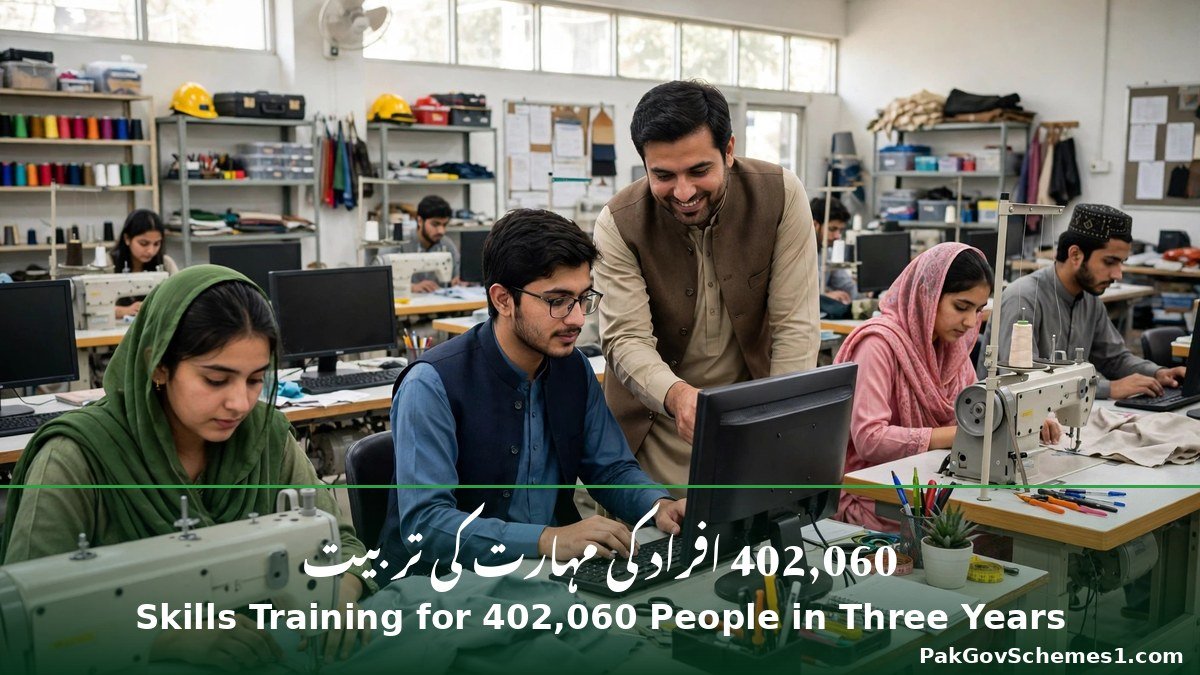
Jobs are the part of PIVOT that most readers care about, so the numbers need careful reading. The plan targets 162,000 additional direct jobs over three years — new positions in factories, processing units, tourism and digital businesses — and better livelihoods for more than one million people, covering wider livelihoods and indirect work. Neither figure means one million government jobs have been announced, and PIVOT is not a government jobs advertisement.
The skills target is clearer: 402,060 people are to receive training over three years, matched to what industry actually needs. At the launch, the Chief Minister said young people must be prepared for the jobs of tomorrow, and that skills development must respond to the actual needs of industry. Which trades will be taught, which institutions will run the training, how enrolment will work and when courses will start have not been officially announced yet. Young readers who want skills training now do not need to wait: DigiSkills Batch 05 enrolment is already open for digital skills, and the Punjab Tourism Internship Phase 2 offers paid practical experience.
What PIVOT Means for Farmers
Agriculture is one of the biggest parts of the plan, and it matters because Punjab grows most of Pakistan’s food. The problem is waste: reports on the plan note that post-harvest losses for fruit and vegetables can reach up to 40 per cent, according to the Asian Development Bank. PIVOT’s answer is processing — four agro-processing parks in Sargodha, Khanewal, Okara and Bhakkar, where produce can be graded, packed and prepared for export — plus e-mechanisation in agriculture and livestock and export financing for citrus, potato and mango value addition. For a citrus grower in Sargodha or a potato farmer in Okara, that could eventually mean a nearby processing facility and better prices. But no start dates for the parks have been published, and no farmer registration process exists yet. Farmers should continue with support that is already available, such as the Kissan Card Scheme Punjab and the CM Green Tractor Subsidy Scheme, and treat any message claiming PIVOT farm payments as fake unless it comes from the Government of Punjab.

Who Can Benefit from the Punjab PIVOT Plan?
PIVOT is an economic development plan, not a cash-assistance scheme like BISP, and it has no household eligibility list, no PMT score and no income threshold. Instead, it is aimed at groups:
- Manufacturers and exporters in the named value chains — garments and textiles, sports goods, leather and footwear, surgical instruments, pharmaceuticals, fans, cutlery, steel and ceramics — who can use STEP financing, duty reimbursements, testing labs and plug-and-play industrial facilities.
- Small and medium businesses that want cheaper credit to expand, modernise machinery or start exporting, once the STEP terms are published.
- Young people looking for industry-relevant skills training and new jobs in factories, processing units, tourism and digital services.
- Farmers and agri-businesses in and around Sargodha, Khanewal, Okara and Bhakkar, where the agro-processing parks are planned, and citrus, potato and mango growers across Punjab.
- Tourism businesses around historical and religious sites, Lahore’s night-time economy, Potohar and Cholistan.
- Investors, both Pakistani and foreign, who want to invest in Punjab’s industrial clusters.
Nobody is excluded by district or income, because PIVOT does not pay individuals — it helps people through businesses, training and infrastructure. Anyone who says you qualify for a PIVOT payment because of your CNIC, poverty score or BISP status is misleading you.

What You Can Do Now: Step by Step
Because no public PIVOT application process exists yet, the steps below are about preparing, not applying.
- Do not apply anywhere yet. There is no verified PIVOT registration form, portal link or SMS code. Do not fill in any form that claims to register you for PIVOT, and do not pay anyone for registration.
- Follow the official source. Watch the Government of Punjab portal (punjab.gov.pk) and the Chief Minister’s official announcements for the STEP terms, the training trades and the agro-park timelines.
- If you run a business, get your paperwork ready. When STEP opens, banks normally ask for a valid CNIC, NTN, business registration, bank statements and a basic business plan. Preparing these now costs nothing and saves time later.
- If you are a young job-seeker, build a skill now. Enrol in training that is already open, such as DigiSkills, instead of waiting for PIVOT courses that have no start date yet.
- If you are a farmer near Sargodha, Khanewal, Okara or Bhakkar, keep your land and crop records in order and follow announcements from the Punjab Agriculture Department about the processing parks.
- If you are an exporter or manufacturer, look into the testing and certification facilities and the machinery duty reimbursement once the government publishes the procedure, and keep your export records and quality certificates ready.
- Check back for updates. The Chief Secretary said the plan would be operationalised within six months of the launch, so the first real details should appear by around April 2027.
How to Check PIVOT Status and Updates
There is no PIVOT status-check portal, no CNIC check and no 8171-style SMS service for this plan. You cannot check a PIVOT application status because there is no application to check. That is the single most important fact for readers who arrive here from social media posts claiming otherwise.
To stay updated, check the Government of Punjab portal (punjab.gov.pk), the Planning and Development Department’s announcements, and reputable newspapers such as Dawn and The News. The PIVOT Board, chaired by Senior Minister Marriyum Aurangzeb, oversees the plan, with a PIVOT Secretariat in the Planning and Development Department and deputy commissioners as district focal persons. No district contact list has been published yet. Be careful with search results: some websites copy the launch figures and add invented application links. If a page asks for your CNIC, OTP or a fee to check your PIVOT status, close it.
Documents You Will Probably Need Later
No official document list has been published for PIVOT or STEP, so the list below is general guidance from how business finance and training programmes normally work in Punjab — not an official requirement. Keep originals safe, share copies only with a verified bank or government office, and never send CNIC copies or OTPs to someone offering PIVOT registration.
- Valid CNIC of the business owner or applicant.
- NTN and business registration documents, for business financing.
- Bank statements, usually for the last six to twelve months, for loan applications.
- Proof of business premises, such as a rent agreement or ownership documents.
- A basic business plan showing what the financing will be used for.
- Educational certificates, for skills training courses, once they are announced.
- Land or tenancy records, for farmers dealing with the agro-processing parks.
Problems and Confusion Around PIVOT
“PIVOT registration is open — send your CNIC.” This is false. No registration has been announced. Anyone asking for your CNIC or a fee for PIVOT registration is running a scam or, at best, guessing. Report such messages and do not respond.
“You will get Rs 25,000, a job or a loan from PIVOT.” No payment amount for individuals has been announced, because PIVOT does not pay individuals. The Rs 300 billion STEP window is financing for businesses, not cash for households, and its terms are not yet published.
Confusing PIVOT with BISP or 8171. PIVOT is a Punjab economic plan. BISP payments and 8171 checks are a separate federal programme. PIVOT has nothing to do with your BISP eligibility, your Kafalat payment or your 8171 status.
Confusing PIVOT with Asaan Karobar or Rozgar schemes. The Asaan Karobar Finance Scheme and the Punjab Rozgar Scheme are separate, already-running loan programmes with their own portals. STEP financing under PIVOT is different and not yet open.
The name confusion (PIVOT vs PIYUT). Early cabinet reports used “PIYUT”; the launch used “PIVOT”. They are the same programme. Do not assume a “PIYUT registration” post is a different, open scheme.
No plan document. The full plan document, year-by-year schedules and private-investment commitments have not been published. Until they are, every figure in this article is a government target, and progress cannot be independently verified. Readers should judge the plan by the results the government publishes over the coming months.

Official Helpline and Complaints
No official PIVOT helpline, email address or complaint portal has been verified, and no phone number for the PIVOT Board or the PIVOT Secretariat has been published. Until the Government of Punjab announces one, do not trust any number circulating on social media as the “PIVOT helpline”. For now, the correct route is the Government of Punjab portal at punjab.gov.pk and the Punjab Planning and Development Department. If someone demands money for PIVOT registration or a PIVOT loan, report it to the FIA Cybercrime Wing through its official channels, and warn others in your area.
Common Mistakes to Avoid
- Paying an agent for PIVOT registration. There is no registration to buy. Any fee is a loss.
- Sharing your CNIC, bank details or OTP with anyone claiming to process a PIVOT application.
- Believing social media payment claims. PIVOT pays no money to individuals, and no payment date has been announced.
- Treating targets as results. Rs 1,995.3 billion, $6.8 billion in exports and 162,000 jobs are three-year targets, not achievements. Judge the plan on delivery, not on the launch.
- Confusing PIVOT with BISP, Asaan Karobar or Rozgar. Each programme has its own rules and portal; mixing them up leads to wasted trips and wrong applications.
- Waiting idle for PIVOT training or loans. Use the training and finance schemes that are already open today, and treat PIVOT as something to prepare for, not something to wait for.
- Trusting unofficial STEP links. Only a link published by the Government of Punjab can be trusted. Bookmark the official portal and ignore forwarded links.

Frequently Asked Questions
What is the Punjab PIVOT Plan 2026-29?
The Punjab PIVOT Plan 2026-29 is Punjab’s three-year economic transformation programme, launched on 30 October 2026. It plans Rs 1,995.3 billion of investment to grow industry, exports, jobs and skills, with targets of $6.8 billion in extra exports, 162,000 direct jobs and training for 402,060 people.
Who launched the Punjab PIVOT Plan?
Chief Minister Maryam Nawaz Sharif formally launched the plan in Lahore on 30 October 2026. The Punjab cabinet had approved its main features on 19 October 2026, after Senior Minister Marriyum Aurangzeb presented the programme at the 37th cabinet meeting.
How much investment does PIVOT include?
The plan envisages Rs 1,995.3 billion over three years: Rs 1,089 billion in planned public investment and Rs 906 billion in expected private investment. The private share is a target, not a confirmed commitment, and no list of private investors has been published yet.
Is PIVOT a cash assistance scheme like BISP?
No. PIVOT is an economic development plan, not a cash-assistance scheme. It pays no money to households, has no PMT score or eligibility list, and is not connected to BISP or 8171. Its benefits come through business financing, skills training, industrial facilities and agro-processing parks.

How can I apply for the Punjab PIVOT Plan?
You cannot apply yet. No public registration process, application form, portal link or deadline has been officially announced. Do not trust any website or agent claiming to register you for PIVOT. Watch punjab.gov.pk and official announcements for the STEP terms and training enrolment details.
What is STEP under the PIVOT Plan?
STEP is the Strategic Trade Enhancement Programme, PIVOT’s main financing window. It envisages Rs 300 billion in concessional financing at 0–5% interest for eligible commercial categories, with a digital portal launched on 30 October 2026. Eligible categories, loan sizes, banks and application dates are not officially announced yet.
How many jobs will PIVOT create?
The target is 162,000 additional direct jobs over three years, plus better livelihoods for more than one million people. The million figure covers wider livelihoods and indirect opportunities, not one million government jobs. Both figures are targets, and no job advertisement has been issued under PIVOT.
Is there a PIVOT helpline or official website?
No. As of 14 November 2026, no official PIVOT helpline, email or dedicated page on punjab.gov.pk has been verified, and no STEP portal URL has been published. Any helpline number or application link circulating on social media should be treated as unverified and not used.
Important Safety Notice
Use only verified official government portals. Never share your CNIC, bank details, OTPs or passwords with unknown individuals, and never pay anyone for PIVOT registration, a STEP loan or a PIVOT job. PIVOT has no public application form yet, so anyone offering one is not acting for the government. PakGovSchemes1.com is an independent informational website, not affiliated with any government department. Always verify details through the relevant official government website before taking action.
Conclusion
The Punjab PIVOT Plan 2026-29 is the most ambitious economic programme Punjab has announced: Rs 1,995.3 billion of planned investment, $6.8 billion in additional exports, 162,000 direct jobs and training for 402,060 people. Its strongest idea is also its biggest test. Remember three things: PIVOT is a plan with targets, not a scheme with open applications; STEP financing and training have no published terms yet; and no one should pay or share documents for PIVOT. Prepare, follow official announcements, and judge it by what is delivered by 2029.
Official Sources
- Government of Punjab portal — https://www.punjab.gov.pk (checked 14 November 2026; no dedicated PIVOT page found)
- Dawn, 31 October 2026 — “CM Maryam launches Rs2 trillion PIVOT initiative to boost industry, exports” — https://www.dawn.com/news/2041052
- The News, 30 October 2026 — “Maryam unveils Rs2tr economic plan” — https://www.thenews.pk/print/1446048-maryam-unveils-rs2tr-economic-plan
- Daily Pakistan, 30 October 2026 — “Punjab CM launches Rs1.99 Trillion Pivot Economic Plan” — https://en.dailypakistan.com.pk/30-Oct-2026/punjab-cm-launches-rs1-99-trillion-mega-economic-plan-promising-1-million-employment-opportunities
- Pakistan Today, 30 October 2026 — “Maryam Nawaz launches Rs1.995tr PIVOT Plan” — https://www.pakistantoday.com.pk/2026/10/30/cm-maryam-unveils-rs1995tr-pivot-plan-to-transform-punjab-into-export-led-industrial-hub
- The Express Tribune, 31 October 2026 — “Punjab eyes exports, jobs boom” — https://tribune.com.pk/story/2637838/punjab-eyes-exports-jobs-boom
- Pakistan Today, 19 October 2026 — “Punjab cabinet approves initiatives relating to industrial development, exports and public services” — https://www.pakistantoday.com.pk/2026/10/19/punjab-cabinet-approves-initiatives-relating-to-industrial-development-exports-and-public-services
- UrduPoint, 19 October 2026 — “Punjab’s New Development Roadmap (PIVOT) Presented at Cabinet Meeting” — https://www.urdupoint.com/en/pakistan/punjab-cabinet-approves-new-development-roadmap-2272892.html
- The Nation, 2 November 2026 — “Punjab’s Economic Pivot” — https://www.nation.com.pk/02-Nov-2026/punjab-s-economic-pivot
- Focus Pakistan, 7 November 2026 — “Punjab PIVOT Plan Targets Rs1.995 trillion Investment” (agriculture allocation, reported only) — https://www.focuspakistan.com/article/punjab-pivot-plan-rs2-trillion-investment
Disclaimer: PakGovSchemes1.com is an independent informational website and is not affiliated with any government department. Information is compiled from available official announcements and other identified sources and may change. Please verify eligibility, registration status, payment details, and deadlines through the relevant official government website before taking action.

