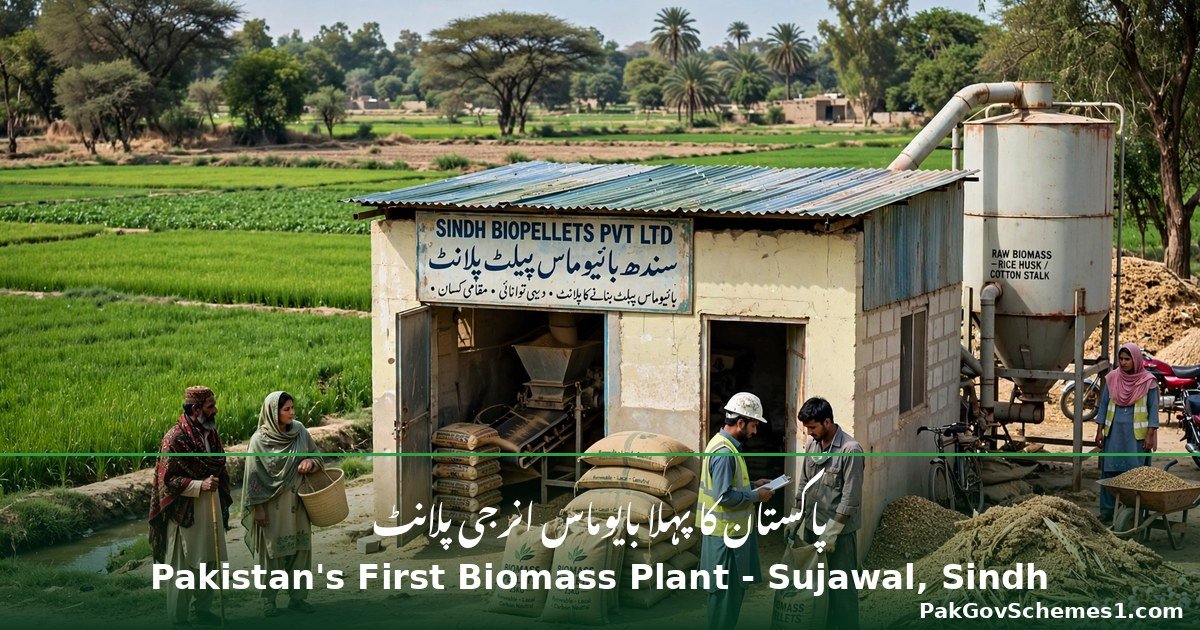
Sindh Biomass Energy Plant Sujawal PASBET 2026: Pakistan’s First Biomass Demonstration Plant
The Sindh biomass energy plant Sujawal PASBET 2026 is Pakistan’s first biomass energy demonstration plant, now operational in Sujawal district, Sindh. Located in Pinnah Reserved Forest, the plant turns forest and farm waste, such as pruned branches, rice straw and cotton sticks, into fuel pellets for cookstoves and other rural energy needs. It is the first of four demonstration sites planned under the Promotion and Application of Sustainable Biomass Energy Technologies in Pakistan (PASBET) project. This article explains what the plant does, who benefits, how it works, and what it does not offer, so readers are not misled by fake payment or registration claims.
Quick Overview
| Information | Details |
|---|---|
| Project name | Promotion and Application of Sustainable Biomass Energy Technologies in Pakistan (PASBET) |
| Plant location | Pinnah Reserved Forest, Sujawal district, Sindh (also spelled Sajawal in some news reports) |
| Status | Operational; jointly inaugurated by UNDP and the Government of Sindh, reported 3 November 2026 |
| Implemented by | United Nations Development Programme (UNDP), in partnership with Pakistan’s Ministry of Climate Change and Environmental Coordination |
| Funded by | Global Environment Facility (GEF) |
| Project duration | Five years; UNDP project brief lists 2024–2029 |
| Total project budget | US$3.5 million (UNDP project brief and news reports) |
| Demonstration sites planned | Four in total; Sujawal is the first |
| Provinces covered by PASBET | Sindh, Punjab, Balochistan and Khyber Pakhtunkhwa |
| Household cash payment | None — this is an energy demonstration project, not a cash assistance scheme |
| Public registration | Not officially announced — no public application form has been announced |
| Last updated | 3 November 2026 |
Latest Update: Pakistan’s First Biomass Energy Demonstration Plant Opens in Sujawal
Pakistan’s first biomass energy demonstration plant has become operational in Sujawal, Sindh. The plant was jointly inaugurated by UNDP and the Sindh government, according to a UNDP statement reported by Dawn on 3 November 2026 and other reputable Pakistani news outlets the same day. Some reports date the announcement to Monday, and one wire version carries a 30 October 2026 date, but the plant’s operational launch was widely reported on 3 November 2026.
The Sujawal facility is the first of four demonstration sites planned under PASBET. Its purpose is to show that woody biomass-based energy technologies can work at a practical scale in Pakistan, so that similar approaches can be considered elsewhere. UNDP Resident Representative Dr Samuel Rizk said Pakistan did not have to choose between meeting rural energy needs and protecting its forests, adding that locally available agricultural and forest residues could be turned into cleaner fuels and economic opportunities.
At the inauguration, 130 fuel-efficient cookstoves designed to run on biomass pellets were distributed to local households, and 20 nursery toolkits were given to community groups. These were inauguration distributions reported in the news coverage; they are not an ongoing public distribution scheme, and no wider household distribution programme has been officially announced.
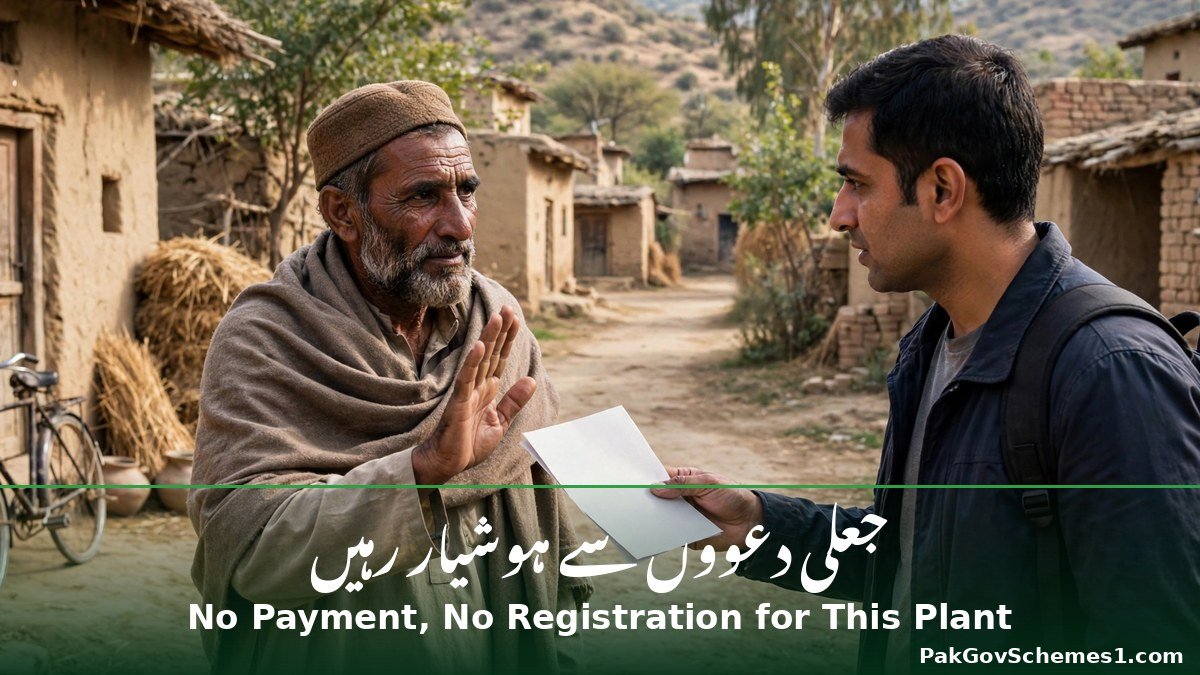
Important clarification: this plant is not a household cash scheme, a subsidy scheme, or a solar panel scheme. There is no payment to apply for, no registration form, and no SMS code connected to it. Anyone offering registration for this plant in exchange for money or personal details should be treated as a scam. Readers interested in genuine household energy support in Sindh may instead read about the Sindh Free Solar Home Systems scheme, which is a separate programme with its own rules.

Who Benefits: Eligibility in Plain Terms
Because PASBET is a demonstration project rather than a household assistance scheme, it does not have an applicant eligibility list in the way BISP or a subsidy scheme does. The groups expected to benefit, as described by UNDP and in the news reports, are:
- Rural households near the demonstration site — through cleaner cooking fuel in the form of biomass pellets and fuel-efficient cookstoves, demonstrated at the Sujawal site.
- Local communities around Pinnah Reserved Forest — through pellet production, community nurseries and work linked to sustainable forest management.
- Farming communities — because crop residues such as rice straw and cotton sticks, which are otherwise often wasted or burned, become a useful fuel input.
- Forest-dependent communities — because the project aims to ease pressure on natural forests by offering an alternative fuel source and by supporting indigenous plantations.
- Communities in the other three demonstration areas — once those sites are announced. Their locations are Not officially announced at the time of writing.
There is no CNIC-based eligibility check, no income test, and no poverty-score requirement for this project, because there is no household application to make. Any website or social media post claiming a CNIC check for the Sujawal biomass plant is not describing this project.
How It Works: From Farm and Forest Waste to Fuel Pellets
The process described in the UNDP statement and news coverage is straightforward. Only the steps below are reported; technical details such as the plant’s daily pellet output or its electricity generation capacity are Not officially announced, and this article does not invent them.
- Residues are collected. Woody material from forested and non-forested areas, together with crop residues such as pruned branches, rice straw and cotton sticks, is gathered instead of being wasted or burned in the open.
- The material is processed into fuel pellets. At the Sujawal plant, these residues are converted into compact fuel pellets that are easier to store, transport and burn than loose straw or branches.
- Pellets fuel efficient cookstoves. The pellets are designed for use in fuel-efficient cookstoves, which were demonstrated at the launch when 130 such stoves were distributed to local households.
- Community nurseries support replanting. Alongside pellet production, community nurseries support sustainable forest management and the enhancement of indigenous plantations, so fuel use does not simply mean cutting more trees.
- The model is demonstrated for replication. As the first of four planned sites, Sujawal is meant to show whether this approach works well enough to be scaled up in other towns and provinces under PASBET. The UNDP project brief also describes energy-integrated development plans for eight pilot towns, two in each of the four provinces.
The wider PASBET programme also includes biomass resource assessments, policy reform work, private-sector engagement and community capacity building, according to the UNDP brief. Those are programme-level activities, not services a household can sign up for.

Project Status Check: How to Follow PASBET
There is no CNIC status check, SMS status check, or beneficiary portal for this project, because it is not a household scheme. Readers who want genuine updates should follow the official channels only:
- UNDP Pakistan — the implementing agency. Its PASBET project brief is the most detailed official document available and confirms the project’s duration, budget, partners and four-site plan.
- Ministry of Climate Change and Environmental Coordination — the government partner named in the UNDP brief and news reports.
- Government of Sindh / Sindh Forest Department — the provincial partner at the Sujawal inauguration; Sindh Chief Conservator of Forests and Wildlife Muhammad Riaz Wagon spoke about the Pinnah Reserved Forest site at the launch.
No dedicated PASBET helpline number, public registration portal, or application deadline has been verified, so none is listed here. If a future demonstration site or community programme is announced, it will appear through these official channels first. Until then, the locations and dates of the remaining three demonstration sites are Not officially announced. For comparison, household energy schemes work very differently: for example, the KP household solarization schemes are aimed at individual homes, while PASBET is aimed at demonstrating a technology.
Funding Details
The funding picture is confirmed by the UNDP project brief and the GEF project database, with one small difference in presentation that readers should understand:

| Detail | Verified Information |
|---|---|
| Total project budget | US$3.5 million, as stated in the UNDP PASBET project brief and news reports |
| GEF grant listed in the GEF database | US$3,439,041 for project ID 10720, “Combating Climate Change through the Promotion and Application of Sustainable Biomass Energy Technologies in Pakistan (PASBET)” |
| Funder | Global Environment Facility (GEF) |
| Implementing agency | United Nations Development Programme (UNDP) |
| Government partner | Ministry of Climate Change and Environmental Coordination |
| Provincial partner at Sujawal | Government of Sindh |
| Duration | Five years; UNDP brief lists 2024–2029 |
| Household payment from this funding | None — funding covers the project, not cash payments to households |
| Co-financing figure in GEF database | US$21,150,446 listed alongside the GEF grant (reported figure; what share reaches each site is Not officially announced) |
The gap between the rounded US$3.5 million budget and the exact US$3,439,041 grant figure is just rounding: the brief uses round terms, while the GEF database lists the grant to the dollar. No per-household amount can be calculated from these figures.

Required Documents
None applicable. This is not an application-based scheme, so there is no document list, no CNIC submission, and no form to fill in. Readers should be suspicious of any person or page asking for CNIC copies, bank details, or fees “for biomass plant registration”, because no such registration exists in any official announcement checked for this article.
Troubleshooting: Common Confusion and Fake Claims
- “Register now for the biomass plant payment.” False. There is no household payment and no registration. Do not pay anyone who claims otherwise.
- “Send your CNIC to a number to get a biomass stove.” Unverified and unsafe. The 130 cookstoves reported at the launch were distributed at the inauguration event to local households, not through an SMS registration drive.
- “This plant gives free electricity to homes.” Not reported. The plant is described as producing fuel pellets for cookstoves and rural energy needs. Any electricity output or megawatt figure is Not officially announced.
- Confusion with solar schemes. PASBET is a biomass project, not a solar panel scheme. Sindh’s household solar support is a separate programme; see the Sindh Free Solar Home Systems article for that scheme’s own rules.
- Confusion with Sujawal jobs. No job vacancies, salaries, or hiring process for the plant have been officially announced. Treat job advertisements using this plant’s name as unverified unless they appear on an official UNDP or government channel.
- Spelling confusion: Sujawal vs Sajawal. Both spellings appear in reputable coverage of the same district and the same plant. They refer to the same place, not to two different plants.
Official Contacts
No dedicated PASBET helpline, phone number, email address, or public office address could be verified from official sources at the time of writing, so none is published here. Readers should use the official websites of UNDP Pakistan and Pakistan’s Ministry of Climate Change and Environmental Coordination for verified updates, and should not trust contact numbers circulated on social media posts about this plant. If an official contact channel is announced later, this article should be updated from that announcement, not from social media claims.
Common Mistakes to Avoid
- Do not pay any agent or “registration fee” for this plant — there is no public registration.
- Do not share your CNIC copy, bank details, or mobile OTP with anyone claiming to register you for biomass benefits.
- Do not confuse this demonstration plant with a cash scheme such as BISP; the two have nothing in common except that both affect rural households.
- Do not confuse biomass pellets with solar panels or with free electricity connections — they are different technologies under different programmes.
- Do not quote an electricity output, pellet price, or household benefit figure for this plant; none has been officially announced.
- Do not assume the other three demonstration sites are in your district — their locations are Not officially announced.
- Do not forward unverified WhatsApp or Facebook posts about “biomass plant payments” without checking UNDP Pakistan or the Ministry of Climate Change first.

Frequently Asked Questions
What is the Sindh biomass energy plant in Sujawal?
It is Pakistan’s first biomass energy demonstration plant, located in Pinnah Reserved Forest in Sujawal district, Sindh. It converts forest and crop residues into fuel pellets for cookstoves and rural energy needs, demonstrating a cleaner alternative to open burning and pressure on natural forests.
What is PASBET?
PASBET stands for the Promotion and Application of Sustainable Biomass Energy Technologies in Pakistan. It is a five-year, US$3.5 million project funded by the Global Environment Facility, implemented by UNDP with Pakistan’s Ministry of Climate Change and Environmental Coordination.
Is the Sujawal biomass plant a government cash scheme?
No. It is an energy and environment demonstration project, not a household cash assistance scheme. There are no household payments, no beneficiary list, and no application form connected to it, and readers should ignore claims that say otherwise.
How can I register for the Sujawal biomass plant?
You cannot, because no public registration has been officially announced. The plant is a demonstration facility run through UNDP, the Ministry of Climate Change and the Sindh government, not a scheme that takes individual applications from the public.

What does the plant produce?
According to UNDP and news reports, the plant converts residues such as pruned branches, rice straw and cotton sticks into fuel pellets for use in cookstoves and other rural energy needs. Its pellet output quantity and any electricity generation figure are Not officially announced.
Who inaugurated the plant?
The plant was jointly inaugurated by UNDP and the Government of Sindh. UNDP Resident Representative Dr Samuel Rizk and Sindh Chief Conservator of Forests and Wildlife Muhammad Riaz Wagon both spoke about the project at the launch, as reported in the coverage.
Will there be more biomass plants like this?
Yes, in plan. Sujawal is the first of four demonstration sites planned under PASBET, and the wider programme covers Sindh, Punjab, Balochistan and Khyber Pakhtunkhwa. The locations and dates of the remaining three sites are Not officially announced.
Does the plant help the environment?
That is its stated aim. UNDP says the project supports rural livelihoods, reduces greenhouse gas emissions, and eases pressure on forest resources by turning waste residues into fuel, supporting community nurseries, and promoting sustainable forest management and indigenous plantations.
Can I get a free cookstove from this project?
Not through any announced public scheme. At the inauguration, 130 fuel-efficient cookstoves and 20 nursery toolkits were distributed to local households and community groups present at the event. No ongoing public cookstove distribution has been officially announced for other households.
Where can I verify news about PASBET?
Check UNDP Pakistan’s PASBET project brief and announcements from Pakistan’s Ministry of Climate Change and Environmental Coordination. Avoid relying on social media posts, forwarded messages, or pages that ask for money or personal details in the project’s name.
Important Safety Notice
Use only verified official channels for information about this project. Never share your CNIC image, bank details, passwords, or mobile OTPs with unknown individuals, and never pay a fee for registration, a stove, or a payment linked to this plant. PakGovSchemes1.com is an independent informational website, not an official government department, and it cannot register anyone for any programme.

Conclusion
The Sindh biomass energy plant Sujawal PASBET 2026 matters because it is Pakistan’s first working demonstration that farm and forest waste can become a useful, cleaner fuel instead of being burned or wasted. With a five-year, US$3.5 million programme behind it and three more demonstration sites still to come, its real test will be whether the Sujawal model can be repeated in other provinces. For readers, the key point is simple: follow UNDP Pakistan and the Ministry of Climate Change, ignore fake registration or payment claims, and keep this plant separate from household cash and solar schemes.
Official Sources
- UNDP Pakistan — PASBET Project Brief (2026): confirms project name, 2024–2029 duration, US$3.5 million budget, partners, four demonstration sites, and eight pilot towns. https://www.undp.org/sites/g/files/zskgke326/files/2026-06/pasbet-project-brief.pdf
- Dawn — “Pakistan’s first biomass plant operational” (3 November 2026): confirms operational status, Pinnah Reserved Forest location, joint UNDP–Sindh inauguration, and project aims. https://www.dawn.com/news/2041699
- Energy Update — “Pakistan’s First Biomass Energy Demonstration Plant Becomes Operational in Sindh” (3 November 2026): confirms the same facts and quotes UNDP Resident Representative Dr Samuel Rizk. https://www.energyupdate.com.pk/pakistans-first-biomass-energy-demonstration-plant-becomes-operational-in-sindh/
- GEF Projects Database — PASBET (Project ID 10720): lists the GEF grant of US$3,439,041 and co-financing of US$21,150,446. https://www.thegef.org/projects-operations/database?f%5B0%5D=countries%3A123&f%5B1%5D=project_type%3A398
- Pakistani News — “UNDP launches Pakistan’s first biomass-based energy plant in Sujawal” (3 November 2026): confirms the 130 cookstoves and 20 nursery toolkits distributed at the inauguration. https://pakistaninews.net/undp-launches-pakistans-first-biomass-based-energy-plant-in-sujawal/
Related reading on this site: Sindh Free Solar Home Systems 2026, Punjab Electric Bus Service 2026.
Disclaimer: PakGovSchemes1.com is an independent informational website and is not affiliated with any government department. Information is compiled from available official announcements and other identified sources and may change. Please verify eligibility, registration status, payment details, and deadlines through the relevant official government website before taking action.

