
National Youth Employment Policy 2026 is Pakistan’s first national policy for youth employment, formally launched by Prime Minister Shehbaz Sharif on 12 August 2026. It promises a large women’s quota in the labour force, a share of opportunities for startups, specialised AI training in China for 1,000 top students, overseas jobs for up to 1.8 million young Pakistanis, and an employment exchange in every district. This guide explains what the policy actually contains, who runs it, who it covers, how young people can use the programmes already linked to it — and, honestly, what the policy has not yet answered, including the criticism that it has no clear timeline for creating jobs at home.
Readers should know one thing at the start: this is a policy framework, not a single application form. There is no “National Youth Employment Policy registration portal” and no deadline to apply for the policy itself. Its promises are delivered through existing programmes — the Prime Minister’s Youth Programme, the Digital Youth Hub, NAVTTC skills training, the PM Youth Business and Agriculture Loan Scheme and overseas employment channels. Anything in this article that could not be verified is clearly marked as not officially announced, and criticism of the policy is labelled as criticism, not presented as government fact.
Quick Overview: National Youth Employment Policy 2026
| Information | Details |
|---|---|
| Policy Name | National Youth Employment Policy 2026 (NYEP) — Pakistan’s first National Youth Employment Policy |
| Launched By | Prime Minister Shehbaz Sharif, on International Youth Day, 12 August 2026, Islamabad |
| Responsible Body | Prime Minister’s Youth Programme (PMYP), Chairman Rana Mashhood Ahmad Khan; National Coordination Committee oversees implementation |
| Policy Purpose | Expand employment and entrepreneurship for young Pakistanis through skills, digital services, startups and overseas jobs |
| Who It Covers | Young Pakistanis aged about 15–29 — nearly 67 million people; students and out-of-school youth, in all provinces |
| Women’s Quota | 50% quota for women in the labour force, as announced by the PM (Radio Pakistan); The News’ print report put the figure at 35% — see the note below |
| Startup Quota | 10% of the annual quota allocated for startups; minimum 10% target for youth-led enterprises among new company registrations |
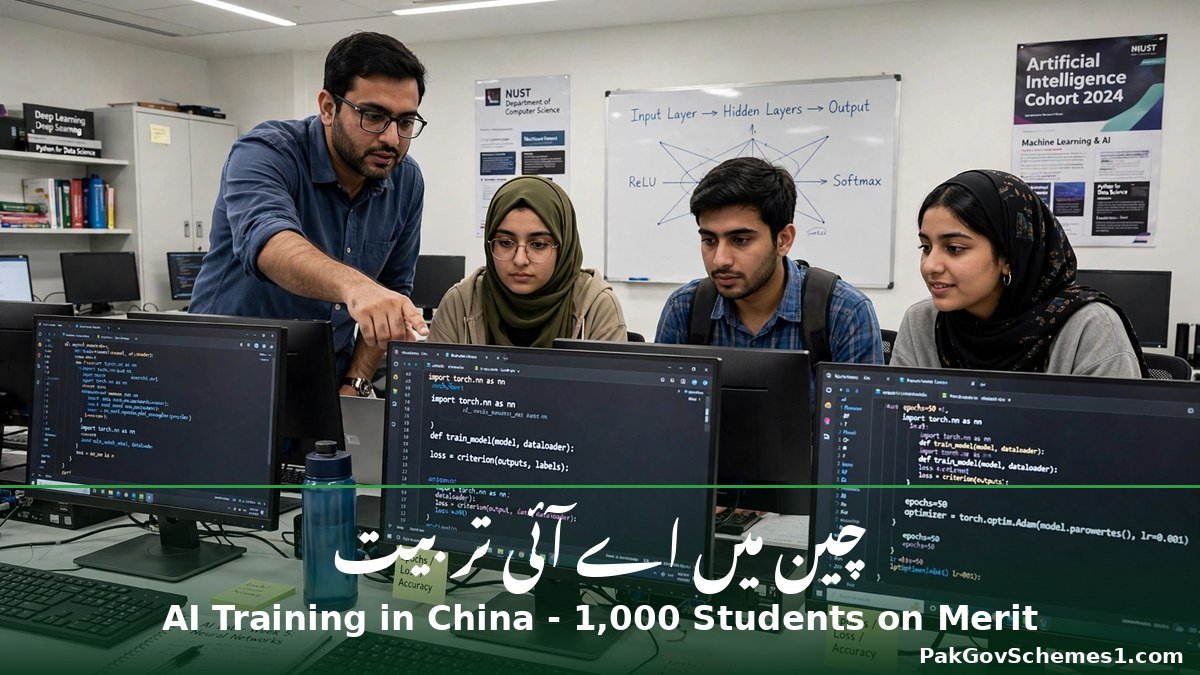
| AI Training in China | 1,000 students to be sent to China for IT and AI training on merit, all expenses borne by the government |
| Overseas Jobs | Up to 1.8 million overseas employment opportunities announced (Qatar, Saudi Arabia, US, Turkiye, Belarus) |
| District Employment Exchanges | Employment exchanges to be set up in every district, with online and doorstep services — rollout status not officially announced |
| Registration Portal | None for the policy itself — see the Digital Youth Hub and PMYP programmes below |
| Last Updated | 6 November 2026 |
Latest Update: How the Policy Was Launched
The policy has a two-stage history, and the dates matter because different reports describe different moments. The National Youth Employment Policy was first unveiled by PMYP Chairman Rana Mashhood Ahmad Khan at Aiwan-e-Iqbal in Lahore on 29 September 2025, when he announced its main features — overseas jobs, district employment exchanges, green jobs and business registration. It was then formally launched by Prime Minister Shehbaz Sharif at a ceremony in Islamabad on 12 August 2026, marking International Youth Day. That August launch is the official launch date used by Radio Pakistan, the Press Information Department and the Institute of Strategic Studies Islamabad (ISSI).
At the 12 August 2026 ceremony, the Prime Minister said the policy would give young people new opportunities to gain skills and prepare for the future job market. He also launched the National Power Sector Innovation Programme and the Skills Ambassador Programme at the same event, and presented certificates to members of the Core Task Force of the National Employment Policy. Federal ministers, parliamentarians and students attended.
Since the launch, the first meeting of the National Coordination Committee on the National Youth Employment Policy was held on 27 August 2026, according to the Press Information Department. The committee brings together federal ministries, provincial governments and relevant institutions to oversee implementation. No public implementation schedule, progress report or district-by-district rollout list has been published as of 6 November 2026 — a gap that critics have pointed to, and which is discussed in the criticism section below.
One figure in the launch reports needs a careful note. Radio Pakistan, the state broadcaster, reported that the Prime Minister announced a fifty percent quota for women in the labour force. The News’ print report of the same ceremony put the figure at 35 percent. Aaj News also reported 50 percent. The ISSI research brief of 7 October 2026 records the range as 35–50 percent. This article uses 50 percent because that is what the official broadcaster reported the Prime Minister as saying, but readers who see 35 percent in another newspaper are not looking at a different policy — they are looking at the same announcement reported differently. The government has not published a policy document that settles the figure, which is itself part of the transparency problem discussed below.
What the Policy Promises: The Main Provisions
The policy is a framework that links existing youth programmes to labour-market demand. Its main provisions, as announced at the launch and in the PMYP chairman’s unveiling, are:
- A women’s quota. A mandatory quota for women in the labour force — reported as 50 percent by Radio Pakistan and Aaj News, and 35 percent by The News. The aim is to make women an integral part of employment programmes, with the PMYP chairman saying women would play a central role in job programmes up to 2029.
- A startup quota. Ten percent of the annual quota allocated for startups, so that young people are encouraged to start their own businesses instead of only seeking conventional jobs. The framework also sets a minimum 10 percent target for youth-led enterprises among new company registrations.
- AI and IT training in China for 1,000 students. One thousand boys and girls to be sent to China for training in information technology and artificial intelligence, selected strictly on merit, with all expenses borne by the government. The Prime Minister said students with outstanding matriculation and FA/FSc results would also be sent to China to study IT and AI. Note that 1,000 agricultural graduates had already been sent to China for training the previous year on the same model.
- Overseas employment for up to 1.8 million youth. Announced by the PMYP chairman, with Qatar, Saudi Arabia, the United States, Turkiye and Belarus named as countries offering opportunities for skilled Pakistani workers. This is an announced target, not a confirmed placement list — no breakdown by country, trade or year has been published.
- An employment exchange in every district. Exchanges to help job seekers through online platforms and doorstep services, so that young people do not have to travel to a big city to find work. No list of functioning exchanges, and no opening dates, have been published.
- Green jobs. New green jobs to engage young people in environmentally friendly work, including rehabilitation opportunities for youth involved in negative activities, channelled into constructive roles.
- Priority sectors. Information technology, e-commerce, agriculture, construction, healthcare, logistics and overseas employment, with skills programmes — including those supported by the National Vocational and Technical Training Commission (NAVTTC) — intended to reflect what employers actually need.
- The Digital Youth Hub. The Prime Minister’s Digital Youth Hub connects young Pakistanis with employment vacancies, internships, scholarships and training opportunities, and is the policy’s main digital doorway. Our guide to PM Digital Youth Hub 2026 registration explains how to use it.
- Regular review. A special committee on IT and technical education, chaired by the Prime Minister, meets every two months to review progress and expand employment efforts.
Alongside the policy, the Prime Minister announced 250,000 Chromebooks for high-achieving students in 2026, on top of more than 700,000 laptops already distributed, and said classes at the new Daanish University in Islamabad — a fully technology-focused university — would begin in 2027, with admission on merit regardless of financial background. These are related youth announcements from the same ceremony, not parts of the employment policy itself. For the laptop and Chromebook scheme, see our guide to the PM Youth Chromebook Scheme 2026.
Who the Policy Covers: Eligibility
The policy is aimed at Pakistan’s young population. According to the ISSI research brief of 7 October 2026, Pakistan has nearly 67 million people aged 15 to 29, and the policy is designed for that whole age group — whether they are enrolled in school, college or university, or not enrolled at all. The PMYP chairman said explicitly that the strategy was created for all young people, in school or out of it.
There is no single eligibility test for “the policy” because it is not a single scheme. Each programme under it has its own rules:

- China AI training: merit-based selection; the Prime Minister said outstanding matriculation and FA/FSc results would be the basis, and that selection would be strictly on merit. No application form, test date or eligibility cut-off has been published — see the registration section below.
- Startup support: delivered through business and loan programmes, including the PM Youth Business and Agriculture Loan Scheme. Our guide to the PM Youth Business and Agriculture Loan Scheme 2026 explains its tiers, which go up to Rs 7.5 million.
- Overseas employment: no list of eligible trades, qualifications or application routes has been published under the policy. Overseas jobs are normally arranged through the Bureau of Emigration and Overseas Employment and licensed overseas employment promoters — not through a policy portal.
- District employment exchanges: meant for all job seekers in a district, with doorstep services. No operating list has been published, so readers cannot yet check whether their district’s exchange exists.
- Skills training: NAVTTC and provincial programmes, including the Punjab One Million Youth Skills Training programme and the Benazir Bhutto Shaheed Youth Development Program in Sindh, run their own enrolments.
The scale of the problem the policy is meant to address is large. Pakistan’s Labour Force Survey 2024–25 recorded unemployment of 12.8 percent among people aged 15–24, compared with a national rate of 7.1 percent, and found that 28.4 percent of young people in that age group were neither employed nor in education or training. Those are official survey figures, and they explain why a youth employment policy matters — and why its results will be judged on jobs, not announcements.
How to Benefit: Step-by-Step (What Exists Today)
There is no registration form for the National Youth Employment Policy itself, so beware of any website, agent or WhatsApp message offering “NYEP registration”. What young people can actually do today is use the programmes the policy links together:
- Join the PM Digital Youth Hub. This is the government’s main digital platform for youth jobs, internships, scholarships and training. Register there and keep your profile updated, because it is the channel the policy names for connecting young people with vacancies. See our PM Digital Youth Hub 2026 guide for the registration steps.
- Build a skill through a recognised programme. DigiSkills offers free online IT courses, and our DigiSkills Batch 05 enrolment guide explains the current batch. NAVTTC and provincial training programmes also run their own admissions — apply to those directly, not through the policy.
- If you want to start a business, look at the PM Youth Business and Agriculture Loan Scheme. It has tiers up to Rs 7.5 million and is the practical route to the startup support the policy talks about. Check its eligibility and tiers in our guide before applying.
- For the China AI training, watch for an official merit announcement. No application process has been published as of 6 November 2026. The Prime Minister said selection would be strictly on merit and government-funded. Do not pay anyone who claims to secure a place. When an official announcement appears — through the PMYP, the Higher Education Commission or a newspaper advertisement — it will name the test or selection method.
- For overseas jobs, use only official channels. Check the Bureau of Emigration and Overseas Employment and licensed promoters. Never pay an agent who promises a guaranteed job abroad under the policy, and never hand over your passport or CNIC to an unlicensed person.
- Ask at your district office about the employment exchange. Because no official list of functioning exchanges has been published, the practical check is to visit your district administration or labour office and ask whether an exchange is operating and what services it offers.
- Keep records of everything. Save screenshots and reference numbers from every application you submit, and never share OTPs, passwords or bank details with anyone who contacts you about a youth scheme.

Young people in Khyber Pakhtunkhwa have an additional route worth knowing: the KP Ehsaas Naujawan Programme 2026 offers interest-free youth loans of Rs 1–5 million. It is a provincial programme, separate from the national policy, but it serves the same goal of turning young people into job creators.
Jobs, Sectors and the 1.8 Million Overseas Figure
The most eye-catching number in the policy is the promise of overseas employment for up to 1.8 million Pakistani youth. It was announced by the PMYP chairman at Aiwan-e-Iqbal, with Qatar, Saudi Arabia, the United States, Turkiye and Belarus named as countries that had offered opportunities for skilled workers. What has not been published is any breakdown: how many jobs in each country, in which trades, over how many years, and through which channel. Until such a breakdown appears, the figure should be treated as an announced target, not a confirmed placement pipeline.
| Detail | Verified Information |
|---|---|
| Overseas jobs target | Up to 1.8 million youth — announced by PMYP chairman, September 2025; no country-wise or trade-wise breakdown published |
| Countries named | Qatar, Saudi Arabia, United States, Turkiye, Belarus — as offering opportunities, per the chairman’s announcement |
| Priority sectors at home | IT, e-commerce, agriculture, construction, healthcare, logistics, overseas employment |
| Women’s participation | 50% quota reported by Radio Pakistan; 35% reported by The News — discrepancy noted above |
| Startup support | 10% of annual quota for startups; 10% minimum target for youth-led enterprises among new registrations |
| China AI training | 1,000 students, merit-based, all expenses government-funded — announced 12 August 2026; no application process published yet |
| Implementation timeline | Not officially announced — no published schedule for exchanges, placements or sector targets |
| Absorption target | Policy seeks to absorb new labour-market entrants by 2030, per the ISSI brief — financing and private-sector job creation will decide whether it happens |
The domestic side of the policy is where the numbers are thinnest. The policy names priority sectors and promises district exchanges and green jobs, but it has not published how many jobs it expects to create in each sector, in which year, or with what budget. That is not a criticism invented by this website — it is the central point made by the policy’s own critics, covered in the next section but one.
How to Check Your Status
There is no single status check for the National Youth Employment Policy, because it is a framework rather than an application-based scheme. Each programme under it has its own check:
- Digital Youth Hub: log in to your account on the hub to see your applications, courses and matched vacancies.
- PM Youth Business Loan: check your loan application status through the official PMYP loan portal, using your application reference.
- DigiSkills and NAVTTC courses: check your enrolment and results on the respective programme’s official website.
- China AI training: no status check exists yet, because no application process has been published.
- Overseas jobs: verify any overseas job offer through the Bureau of Emigration and Overseas Employment before paying any fee or handing over documents.
If a website claims to show your “NYEP status” after you enter your CNIC, treat it as fake. The policy has no such portal, and entering your CNIC on an unknown site puts your identity at risk.
Troubleshooting: Common Problems and What to Do
1. “A website is offering NYEP registration”
There is no NYEP registration. The only real registrations are for the individual programmes — Digital Youth Hub, DigiSkills, the PM Youth Loan Scheme and others — each on its own official website. A site that asks for your CNIC to “register for the policy” is not official.
2. “An agent promises me a China training place for a fee”
The Prime Minister said selection for the China AI training would be strictly on merit and fully government-funded. No agent can sell a place. Do not pay anyone, and wait for the official merit announcement.
3. “I applied for a youth loan and heard nothing”
Check your status on the official PMYP loan portal with your reference number, and make sure the mobile number on your application is active. Loan processing takes time and depends on your bank; a delay is not the same as a rejection.

4. “There is no employment exchange in my district”
No official list of functioning exchanges has been published, so this may be true for your district. Ask your district administration or labour office directly, and use the Digital Youth Hub online in the meantime.
5. “I was promised a job abroad and asked to pay first”
Stop. Verify the offer with the Bureau of Emigration and Overseas Employment and check that the promoter is licensed. Genuine overseas recruitment does not work through WhatsApp agents demanding advance fees.
6. “The policy sounds good, but where are the jobs?”
That is the fair question critics are asking, and it is covered in the criticism section below. The honest answer today is that the policy’s job numbers are targets and announcements, not yet published results. Judge it by the implementation reports that follow — or their absence.

Official Helpline and Complaint Procedure
No helpline number, complaint portal or email address has been published for the National Youth Employment Policy itself. Because the policy is delivered through the Prime Minister’s Youth Programme and its partner programmes, the correct channels are those programmes’ own official contacts:
- Prime Minister’s Youth Programme (PMYP) — the programme’s official website and the PM Digital Youth Hub for programme queries, loan status and training enrolment.
- NAVTTC — for questions about vocational and technical training under the policy.
- Bureau of Emigration and Overseas Employment — for verifying overseas job offers and licensed promoters.
- Press Information Department — for official announcements about the policy and its National Coordination Committee.
Do not trust a helpline number for the policy copied from a Facebook post or blog. If a number asks you for money or for your bank details, it is not official.
Common Mistakes to Avoid
- Paying for “NYEP registration”. There is no such registration. Payment requests are a scam.
- Believing a guaranteed job abroad. The 1.8 million figure is an announced target with no published breakdown. No one can guarantee you one of those jobs.
- Sharing your CNIC or OTP on an unknown site. Official programmes never ask for these through WhatsApp or a random link.
- Confusing announcements with results. A launch ceremony is not a job. Watch for published placement numbers and district exchange lists before deciding the policy has delivered.
- Ignoring the merit rule for China training. Selection is announced as strictly merit-based. Anyone selling a place is lying.
- Applying to the wrong programme. The youth loan, DigiSkills, the Digital Youth Hub and overseas employment are separate programmes with separate portals. Use the right one.
- Missing real deadlines. The policy itself has no deadline, but its programmes do. Check each programme’s official page for its own dates.
What Critics Say — The Other Side of the Policy
A fair guide must include the criticism, labelled as criticism. The most widely noted critique appeared in Dawn on 30 October 2026, in a letter from a reader in Faisalabad titled “Beyond policy”. It is important to be precise about what that piece is: a published letter to the editor — opinion from a reader — not a Dawn news report or an official statement. Its argument is nonetheless worth reporting, because it echoes warnings from the country’s own economic and educational experts.
The letter’s central point is that the policy “remains silent on how the domestic market will actually absorb these skilled graduates once their training concludes”, with “no clear timeline or sectoral integration plan”. It warns that skill development without parallel market expansion only accelerates brain drain, noting that thousands of qualified technology and engineering graduates enter the workforce every year and find very few opportunities. It adds that most high-value tech opportunities need stable digital access and simpler financial regulations, which it says suffer from heavy administrative bottlenecks, and that without fixing those foundations, specialised training risks sending local talent abroad rather than building domestic industry.
The Institute of Strategic Studies Islamabad made a similar, more measured point in its 7 October 2026 research brief: training programmes alone cannot create employment without investment, business expansion and employer participation. It recommended paid apprenticeships, stronger workplace protections, targeted support for women and transparent monitoring of employment outcomes. It also cautioned that the policy’s aim of absorbing new labour-market entrants by 2030 will depend on financing, provincial coordination and private-sector job creation.

What should readers take from this? The policy’s promises — the women’s quota, the startup quota, the China training and the overseas jobs — are real announcements from the Prime Minister and the PMYP chairman. The criticism is not that those announcements are false, but that the policy has not yet published the implementation plan that would turn them into jobs at home: no timeline, no sector targets, no published budget, no list of operating district exchanges, and no public progress report since the National Coordination Committee’s first meeting on 27 August 2026. Until those appear, the fair description of the policy is “launched, with delivery still to be demonstrated”. This website will update this article when an implementation schedule or progress report is published.
Fake Claims About the National Youth Employment Policy — What Is Not True
- “Register now for the National Youth Employment Policy before the deadline.” False. There is no policy registration and no policy deadline. Programmes under it have their own dates.
- “The government will give every young person a job.” False. The policy sets targets and quotas; it does not guarantee any individual a job.
- “Pay Rs [amount] to secure a China AI training place.” False. Selection is announced as strictly merit-based and fully government-funded.
- “1.8 million overseas jobs are already available.” Misleading. The figure is an announced target with no published country-wise or trade-wise breakdown.
- “Every district already has an employment exchange.” Not confirmed. The exchanges were announced, but no list of functioning exchanges has been published.
Frequently Asked Questions
1. What is the National Youth Employment Policy 2026?
It is Pakistan’s first national youth employment policy, formally launched by Prime Minister Shehbaz Sharif on 12 August 2026 under the Prime Minister’s Youth Programme. It is a framework linking skills training, startups, women’s participation, overseas jobs and district employment exchanges to labour-market demand.
2. How do I register for the National Youth Employment Policy?
There is no registration for the policy itself. You use the programmes under it instead: register on the PM Digital Youth Hub, apply for DigiSkills or NAVTTC training, or apply for the PM Youth Business and Agriculture Loan Scheme. Beware of any site offering “NYEP registration”.
3. What is the women’s quota in the policy?
Radio Pakistan reported that the Prime Minister announced a 50% quota for women in the labour force, and Aaj News reported the same figure. The News’ print report put it at 35%. The government has not published a policy document settling the figure, so this article reports both and notes the discrepancy.
4. How can I get the China AI training?
The Prime Minister announced that 1,000 students would be sent to China for IT and AI training on merit, with all expenses paid by the government. No application process, test date or eligibility cut-off has been published as of 6 November 2026. Watch for an official announcement from the PMYP or HEC.
5. Are 1.8 million overseas jobs really available?
The PMYP chairman announced overseas opportunities for up to 1.8 million youth, naming Qatar, Saudi Arabia, the US, Turkiye and Belarus. No breakdown by country, trade or year has been published, so the figure is an announced target, not a confirmed list of vacancies.
6. Is there an employment exchange in my district?
Not officially announced. Exchanges in every district were promised, with online and doorstep services, but no list of functioning exchanges has been published. Ask your district administration or labour office, and use the Digital Youth Hub online in the meantime.
7. Who is in charge of the policy?
The Prime Minister’s Youth Programme, chaired by Rana Mashhood Ahmad Khan, runs the policy, and a National Coordination Committee of federal ministries, provincial governments and institutions oversees implementation. Its first meeting was held on 27 August 2026, and a special committee on IT and technical education, chaired by the Prime Minister, also reviews progress every two months.

8. What has the policy been criticised for?
Critics, including a Dawn reader’s letter of 30 October 2026 and the ISSI research brief of 7 October 2026, say the policy has no clear timeline or plan for how the domestic market will absorb trained graduates, and that training alone cannot create jobs without investment, employers and transparent monitoring.
9. Does the policy give loans to start a business?
Not directly. Startup support under the policy is delivered through programmes such as the PM Youth Business and Agriculture Loan Scheme, which offers tiers up to Rs 7.5 million. The policy sets a 10% startup quota; the loan scheme is where you actually apply.
10. Where can I check official updates about the policy?
Watch the Prime Minister’s Youth Programme, the Press Information Department and Radio Pakistan for official announcements, and the PM Digital Youth Hub for programmes you can join. This article will be updated when an implementation schedule or progress report is published.

Important Safety Notice
Youth employment announcements attract scammers, especially promises of jobs abroad and training places in China. Never pay anyone for policy registration, a training place or a guaranteed overseas job, and never share your CNIC photo, passport, OTP or bank details with an agent on WhatsApp or Facebook. Use only official programme websites — the PM Digital Youth Hub, the PMYP loan portal, NAVTTC and the Bureau of Emigration and Overseas Employment. PakGovSchemes1.com is an independent informational website and is not affiliated with any government department. Always verify eligibility, deadlines and job offers through the official source before taking action.
Conclusion
National Youth Employment Policy 2026 is a real and ambitious framework: Pakistan’s first youth employment policy, launched by the Prime Minister on 12 August 2026, with a large women’s quota, startup support, AI training in China for 1,000 students, up to 1.8 million overseas jobs and an employment exchange in every district. Its value will be decided not by the launch ceremony but by what follows — a published implementation timeline, operating district exchanges, transparent placement numbers and jobs created at home. Until those appear, young Pakistanis should use the programmes that already exist — the Digital Youth Hub, DigiSkills, NAVTTC training and the PM Youth Loan Scheme — and treat any promise of guaranteed registration or a paid-for place as a scam. Revisit this page for verified updates as implementation reports are published.

Official Sources
- Radio Pakistan — “PM launches first-ever National Youth Employment Policy” (12 August 2026): https://www.radio.gov.pk/12-08-2026/pm-launches-first-ever-national-youth-employment-policy (official state broadcaster — 50% women’s quota, 10% startup quota, 1,000 students to China, 700,000 laptops, 250,000 Chromebooks)
- The News — “PM unveils first national youth employment policy” (13 August 2026): https://www.thenews.pk/print/1431786-pm-unveils-first-national-youth-employment-policy (reputable news — launch ceremony, 35% women’s quota figure, 10% startup quota, China training, Daanish University)
- Press Information Department — “First Meeting of National Coordination Committee on National Youth Employment Policy Held” (27 August 2026): https://pid.gov.pk/site/press_detail/33738 (official — National Coordination Committee, implementation oversight; cited in the ISSI brief)
- Institute of Strategic Studies Islamabad — “Pakistan’s First National Youth Employment Policy” (Issue Brief, 7 October 2026): http://issi.org.pk/wp-content/uploads/2026/10/IB_Salik_Oct_7_2026.pdf (research brief — launch date, 67 million youth aged 15–29, committee, priority sectors, 2030 absorption aim, recommendations)
- WE News — “What Does Pakistan’s First National Employment Policy Offer Its Youth?”: https://wenewsenglish.com/pakistan-national-youth-employment-policy/ (reputable news — Digital Youth Hub, NAVTTC, Labour Force Survey 2024–25 figures: 12.8% youth unemployment, 28.4% NEET)
- APP via UrduPoint — “Mashhood Launches National Youth Employment Policy To Boost Jobs, Green Economy” (29 September 2025): https://www.urdupoint.com/en/pakistan/mashhood-launches-national-youth-employment-p-2053324.html (news agency — 1.8 million overseas jobs, district employment exchanges, green jobs, countries named)
- Dawn — “Beyond policy” (letter to the editor, 30 October 2026): https://www.dawn.com/news/2040912 (opinion — criticism that the policy has no timeline or plan for absorbing graduates at home; labelled as a reader’s letter in this article)
Disclaimer: PakGovSchemes1.com is an independent informational website and is not affiliated with any government department. Information is compiled from available official announcements and other identified sources and may change. Please verify eligibility, registration status, payment details, and deadlines through the relevant official government website before taking action.

