
Dhee Rani Phase 3 2026 has officially begun: mass wedding ceremonies started on 12 November 2026 with 150 deserving couples married in Lahore. Each bride receives Rs 200,000 as salami through an ATM card, and the government pays all ceremony expenses. For the 2026–27 financial year, the target is 5,000 more weddings across Punjab. This article reports what has happened so far, who can apply, and how to apply. Facts here come from the department’s announcement as reported by Pakistan Point, Pakistan Today, LHR Times and NiaziTV; anything unverified is marked as such.
Quick Overview: Dhee Rani Phase 3 2026
| Information | Details |
| Program Name | Punjab Dhee Rani Programme (Collective Marriages Programme), Phase 3 — 2026–27 |
| Responsible Department | Social Welfare and Bait-ul-Maal Department, Government of Punjab |
| Launched By | Chief Minister Punjab Maryam Nawaz Sharif |
| New Development | Phase 3 launched; mass wedding ceremonies began 12 November 2026 |
| First Ceremony | Lahore, 12 November 2026 — 150 couples married |
| Second Ceremony | Gujranwala, 13 November 2026 — 110 couples married (93 Muslim, 17 Christian) |
| Assistance Amount | Rs 200,000 salami per bride, through ATM cards; all ceremony expenses paid by the government |
| Target for 2026–27 | 5,000 more deserving couples across Punjab |
| Eligible Beneficiaries | Deserving unmarried daughters of low-income families in Punjab, aged 18–40, holding a Punjab domicile |
| Application Method | Online application through the official portal cmp.punjab.gov.pk, by the bride’s father, mother or legal guardian |
| Application Deadline | Not officially announced |
| Official Helpline | 1312 |
| Official Website | cmp.punjab.gov.pk |
| Last Updated | 15 November 2026 |
Latest Update: Dhee Rani Phase 3 Mass Weddings Have Begun
The third phase of the Dhee Rani Programme has launched, and the first mass wedding ceremonies have already taken place. According to the Social Welfare and Bait-ul-Maal Department, ceremonies began on 12 November 2026, with a target of 5,000 more government-sponsored weddings in 2026–27 and all ceremony expenses covered by the province. This is a launch report on the first two days of the phase. Our complete Dhee Rani Programme guide explains the programme in full, and our earlier article on the next phase announcement covered the decision behind this launch.
Lahore Ceremony — 12 November 2026: 150 Couples Married
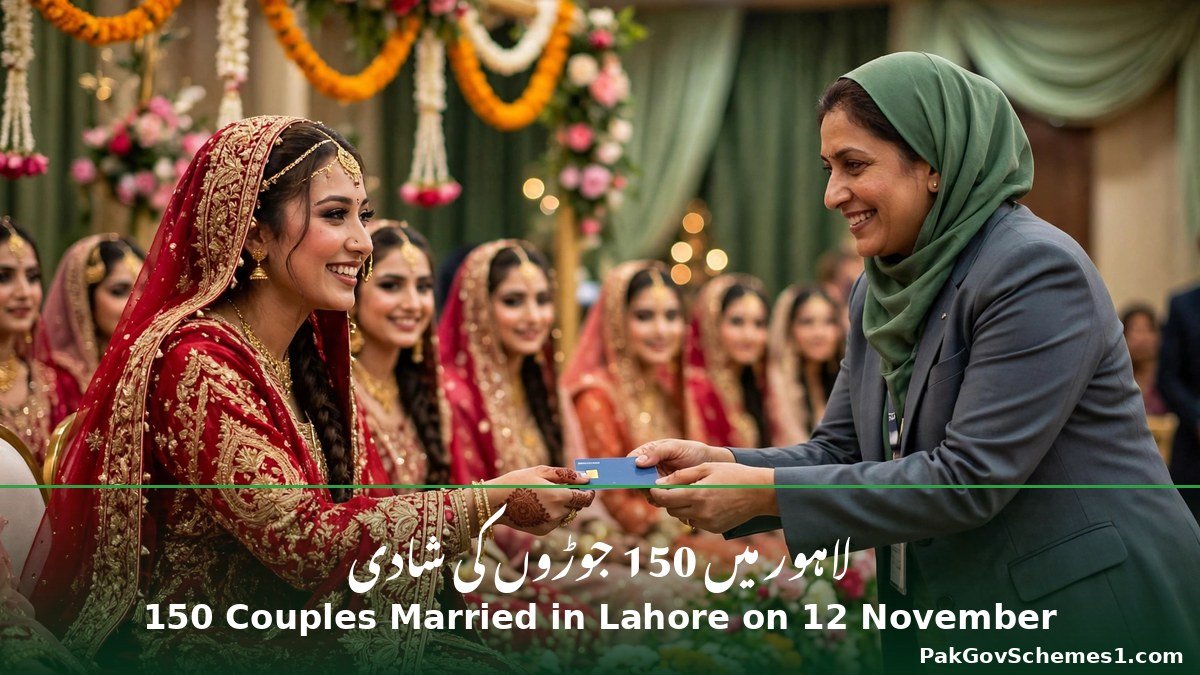
The first ceremony of Phase 3 was held in Lahore on Wednesday, 12 November 2026, where 150 deserving couples were married in a single mass ceremony. Information Minister Azma Bokhari attended as chief guest, with National Assembly Speaker Sardar Ayaz Sadiq and Adviser to the Chief Minister Ali Dar as special guests, and Social Welfare Minister Sohail Shaukat Butt was also present.
The ceremony brought together couples from deserving families, including orphaned, destitute and differently-abled girls, and 21 minority couples took part. On behalf of Chief Minister Maryam Nawaz, each bride and groom received Rs 200,000 through ATM cards.
Azma Bokhari said the Chief Minister was extending motherly care to Punjab’s daughters. Sohail Shaukat Butt said about 8,000 couples had been married under the programme over the past two years, and this year’s target is 5,000 weddings across all districts.
Gujranwala Ceremony — 13 November 2026: 110 Couples Married
A second ceremony followed the next day, Thursday, 13 November 2026, in Gujranwala, where 110 couples from low-income families were married at the Executive Marquee in Rahwali — 93 Muslim and 17 Christian couples, with a cleric and a pastor praying side by side. Each couple received Rs 200,000 on behalf of Chief Minister Maryam Nawaz.
Minister Sohail Shaukat Butt presented the cash gifts and said 5,000 couples would be married across Punjab this year, with a target of 450 for Gujranwala Division. Commissioner Muhammad Ali said the scheme let parents send off their daughters with dignity.
What This Phase Changes — and What It Does Not
Phase 3 continues the same programme with a new annual target. The Rs 200,000 salami is paid through ATM cards — earlier the programme gave gift hampers, later replaced with the Rs 200,000 payment through a Dhee Rani card. The government covers the full ceremony cost.
The department has stated the most misunderstood point plainly: the Rs 200,000 is exclusively part of the government’s mass wedding scheme, and no cash assistance is provided for privately arranged weddings. A family that arranges its own wedding does not receive this amount.

Two more points matter. Deserving daughters from minority communities are included — Gujranwala married 17 Christian couples alongside 93 Muslim couples, and Lahore included 21 minority couples. And 5,000 is the target for this financial year, not a count of weddings held: so far, 260 couples have been married — 150 in Lahore and 110 in Gujranwala.
What Is Confirmed and What Is Not
Confirmed: Phase 3 has launched; mass weddings began on 12 November 2026; 150 couples were married in Lahore and 110 in Gujranwala; each couple received Rs 200,000 through ATM cards; the 2026–27 target is 5,000 couples; about 8,000 couples were married over the past two years.
Reported, not officially confirmed: news reports say applications for this phase were received through the Maryam Ko Batain app and are being scrutinised. The official portal remains cmp.punjab.gov.pk, so treat the app route as reported, not confirmed. The yearly split of the earlier 8,000 — roughly 3,000 then 5,000 — also comes from news reporting.
Unconfirmed — do not rely on it: no application deadline for Phase 3 has been announced in any report we checked, so do not trust a date on social media. An extra gift of Rs 121,000 appears in some older guides, but the 12–14 November Phase-3 reports mention only Rs 200,000. Do not count on any amount beyond that until the department confirms it.
Who Is Eligible for Dhee Rani Phase 3 2026
Eligibility follows the department’s published criteria. The scheme is for deserving daughters of low-income Punjab families who cannot afford wedding expenses. It is not open to every family — where applications exceed the available places, eligible candidates are chosen through a transparent electronic ballot.

Priority goes to orphan girls, women with disabilities, daughters of people with disabilities, and families facing extreme economic hardship. The bride must be aged 18 to 40, hold a Punjab domicile, be unmarried, have a match arranged, and agree to attend the government mass wedding and provide an affidavit to that effect.
Brides from all communities are covered, and deserving daughters from minority communities are expressly included, as both ceremonies showed. No income limit or poverty score has been published, so do not rely on old criteria shared on social media.
Remember the central condition: the assistance is tied to the government-organised mass wedding, and a selected bride must attend. A family that prefers a private wedding, or cannot attend the scheduled ceremony, does not qualify for the Rs 200,000 salami — the detail most often misunderstood on social media. Families of registered workers can also read our guide to the Punjab Workers Welfare marriage grants.
How to Apply for Dhee Rani Phase 3 2026: Step by Step
Applications go through the official portal, cmp.punjab.gov.pk, submitted by the bride’s father, mother or legal guardian — not by the bride herself and not by an agent. The steps below follow the department’s published procedure.
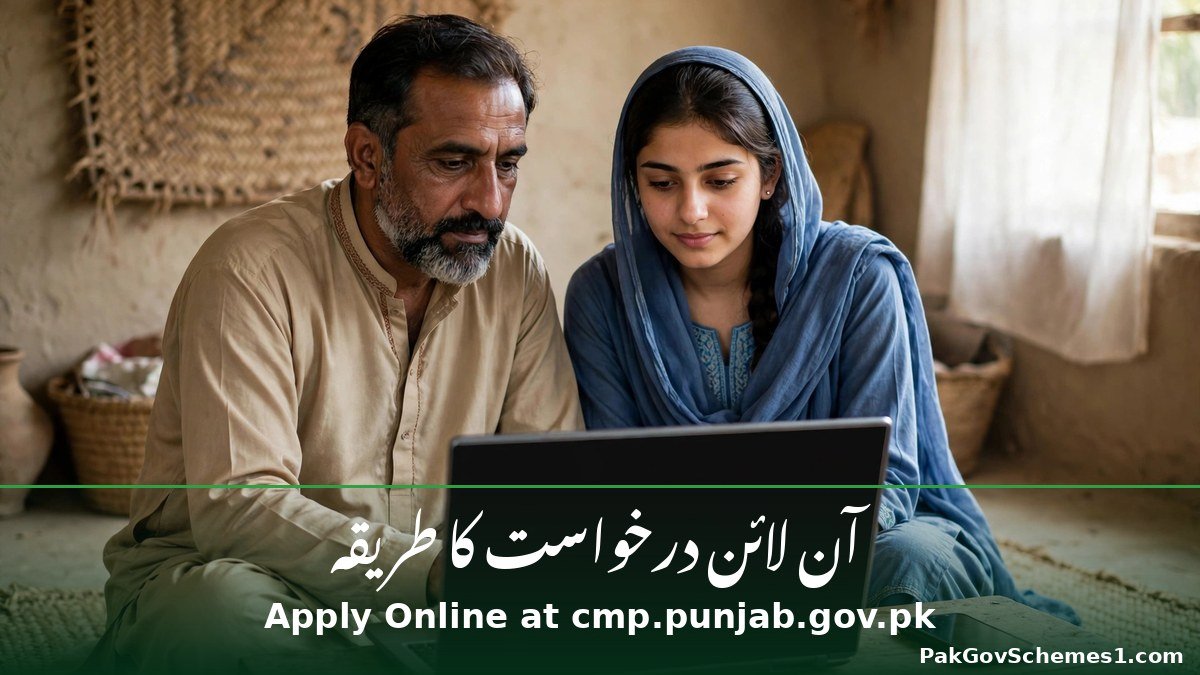

- Open the official portal. Go to cmp.punjab.gov.pk in your browser. Use only this address. Lookalike websites and Facebook pages use similar names to collect personal details — entering your information on a fake site puts your family at risk.
- Create an account. Register on the portal by entering your name, your National Identity Card number, your district and your mobile number. Keep the mobile number active, because the department will send updates to it.
- Log in and complete the application form. Fill in the bride’s details and your family information exactly as they appear on your identity documents. A spelling mistake or a wrong district can delay verification, so check every field before submitting.
- Upload the required documents. The portal will ask you to upload the documents it lists. Scan or photograph them clearly — a blurred or cropped image can be rejected during verification.
- Submit and wait for verification. Department officials review all applications and verify the applicants’ eligibility. This takes time; there is no same-day approval, and nobody can speed it up for a fee.
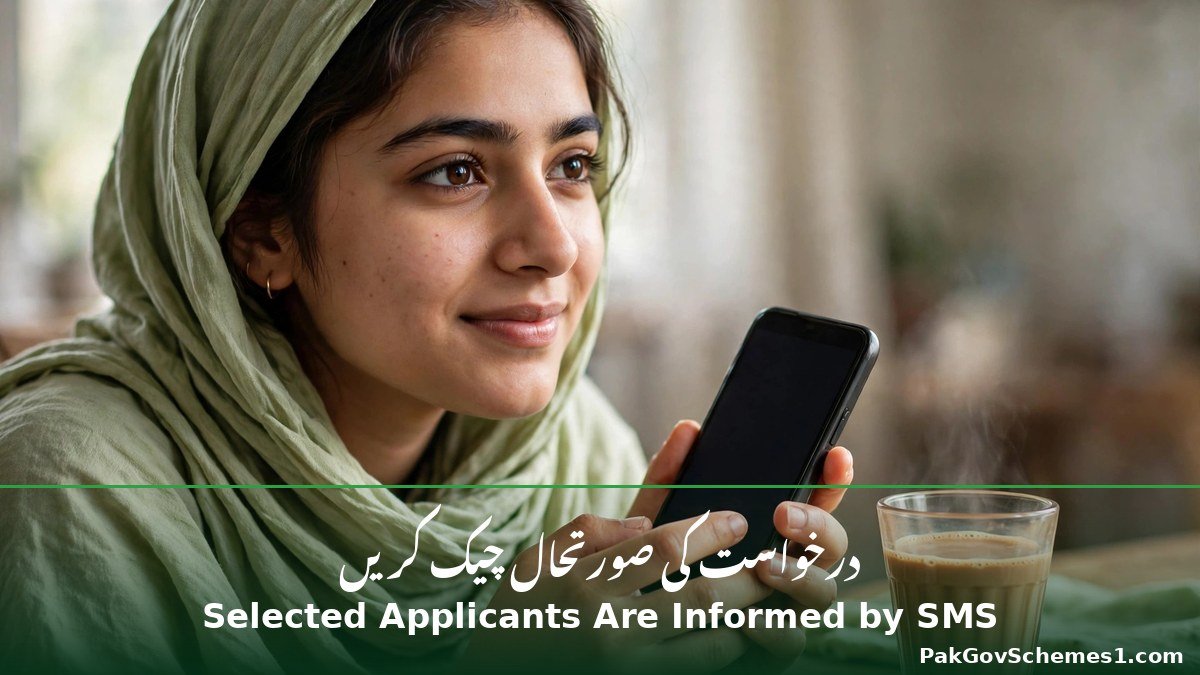
- Wait for the SMS notification. After final approval, selected applicants are informed by SMS of the mass wedding ceremony date and other details. Keep the phone number you registered switched on and check it regularly.
- Attend the mass wedding ceremony. Go to the ceremony on the date and at the venue given in the SMS. The financial assistance of Rs 200,000 is provided through ATM cards at the ceremony itself.
If applications exceed the available places for a district, eligible candidates are selected through a transparent electronic ballot, so applying does not guarantee selection. If you are not selected in one round, ask the helpline whether your application stays valid for the next ceremony or whether you need to apply again.
News reports say applications for this phase were also received through the Maryam Ko Batain app and are being scrutinised — a route that is reported, not confirmed on the official portal, so confirm your application’s status on helpline 1312 as well. Do not pay anyone to submit your application; the portal is free.
Application Status and CNIC Check
There is no public status-check page for Dhee Rani like the 8171 portal for BISP, so families must use the department’s own channels. Call helpline 1312 to ask whether your application has been received, whether verification is complete, and whether a ceremony date has been fixed for your district.
When you call, keep your identity card number and the mobile number used on the application ready. The helpline can tell you whether your application is under verification, whether any document is missing, and when the next ceremony in your district is expected.
Selected applicants are informed by SMS of the ceremony date and other details, so the SMS on your registered mobile number is the official confirmation. Do not trust a call or WhatsApp message claiming you are selected if it asks for money, a PIN or a bank code — the department charges no selection fee, and no official will ask for your ATM PIN or OTP.
If you applied and have heard nothing, first check that the mobile number on your application is correct and active, then call 1312. Do not assume rejection from silence — verification takes time, and ceremonies are scheduled district by district.
Payment Details: Rs 200,000 Salami and Ceremony Costs
| Detail | Verified Information |
| Assistance Amount | Rs 200,000 salami per bride, for brides selected for government-organised mass weddings only |
| Payment Method | Through ATM cards (Dhee Rani Card), handed over at the mass wedding ceremony |
| Ceremony Expenses | All expenses of the collective ceremony — hall, catering and event arrangements — paid by the Punjab government |
| Private Weddings | No cash assistance for privately arranged weddings |
| Target for 2026–27 | 5,000 more deserving couples across Punjab (Gujranwala Division target: 450) |
| Couples Married So Far (Phase 3) | 260 — Lahore 150 on 12 November 2026; Gujranwala 110 on 13 November 2026 |
| Couples Married in Past Two Years | About 8,000 (2024–25 and 2025–26) |
| Application Deadline | Not officially announced |
| Payment Status Check | Helpline 1312, or SMS notification from the department after selection |
| Complaints | Helpline 1312 and the Social Welfare and Bait-ul-Maal office in Lahore |
The Rs 200,000 figure is confirmed by the department’s announcement and both ceremony reports. It is paid as a wedding gift — salami — to the bride, through an ATM card at the ceremony. Earlier the programme gave gift hampers; the steering committee later replaced them with the Rs 200,000 payment through a Dhee Rani card, and that arrangement continues in Phase 3.
For a family in a small town, Rs 200,000 can cover a large part of the basic household items a new couple needs, so plan how it will be used before the wedding day. But do not borrow money assuming it will arrive on a particular date — selection depends on verification and, where applications exceed places, on the ballot. The money is handed over at the ceremony, and only to selected brides who attend.
One more caution: some older guides mention an extra gift of Rs 121,000, but the Phase-3 reports of 12–14 November mention only Rs 200,000. Until the department confirms it for this phase, treat the Rs 121,000 as unconfirmed and do not include it in any family budget.
Required Documents for Dhee Rani Phase 3 2026
No fixed document list has been published for Phase 3; the portal lists what it requires when you fill in the form. The items below are what families should have ready, based on the portal’s account-creation requirements and the verification process. The portal may ask for more, so follow its instructions.

- Valid CNIC of the applicant — the father, mother or legal guardian who submits the application. The portal asks for the CNIC number at account creation.
- Bride’s identity document — her CNIC or other identity document, since verification depends on her age (18–40) and identity.
- Punjab domicile certificate — to prove the bride holds a Punjab domicile, which is a published eligibility condition.
- Registered mobile number — the number entered at account creation, on which the SMS about selection and ceremony dates will arrive.
- Proof of the match and the affidavit — the bride must have a match arranged and must agree to attend the government mass wedding and provide an affidavit to that effect.
- Disability or orphanhood evidence (where applicable) — priority is given to orphan girls, women with disabilities and daughters of people with disabilities, so supporting documents may be needed to claim that priority.
Keep originals safe and upload clear copies only through the official portal. Never send photos of identity documents to a stranger, and never hand your original CNIC to an agent.
Troubleshooting: Common Problems and What to Do
Portal will not open, or the form will not submit. Try again after an hour — heavy traffic after a new phase announcement often slows government portals — or use a different browser. If it still fails, call helpline 1312.
Application submitted but no SMS received. Verification takes time, and ceremonies are scheduled district by district. Check that the mobile number on your application is correct and the SIM is active, then call 1312.
Documents rejected during verification. Ask the helpline or the district social welfare office exactly which document failed and why — a blurred photo, a wrong district or a mismatched name are common causes. Correct it and resubmit through the portal. Never pay anyone who promises to fix it for a fee.
Not selected even though you meet the conditions. Where applications exceed the available places, selection is made through a transparent electronic ballot, so meeting the conditions does not guarantee a place. Ask the helpline whether your application remains valid for the next ceremony.
Someone calls claiming you are selected and asks for money. Hang up — the department charges no selection, registration or ceremony fee, and no official will ask for your ATM PIN or an OTP. Report the number to helpline 1312.
Official Helpline and Complaint Procedure
For questions about eligibility, your application’s status, or a ceremony date in your district, the official helpline is 1312, the number printed in the department’s official advertisement (SPL#1108). Call to ask whether registration is open in your district, what documents are needed, and whether your application has been verified. Have the CNIC number and registered mobile number ready.
For written queries or problems the phone cannot solve, contact the Social Welfare and Bait-ul-Maal office in Lahore at 41 Empress Road, or on 042-99204148 and 042-99204149.
When you complain — about an agent demanding money, a fake selection call, or a document problem — give the helpline the caller’s number, the date and time, and exactly what was asked for, and keep any complaint reference number. Never hand your CNIC to anyone outside an official office, and never share your ATM PIN or OTP.
Common Mistakes to Avoid
- Believing a private wedding qualifies for Rs 200,000. The salami is only for brides selected for government-organised mass weddings. A family that arranges its own wedding does not receive the amount, no matter what a social media post claims.
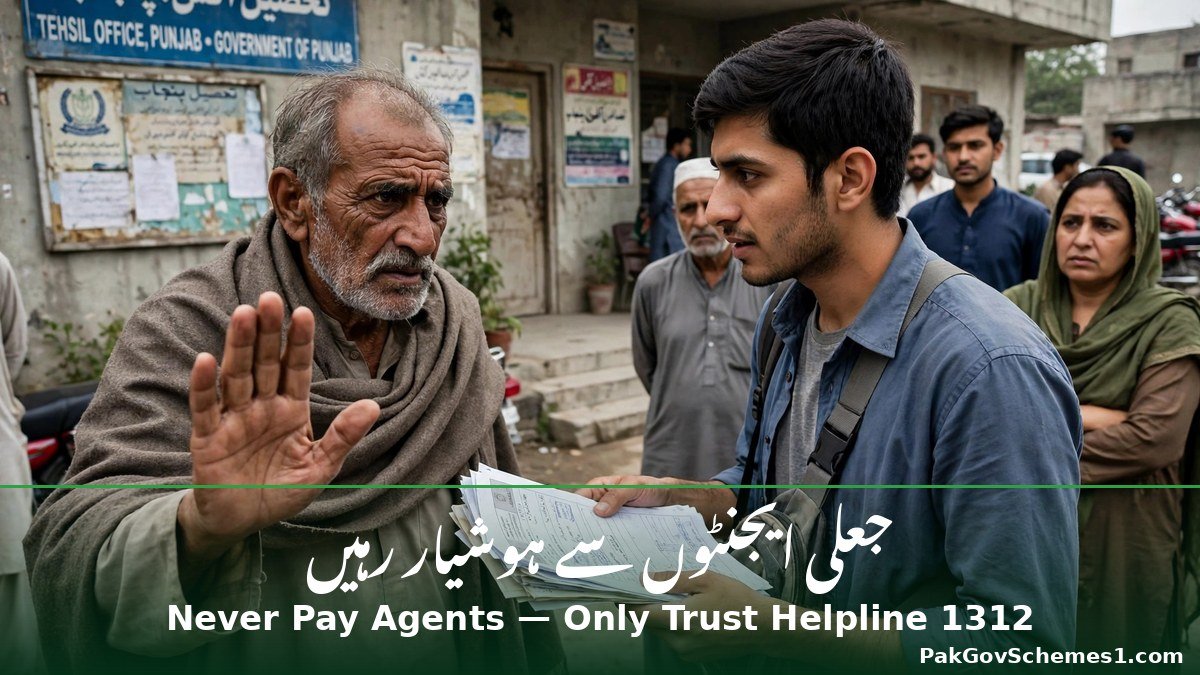
- Paying an agent to apply or to guarantee selection. The portal is free, and selection depends on verification and, where needed, an electronic ballot. Anyone asking for a fee for registration, approval or a ceremony place is running a scam.
- Sharing CNIC photos or OTPs with strangers. Never send a photo of your CNIC, your OTP or your ATM PIN to anyone on WhatsApp or Facebook, and never enter your details on a website that is not cmp.punjab.gov.pk.
- Trusting a deadline from social media. No Phase-3 application deadline has been officially announced. A date on Facebook or TikTok is not an official deadline — confirm it on helpline 1312.
- Counting on the Rs 121,000 gift. Older guides mention an additional gift of Rs 121,000, but Phase-3 reports mention only the Rs 200,000 salami. Do not budget for an amount the department has not confirmed for this phase.
- Applying with wrong or incomplete details. A wrong CNIC number, district or mobile number can delay or block verification. Check every field against your documents before submitting, and keep the registered mobile number active.
- Missing the SMS about your ceremony. Selected applicants are informed by SMS. If your registered number is switched off or changed without updating the portal, you can miss your ceremony date entirely.
Frequently Asked Questions
When did Dhee Rani Phase 3 2026 start?
Mass wedding ceremonies under Phase 3 began on 12 November 2026, when 150 deserving couples were married in Lahore. A second ceremony followed in Gujranwala on 13 November, where 110 couples were married. The phase covers the 2026–27 financial year.
How much money does each bride get in Dhee Rani Phase 3?
Each selected bride receives Rs 200,000 as salami, paid through an ATM card at the mass wedding ceremony. The Punjab government also covers all ceremony expenses, including the hall, catering and event arrangements. The amount is only for government-organised mass weddings.
How many weddings will be held under Dhee Rani Phase 3?
The target is 5,000 more weddings of deserving couples across Punjab in 2026–27, including 450 in Gujranwala Division. So far, 260 couples have been married in this phase — 150 in Lahore and 110 in Gujranwala — with more ceremonies to follow in other districts.

Who can apply for the Dhee Rani Programme Phase 3?
Deserving unmarried daughters of low-income Punjab families can apply through their father, mother or legal guardian. The bride must be aged 18 to 40, hold a Punjab domicile, have a match arranged, and agree to attend the government mass wedding and provide an affidavit. Priority goes to orphans and women with disabilities.
How do I apply for Dhee Rani Phase 3 2026?
Apply online through the official portal cmp.punjab.gov.pk. Create an account with your name, CNIC number, district and mobile number, then log in, complete the form and upload the required documents. The bride’s father, mother or legal guardian must submit it. There is no fee.
What is the last date to apply for Dhee Rani Phase 3?
No application deadline for Phase 3 has been officially announced — the reports of 12–14 November 2026 give no closing date. Do not trust a deadline on social media; confirm the current position on helpline 1312 before you rely on any date.
Can I get Rs 200,000 for a private wedding under Dhee Rani?
No. The Rs 200,000 salami is only for brides selected for government-organised mass weddings — the department has stated clearly that no cash assistance is provided for privately arranged weddings. To receive it, the bride must apply, be selected, and attend the mass wedding ceremony.
Are minority communities included in Dhee Rani Phase 3?
Yes. Deserving daughters from minority communities are expressly included in the programme. The Lahore ceremony on 12 November included 21 minority couples, and the Gujranwala ceremony on 13 November married 17 Christian couples alongside 93 Muslim couples, with a cleric and a pastor praying side by side.
How will I know if I am selected for a Dhee Rani mass wedding?
After verification and final approval, selected applicants are informed by SMS on their registered mobile number, with the ceremony date and other details. If applications exceed the available places, selection is made through a transparent electronic ballot. You can also call helpline 1312 to ask about your application’s status.
What is the Dhee Rani helpline number?
The official helpline is 1312, printed in the department’s official advertisement (SPL#1108). You can also contact the Lahore office at 41 Empress Road, or on 042-99204148 and 042-99204149. Never pay anyone who claims to be from the department and asks for money.
Important Safety Notice
Use only the official portal — cmp.punjab.gov.pk — and helpline 1312. Never share your CNIC photo, OTP or ATM PIN with strangers, and never pay anyone who promises registration, selection or a ceremony place. PakGovSchemes1.com is an independent informational website, not affiliated with the Punjab government or the Social Welfare and Bait-ul-Maal Department.
Conclusion
Dhee Rani Phase 3 2026 is under way: mass weddings began on 12 November in Lahore with 150 couples, followed by 110 couples in Gujranwala the next day, each receiving Rs 200,000 salami through ATM cards, with the government paying every ceremony expense. The 2026–27 target is 5,000 more weddings across Punjab. If your family is eligible, apply through cmp.punjab.gov.pk or call helpline 1312 — remembering the amount is only for government-organised mass weddings, not private ones.
Official Sources
- Pakistan Point, 14 November 2026 — “Punjab Launches Third Phase Of Dhee Rani Programme, Announces Wedding Aid”: pakistanpoint.com — verifies the Phase-3 launch, the 12 November start, the 5,000 target, the Rs 200,000 salami through ATM cards, the mass-wedding-only condition, eligibility criteria, and the portal application procedure.
- Pakistan Today, 12 November 2026 — “Maryam’s Dhee Rani Programme brings wedding joy to 150 deserving couples in Lahore”: pakistantoday.com.pk — verifies the Lahore ceremony (150 couples, 21 minority couples), the Rs 200,000 gift through ATM cards, the 8,000 couples married over the past two years, and the 5,000 target for the current financial year.
- LHR Times, 15 November 2026 — “110 Couples Wed in Gujranwala as Dhee Rani Targets 5,000 Marriages”: lhrtimes.com — verifies the Gujranwala ceremony (110 couples, 93 Muslim and 17 Christian, Executive Marquee Rahwali), the Gujranwala Division target of 450, and the earlier record of 66 ceremonies and 4,857 couples by November 2025.
- NiaziTV, 12 November 2026 — “Dhee Rani Programme 2026-27: Mass Weddings Resume From 12 November”: niazitv.pk — verifies the official advertisement (SPL#1108), helpline 1312, the Lahore office address and phone numbers, the 8,000 weddings over 2024–25 and 2025–26, and the reported Maryam Ko Batain app application route.
- UrduPoint, 14 November 2026 — “Punjab Launches Third Phase of Dhee Rani Programme”: urdupoint.com — carries the same department announcement as Pakistan Point; listed for cross-checking, not separately quoted.
- Punjab Dhee Rani Programme, official portal: cmp.punjab.gov.pk — checked 15 November 2026; the fetched copy was a cached version of the portal’s programme description and did not show Phase-3 ceremony details or a deadline, so launch facts are sourced to the reports above and the article says so.
- Social Welfare and Bait-ul-Maal Department, Government of Punjab: swd.punjab.gov.pk — the department’s official website, cited for the helpline and office contact details as printed in the official advertisement.
Disclaimer: PakGovSchemes1.com is an independent informational website and is not affiliated with any government department. Information is compiled from available official announcements and other identified sources and may change. Please verify eligibility, registration status, payment details, and deadlines through the relevant official government website before taking action.

